The University of Olivet in Italy 2026

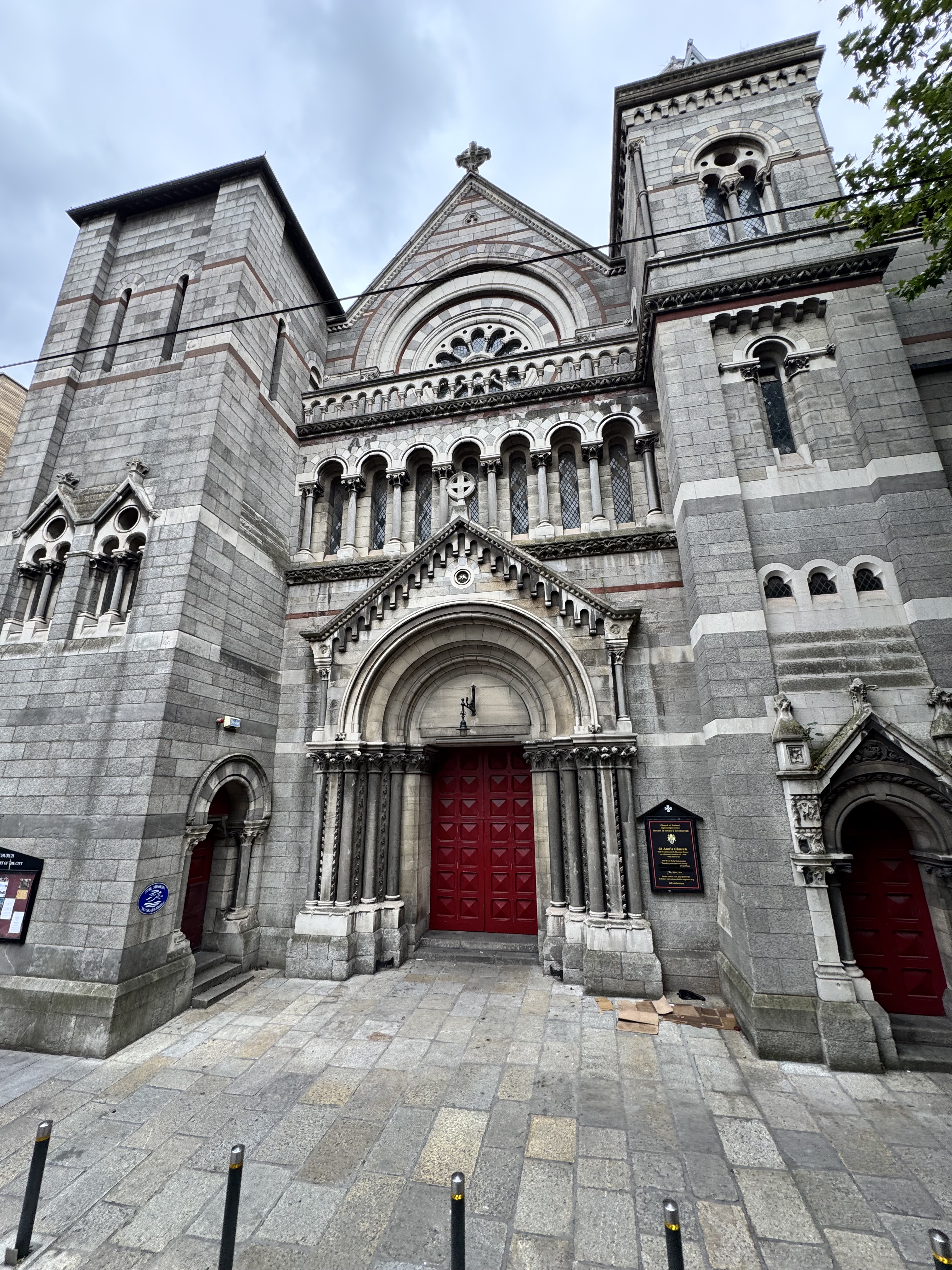
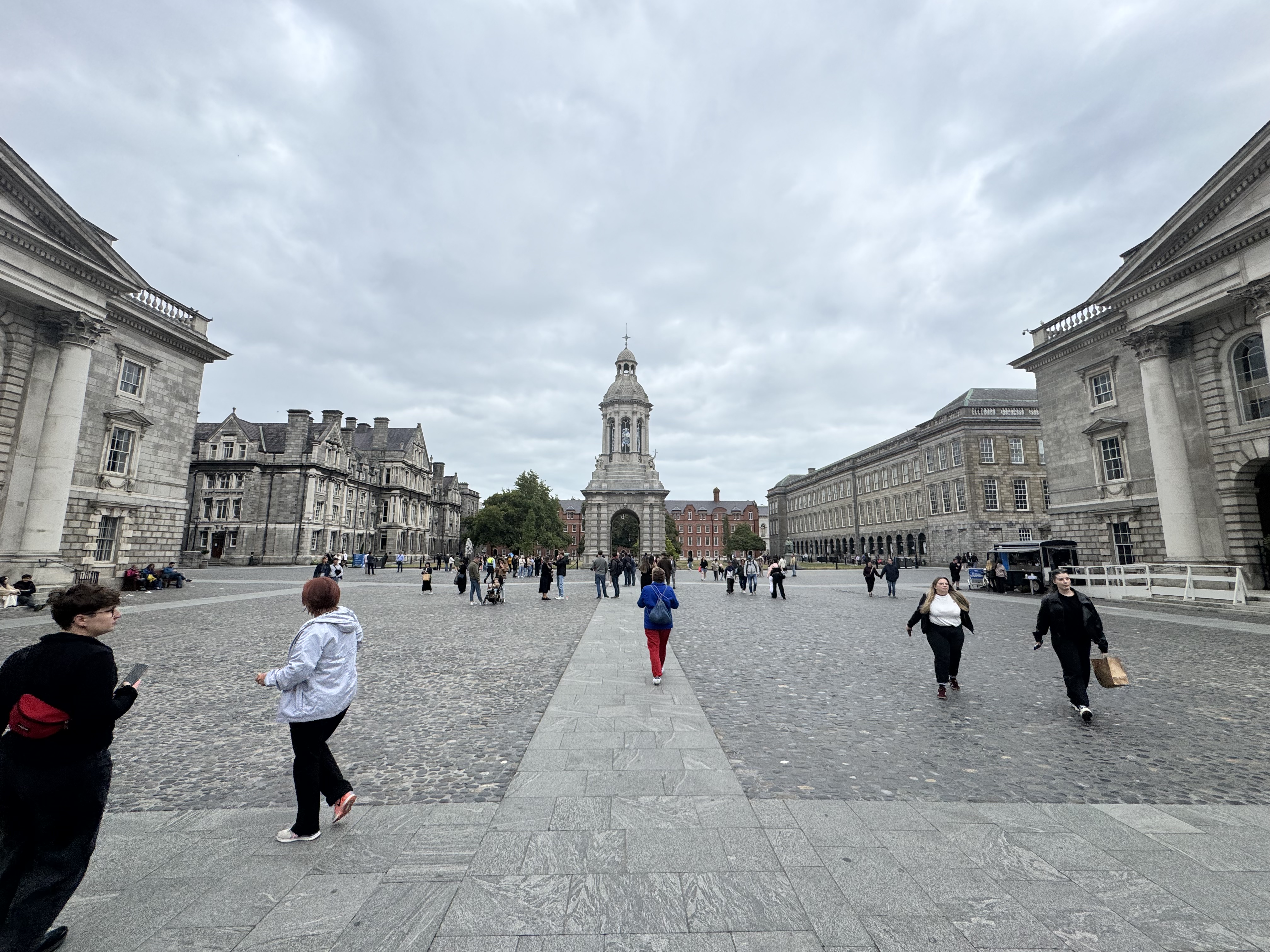
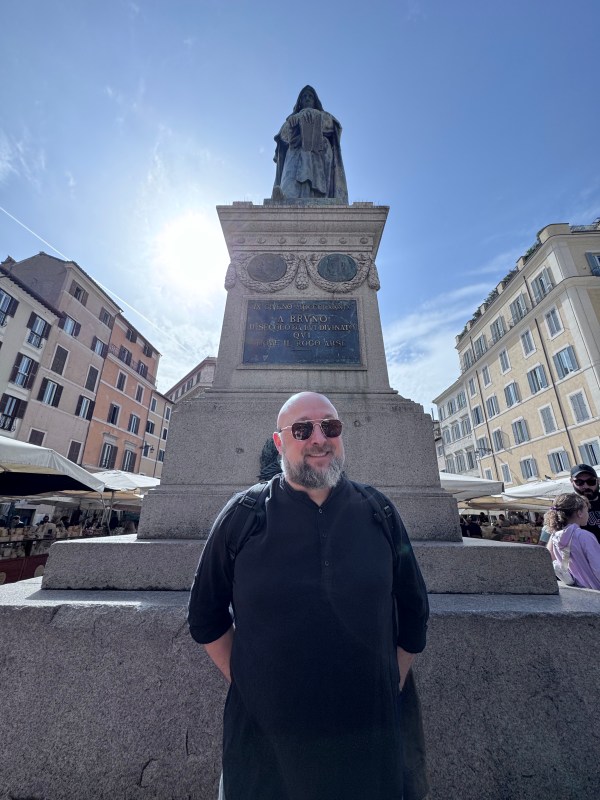
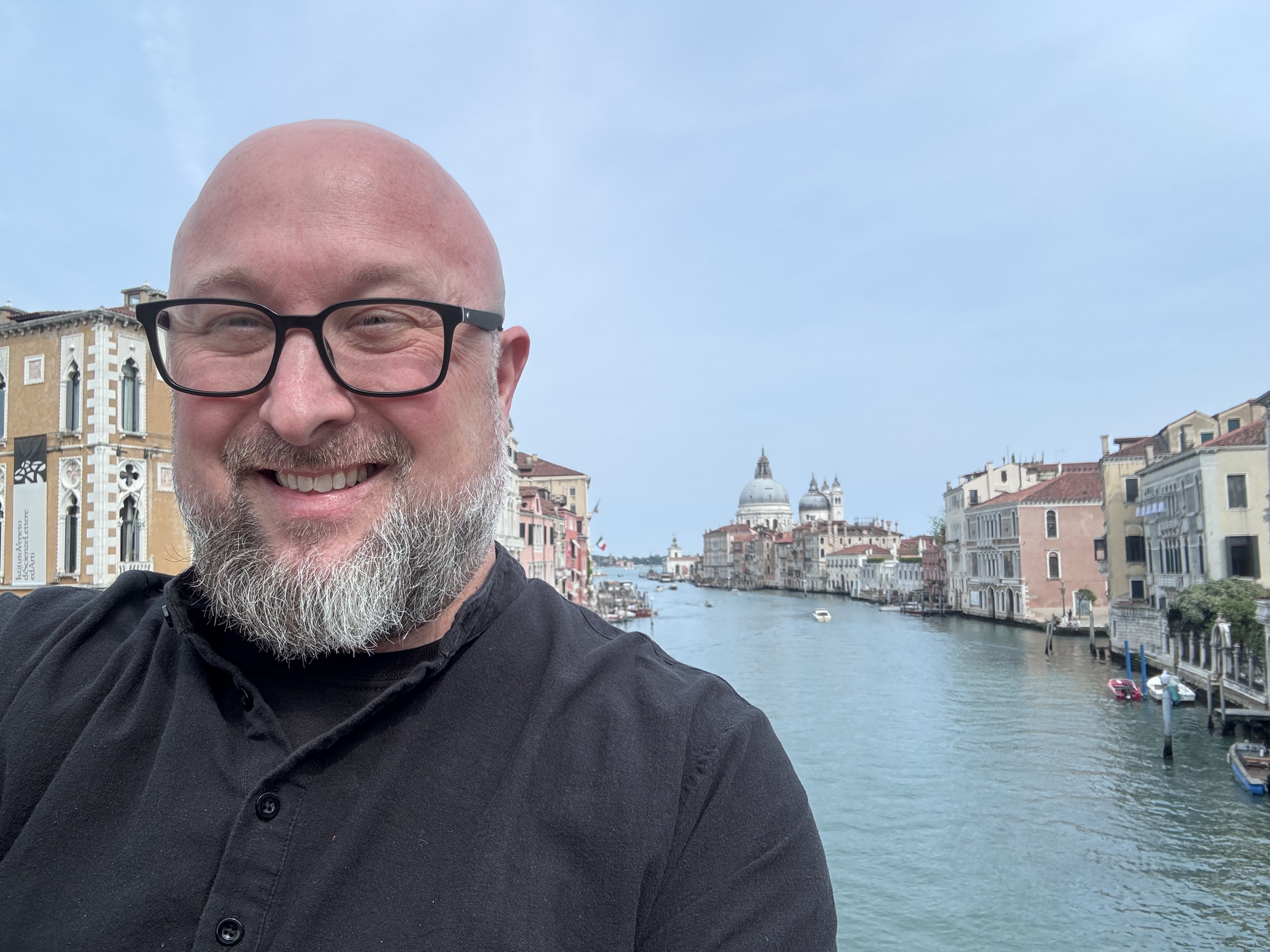
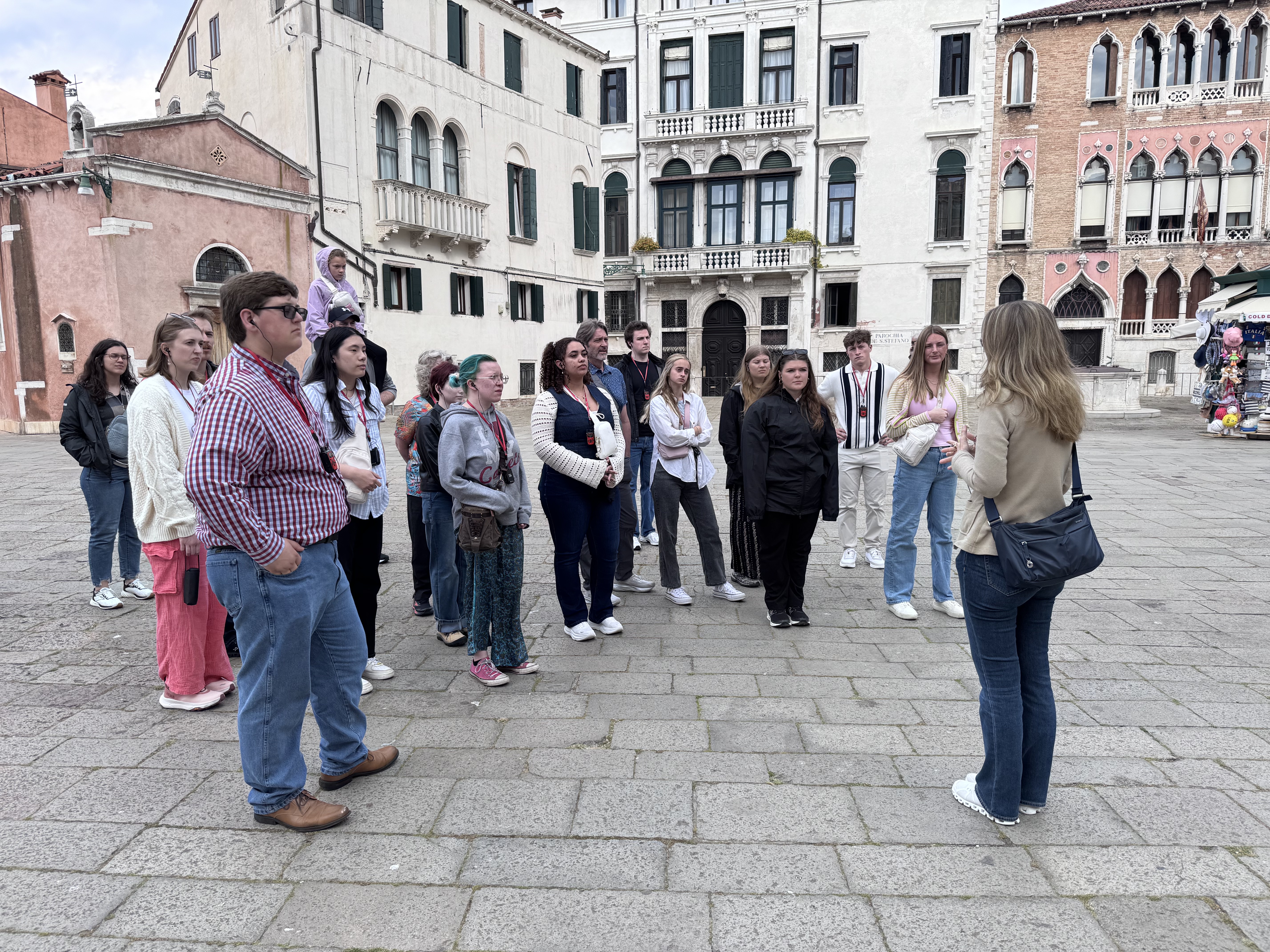
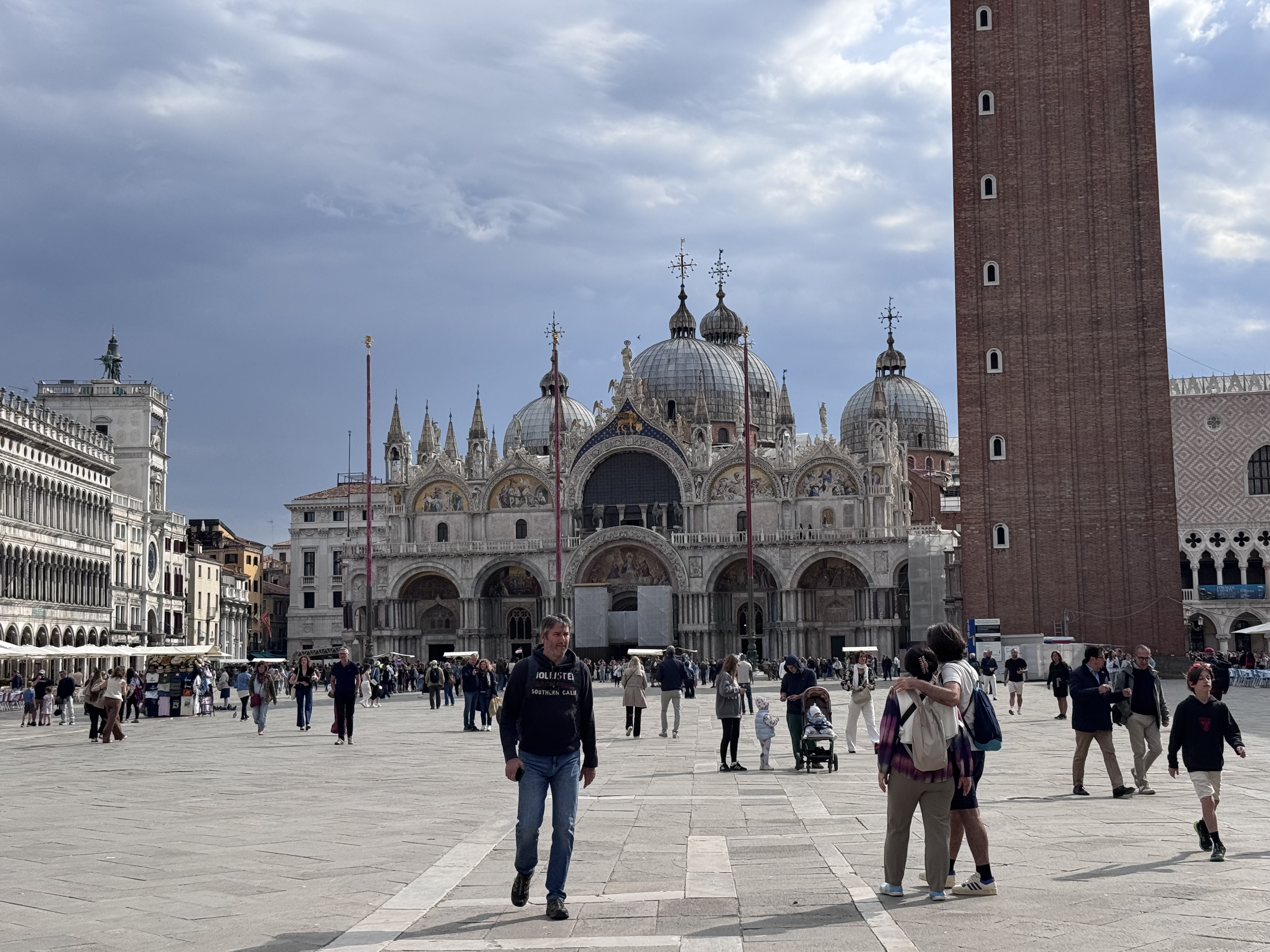
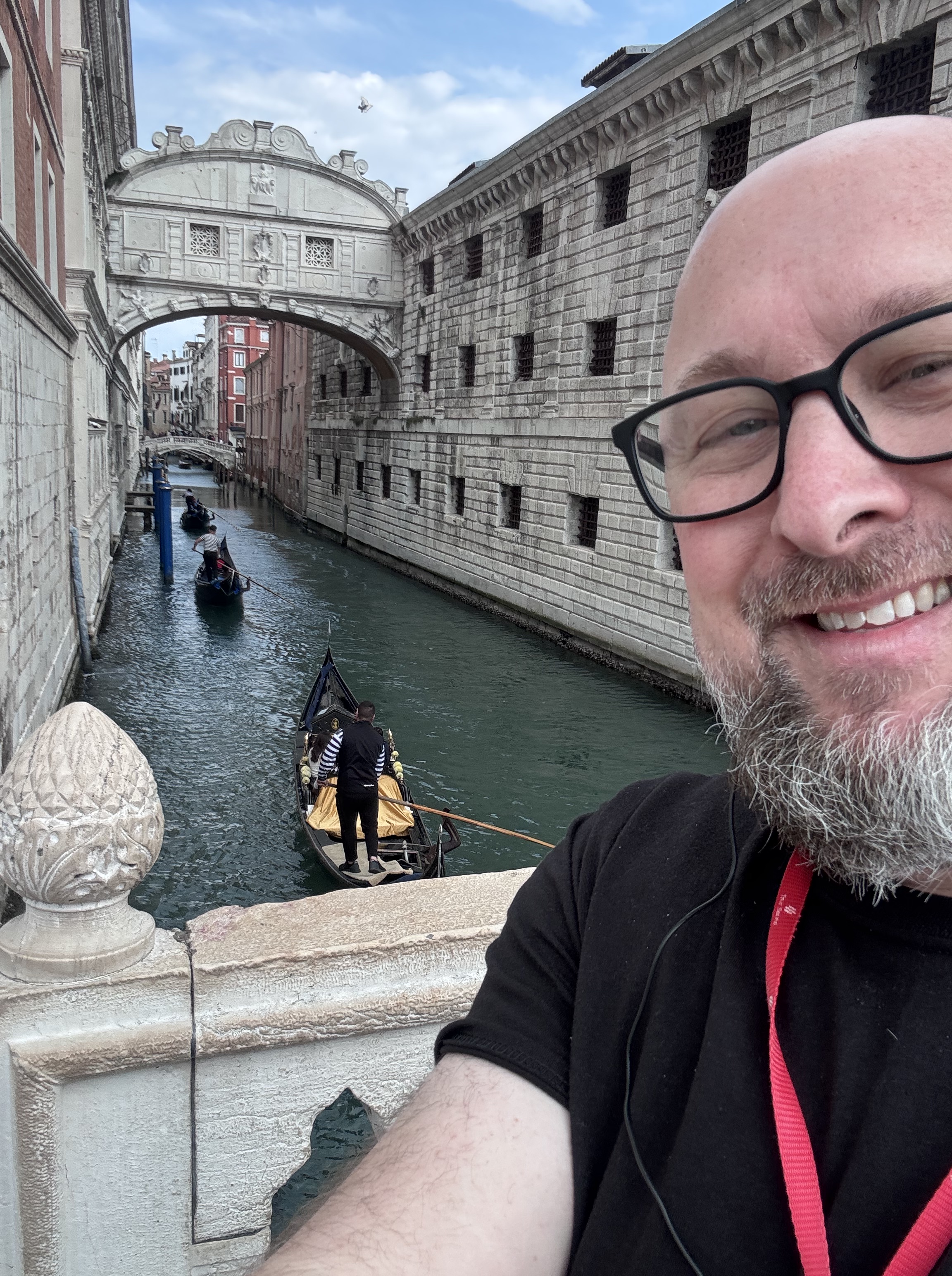
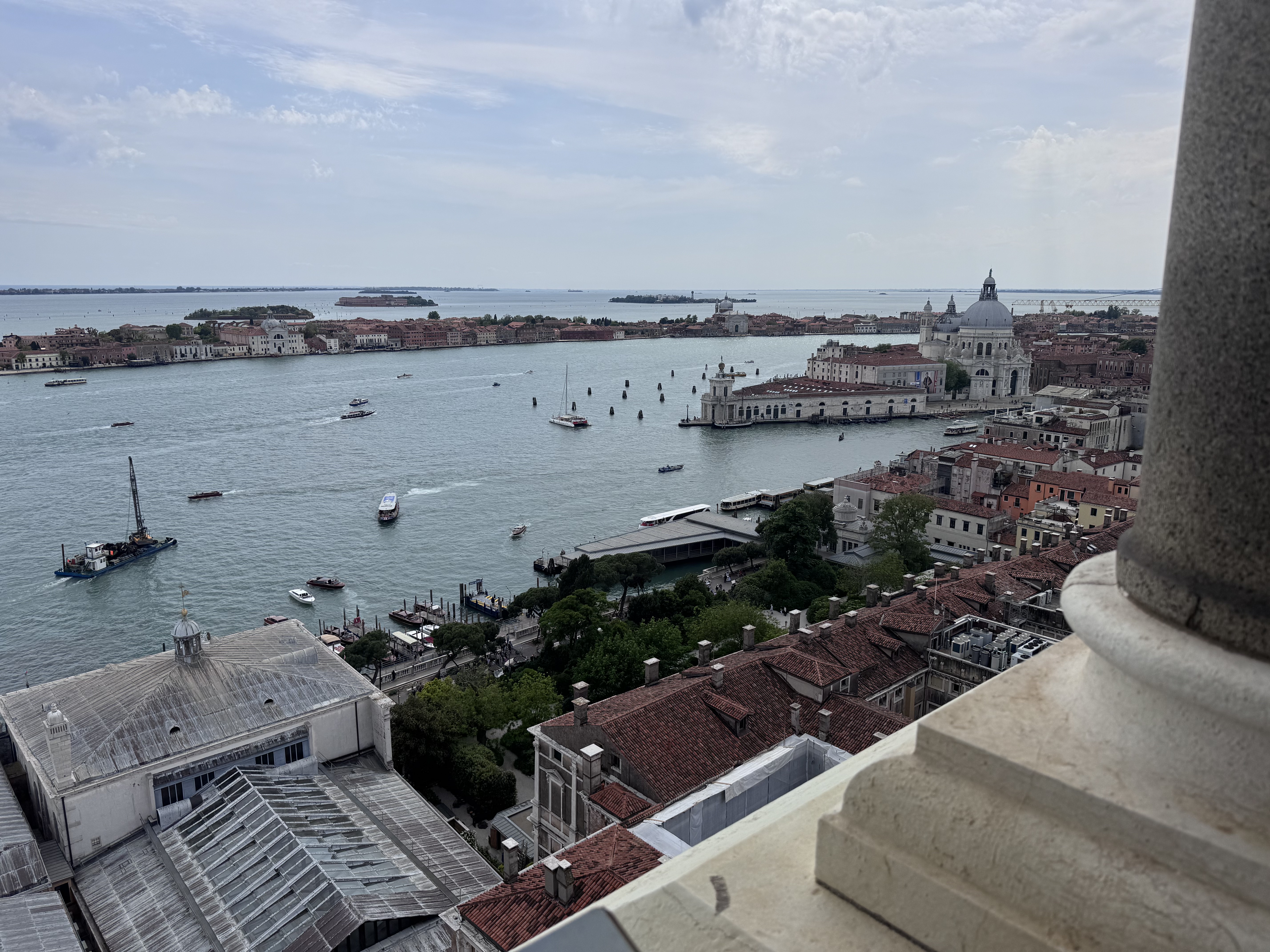
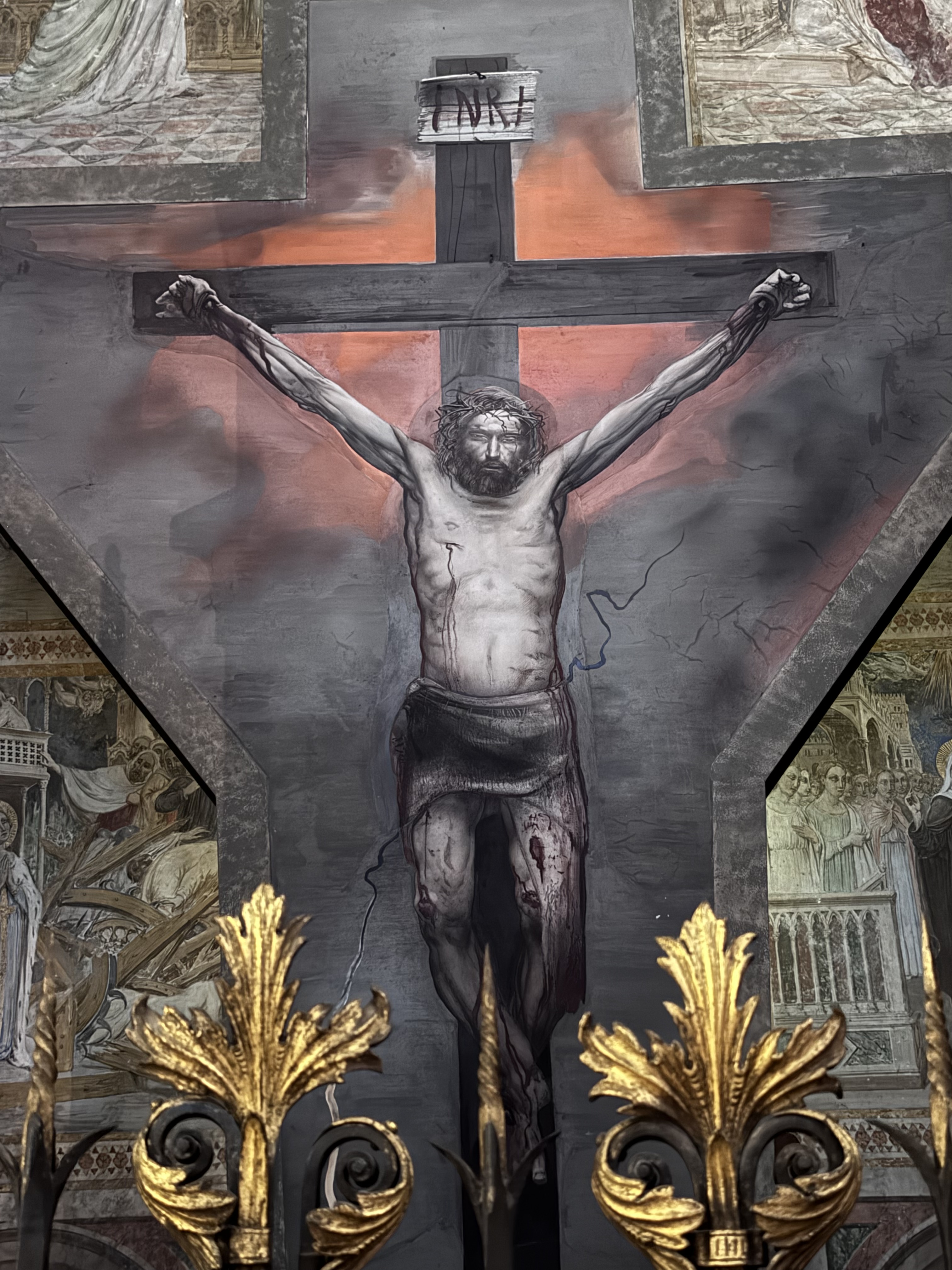
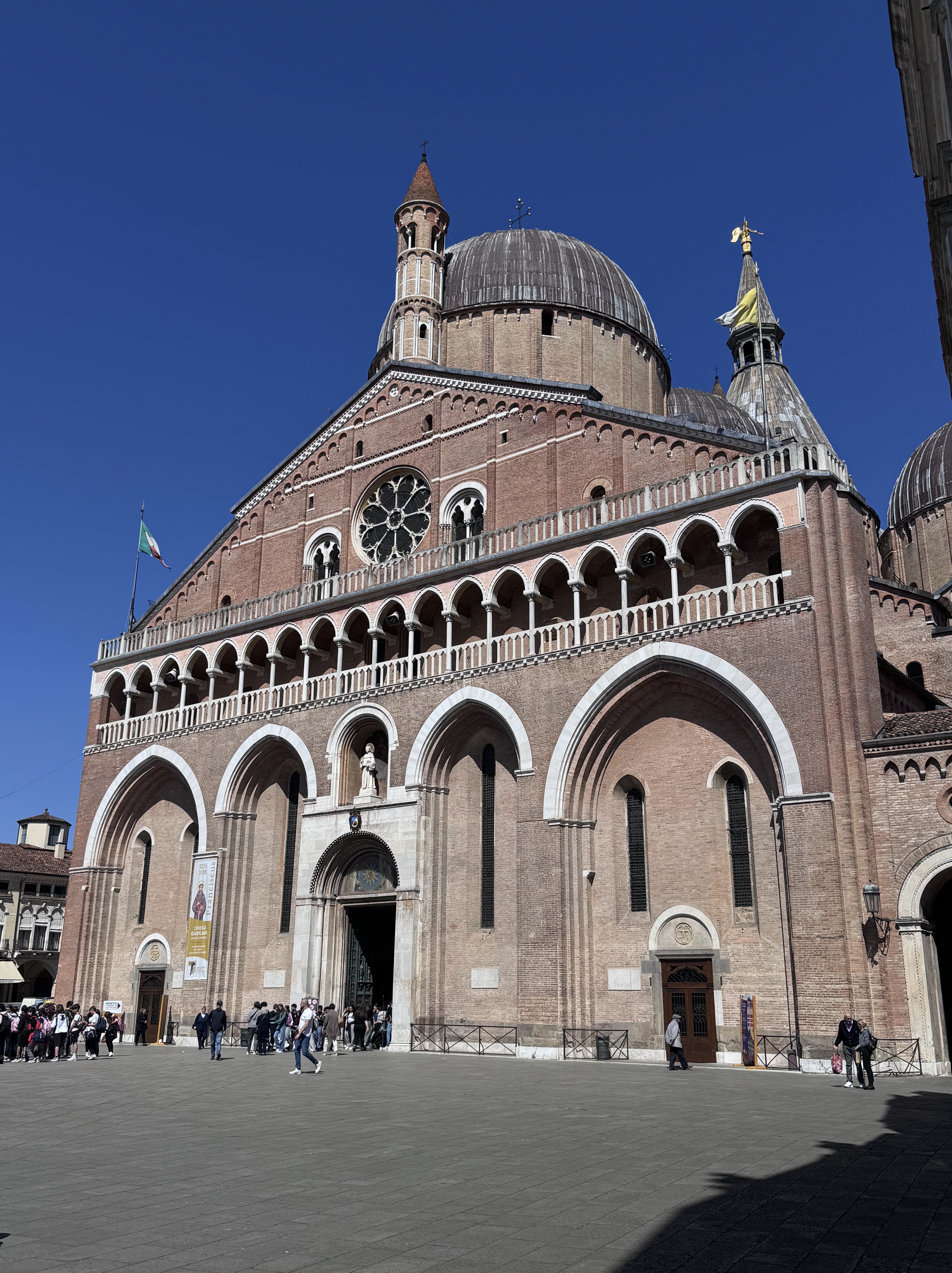
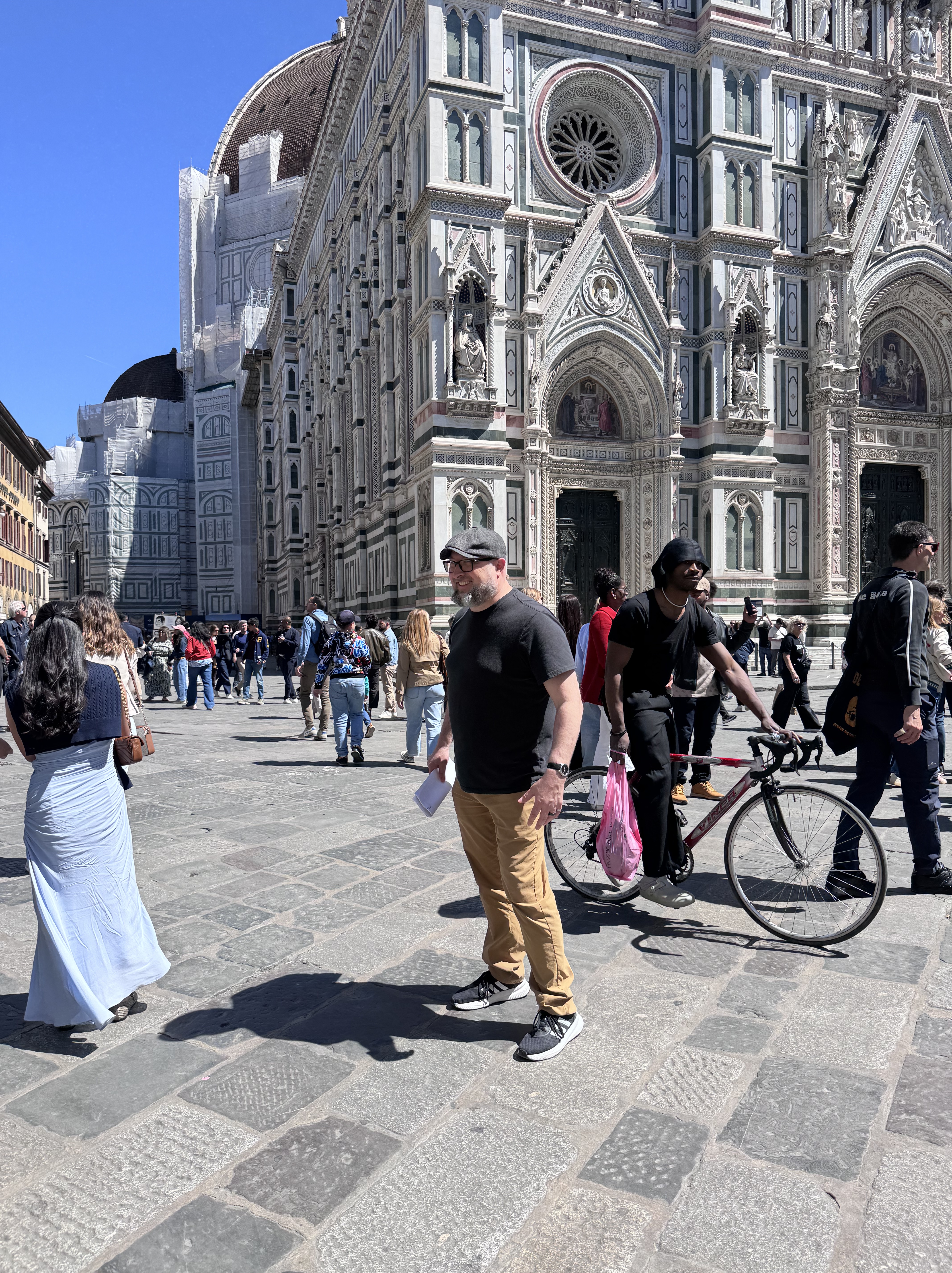
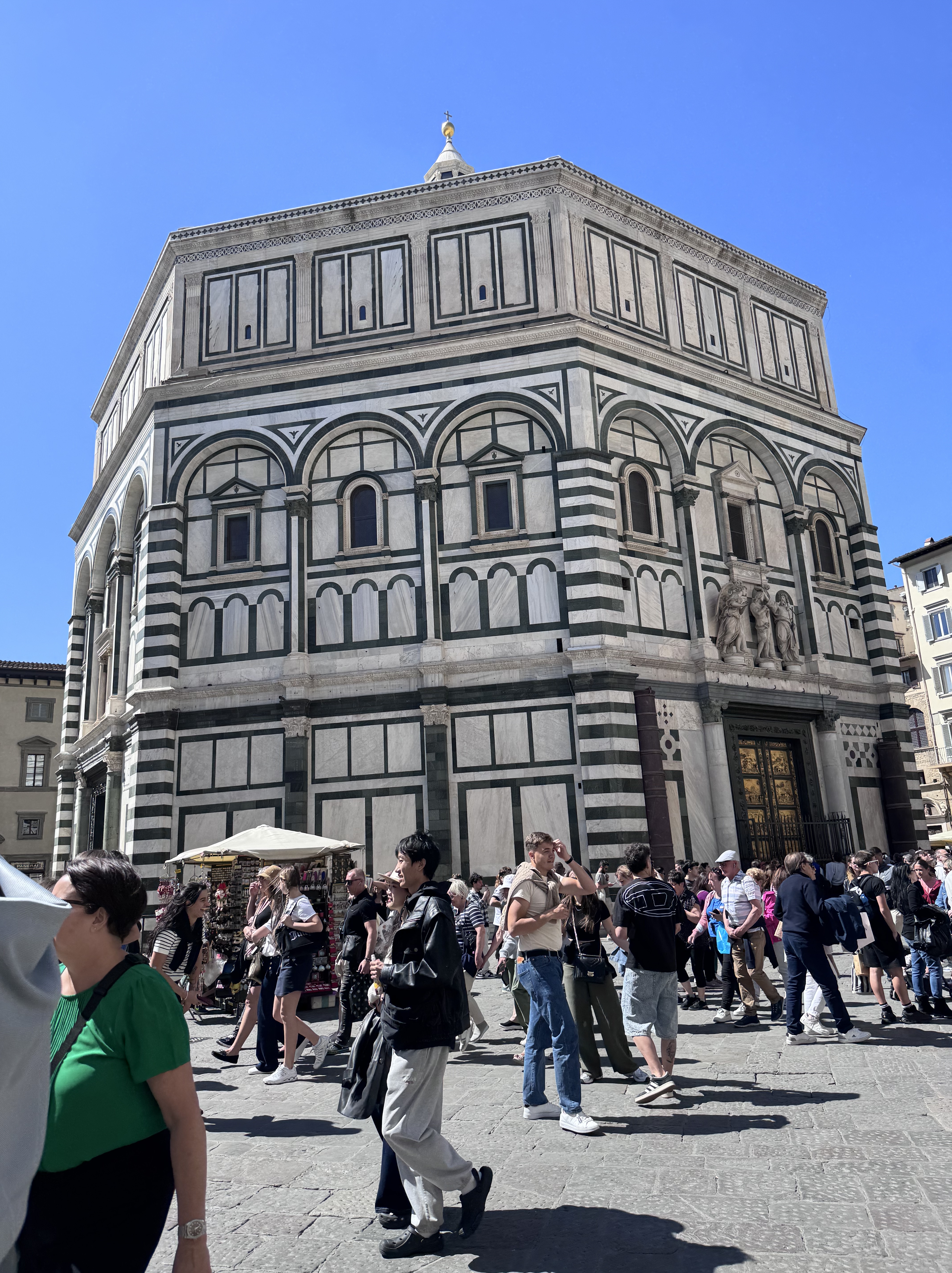
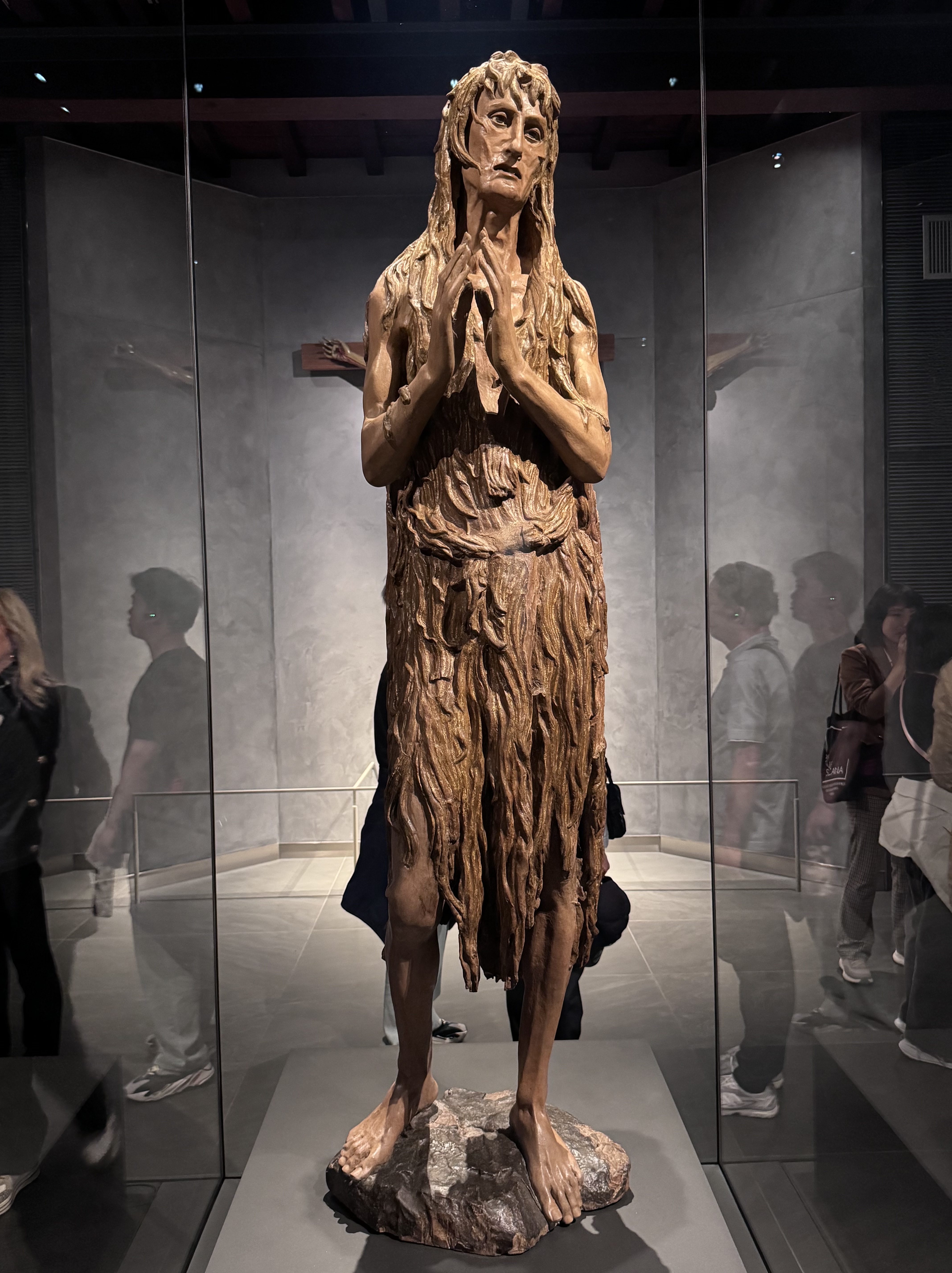
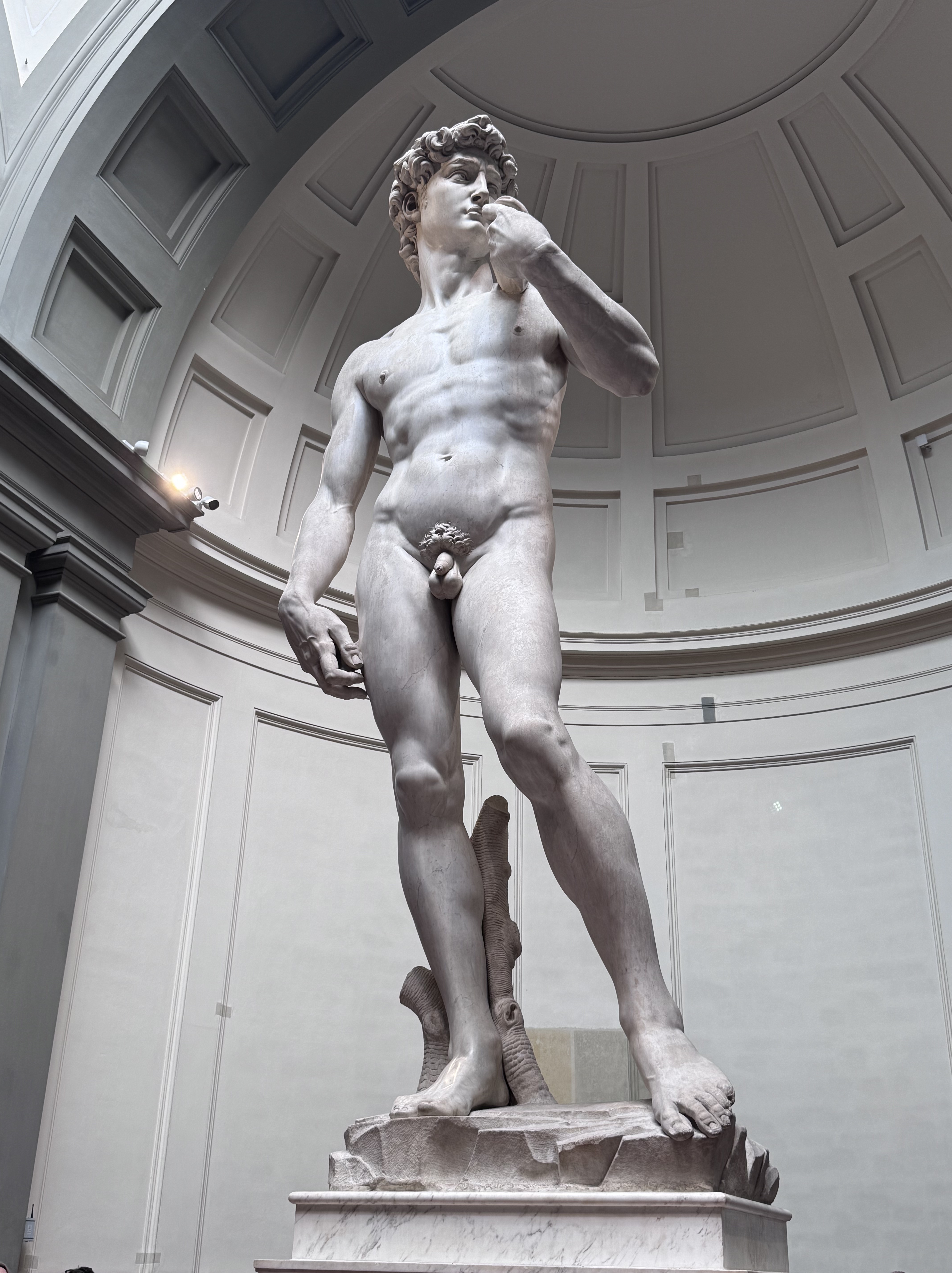
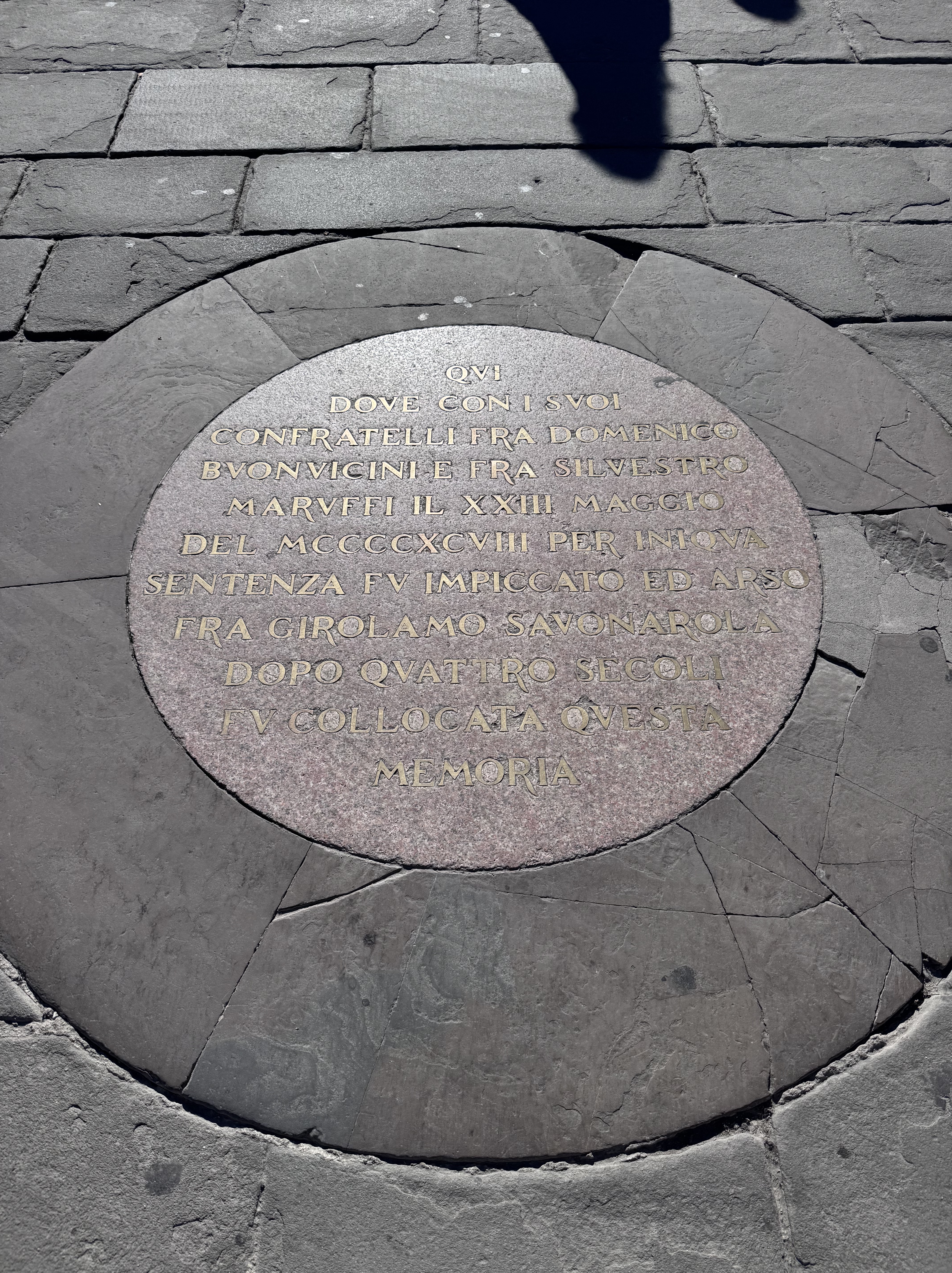
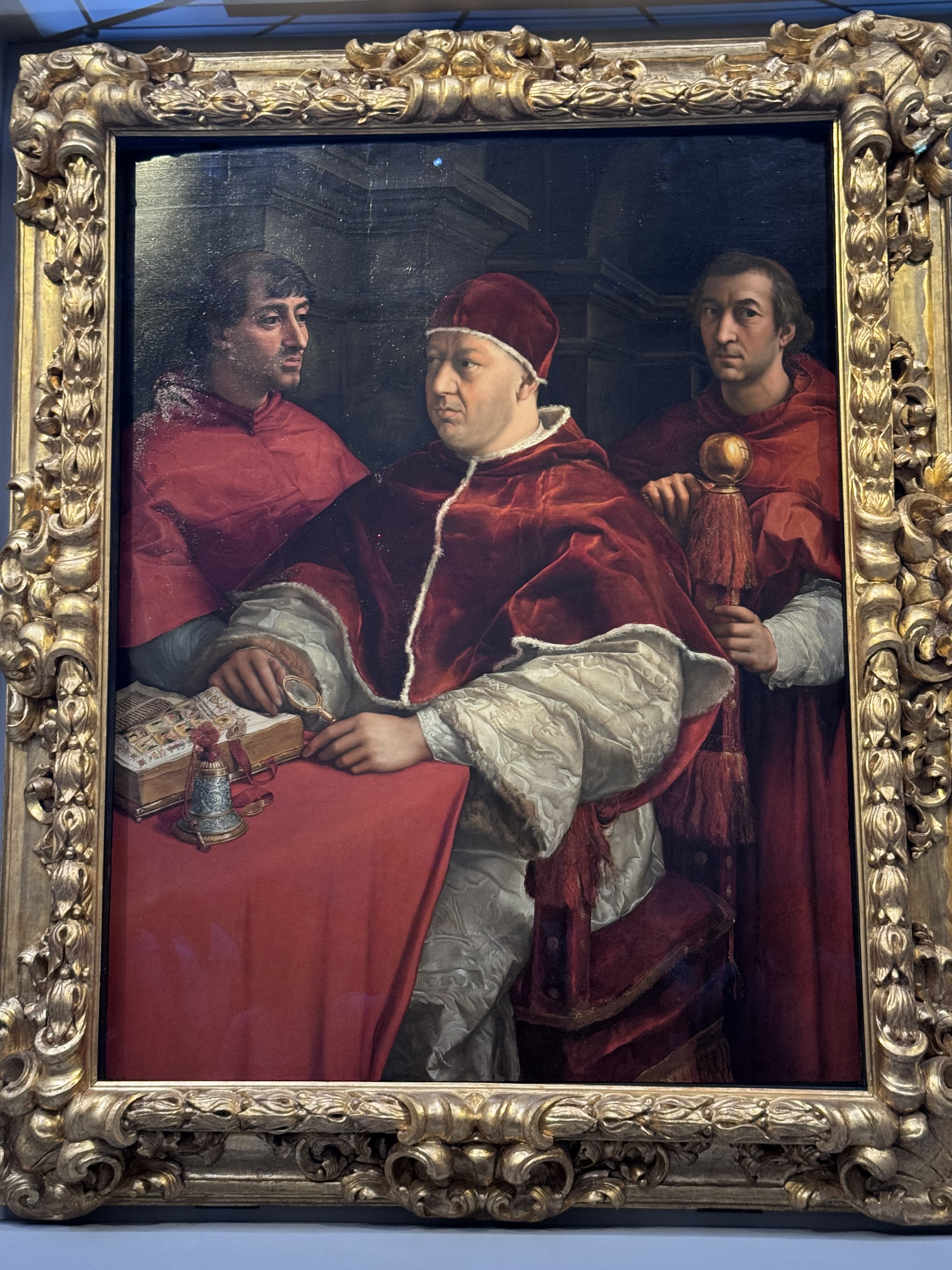
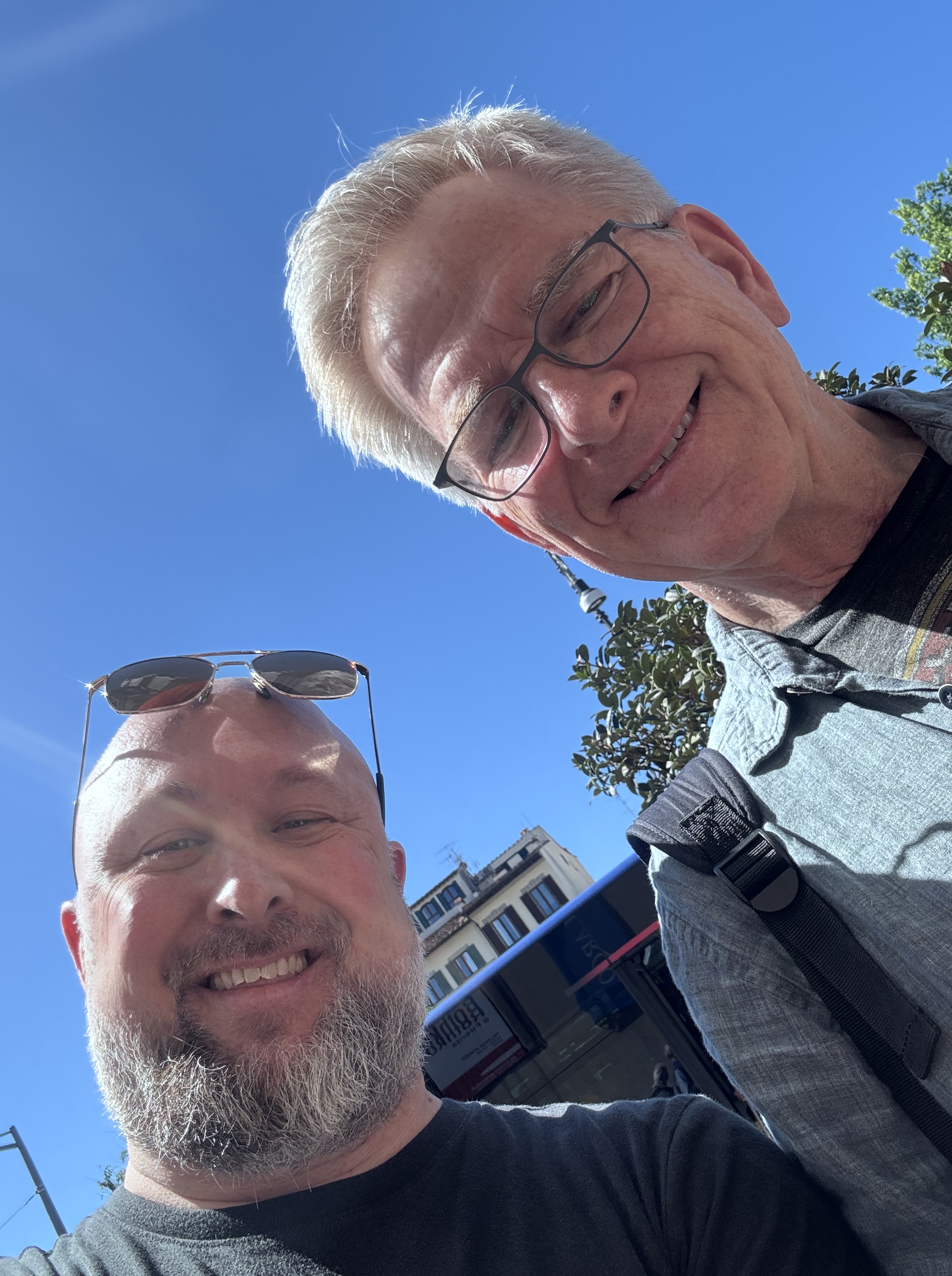
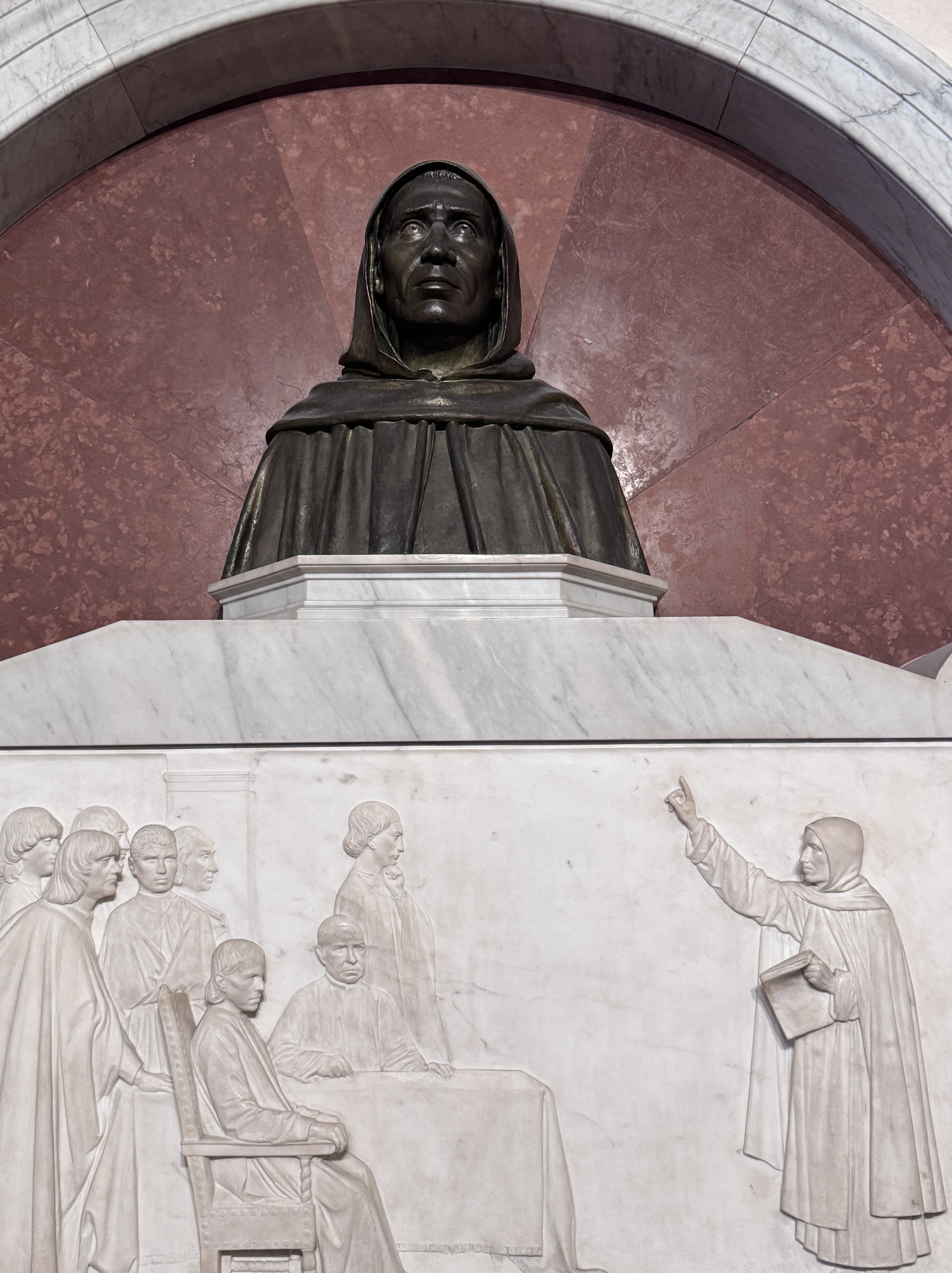
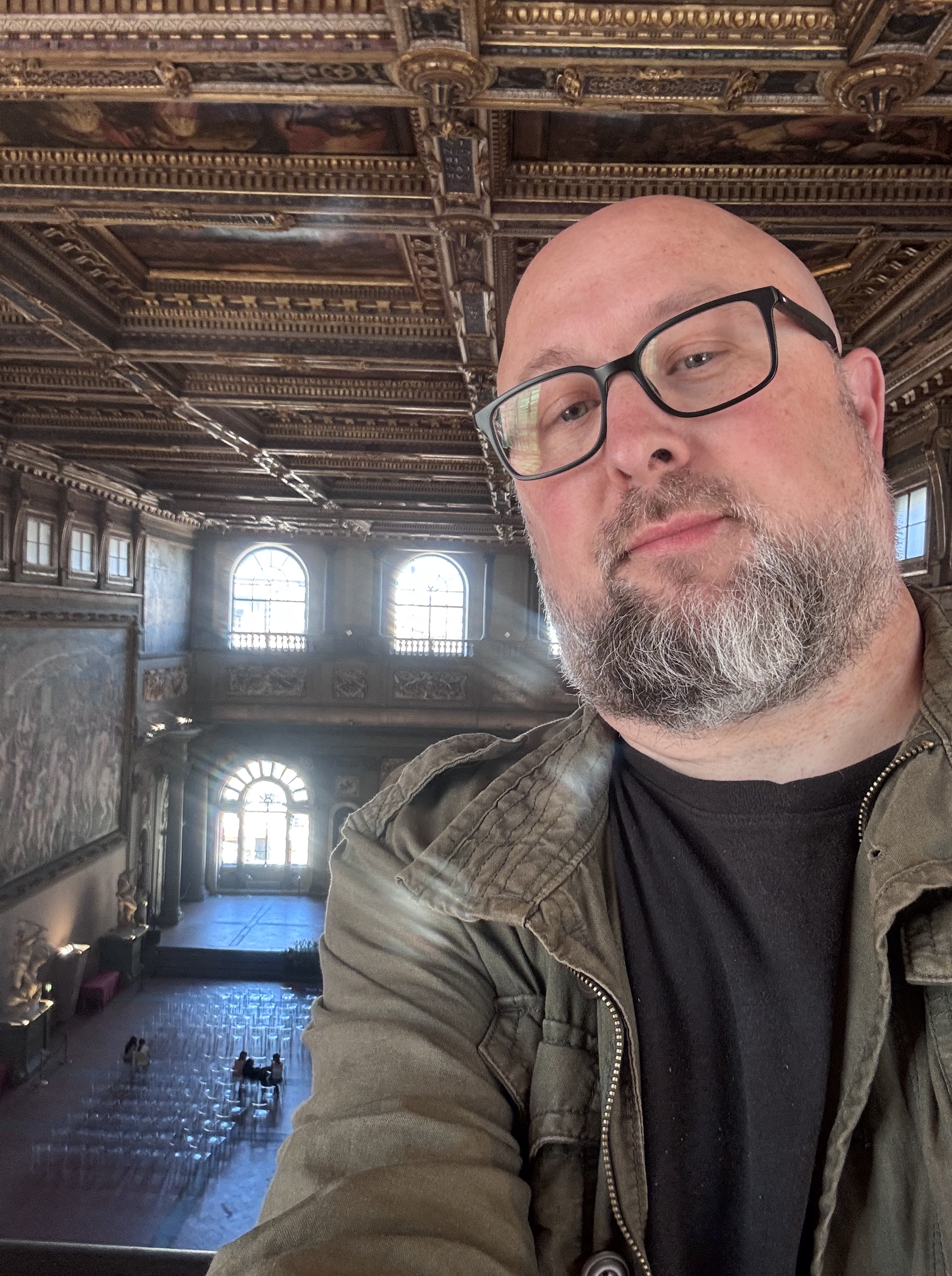
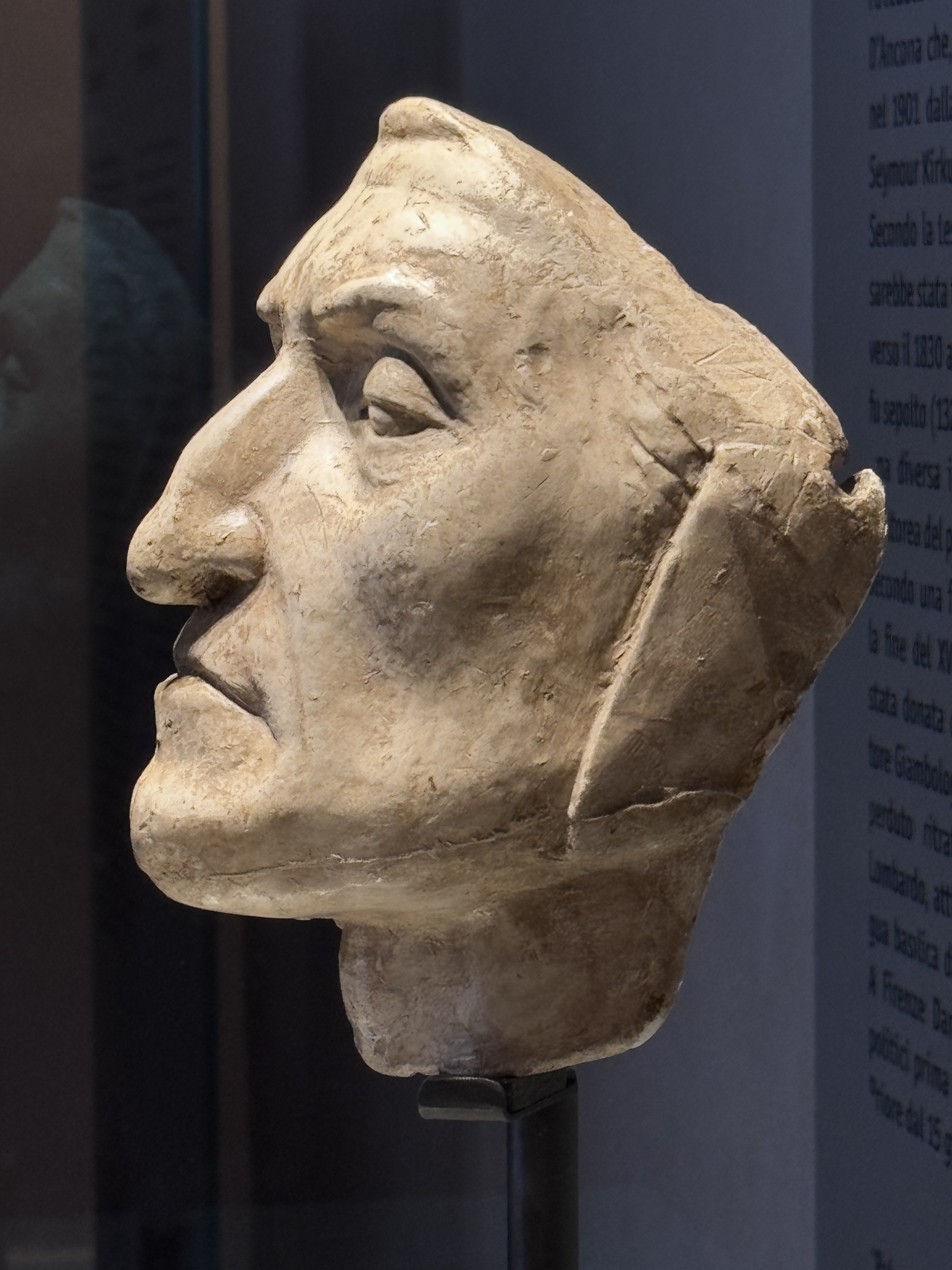
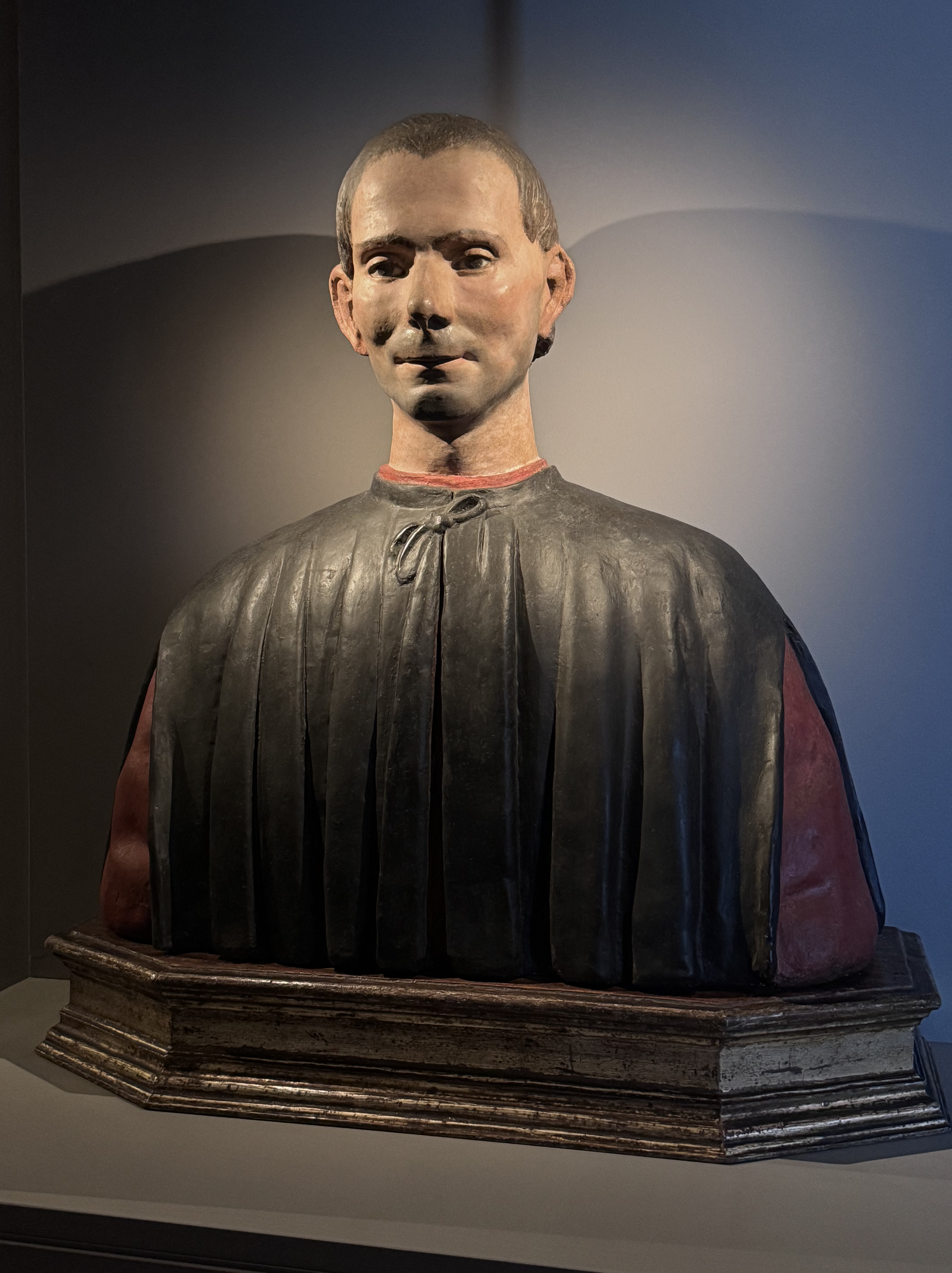
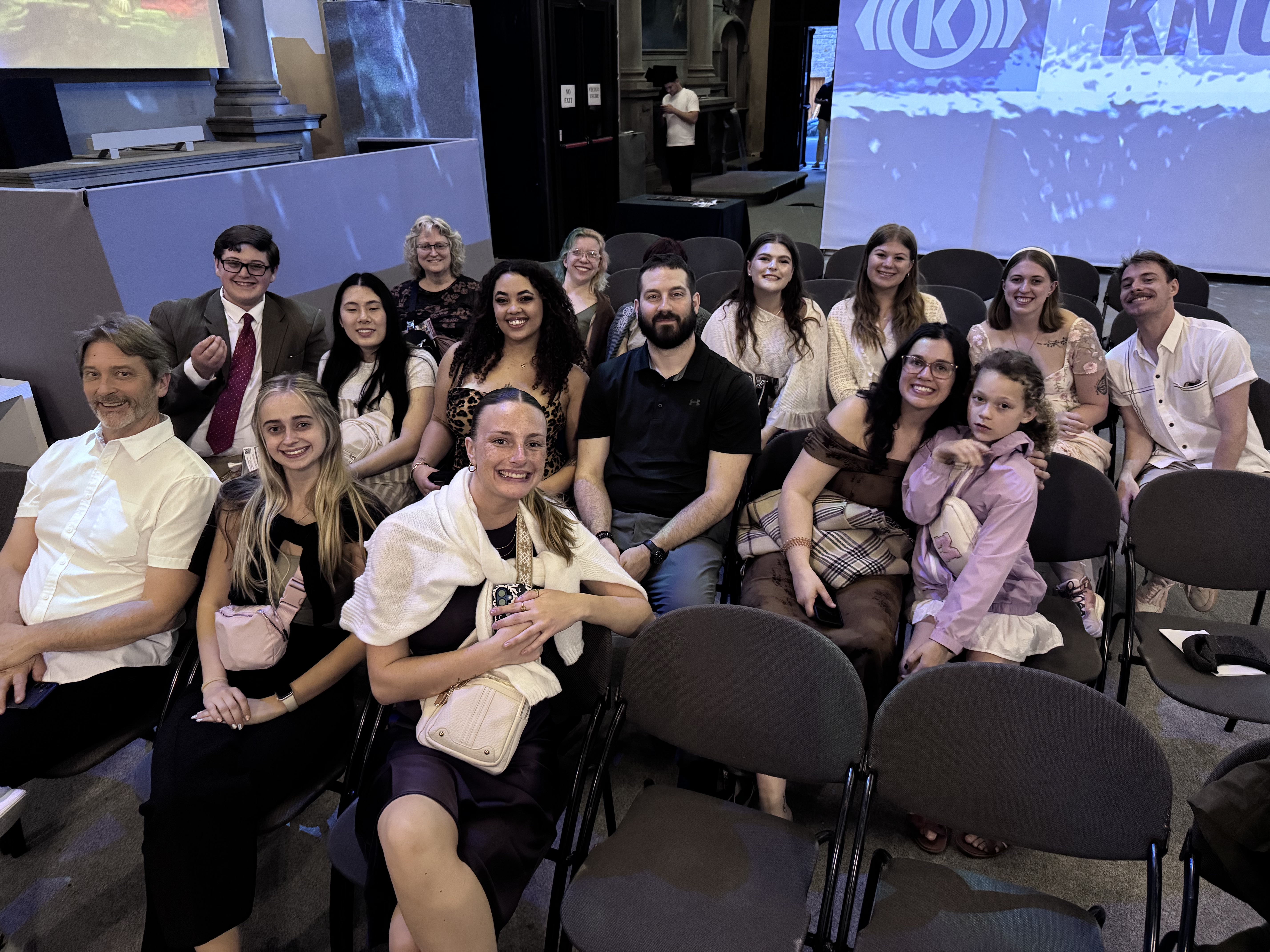
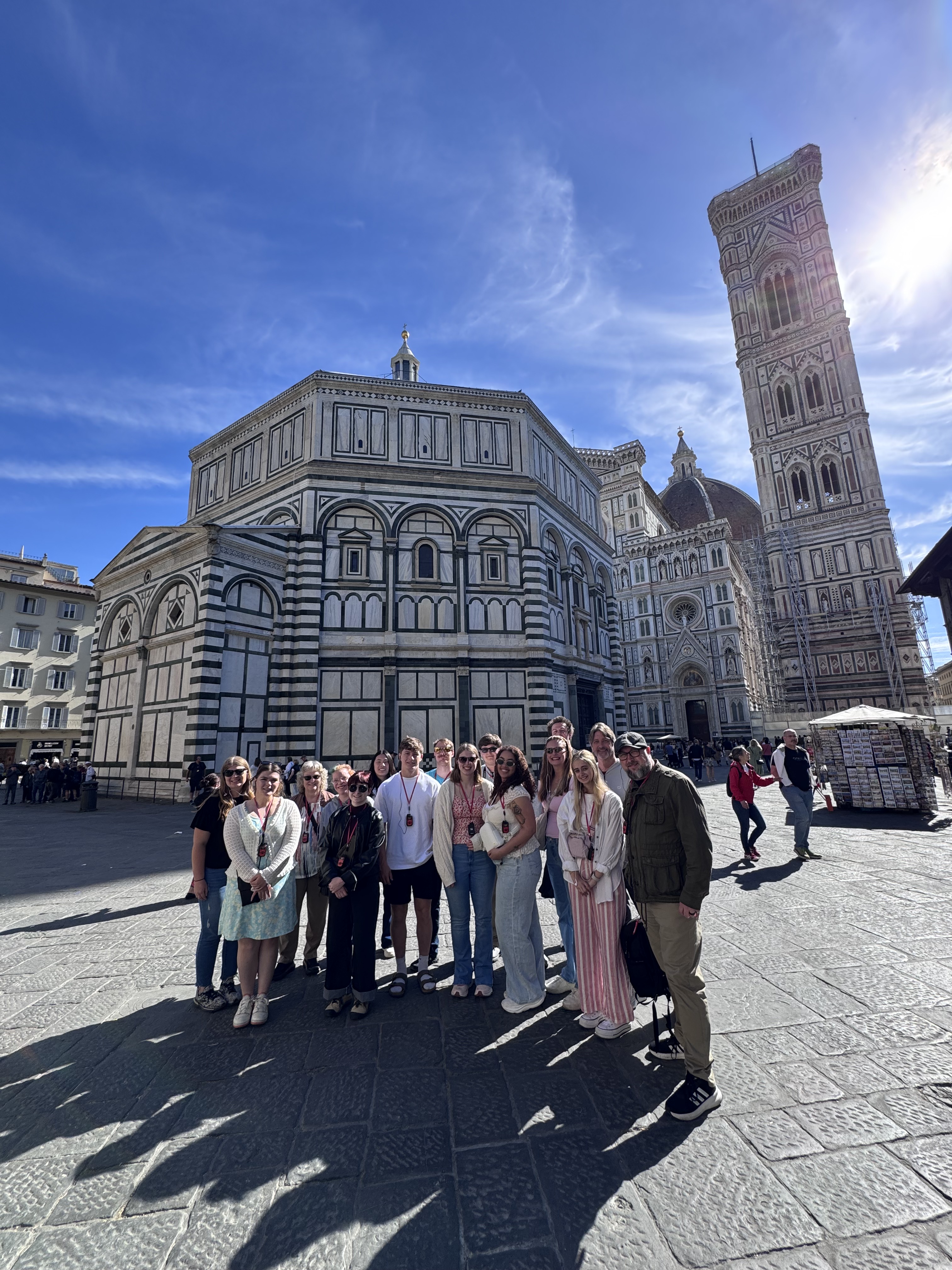
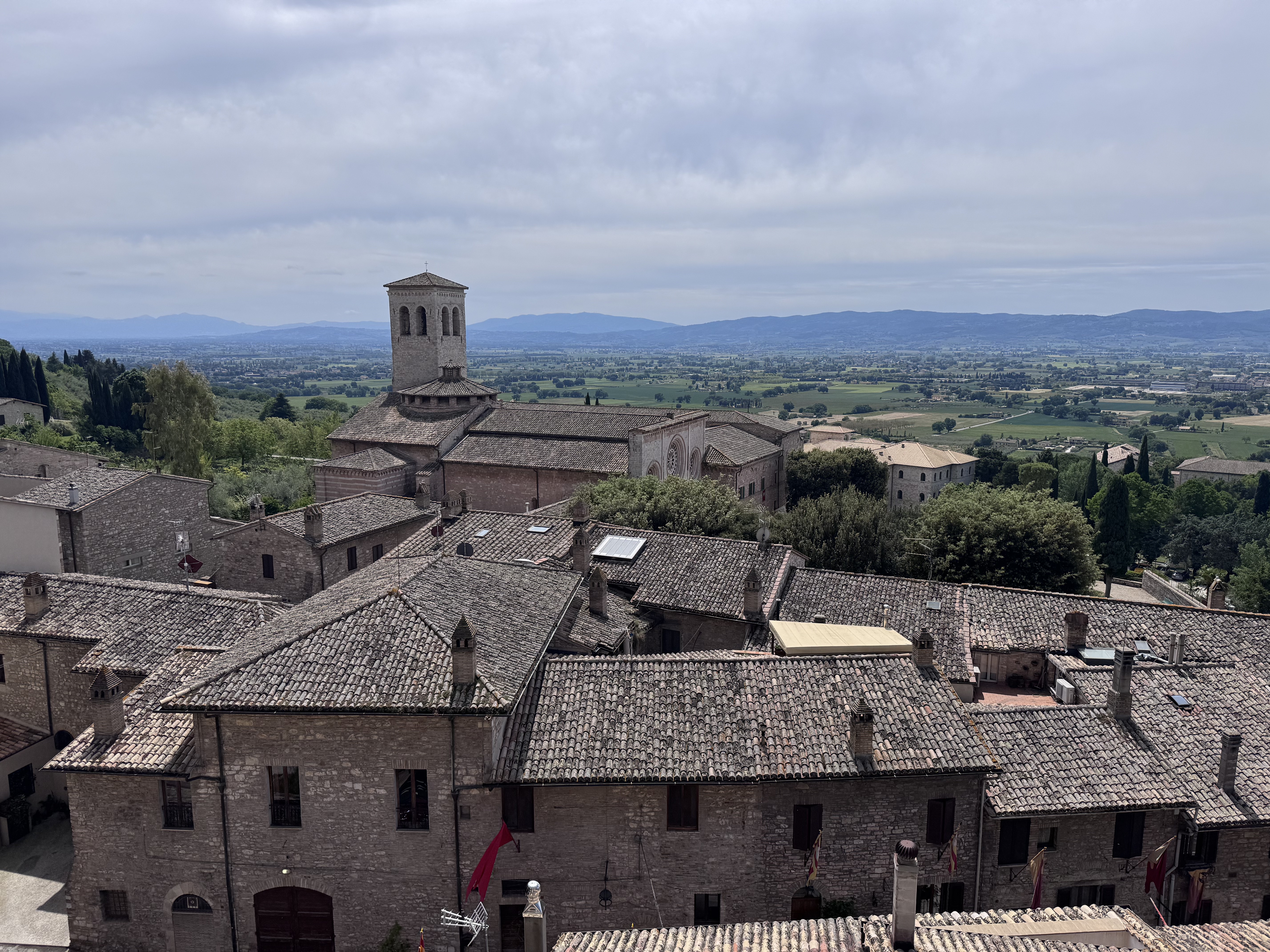
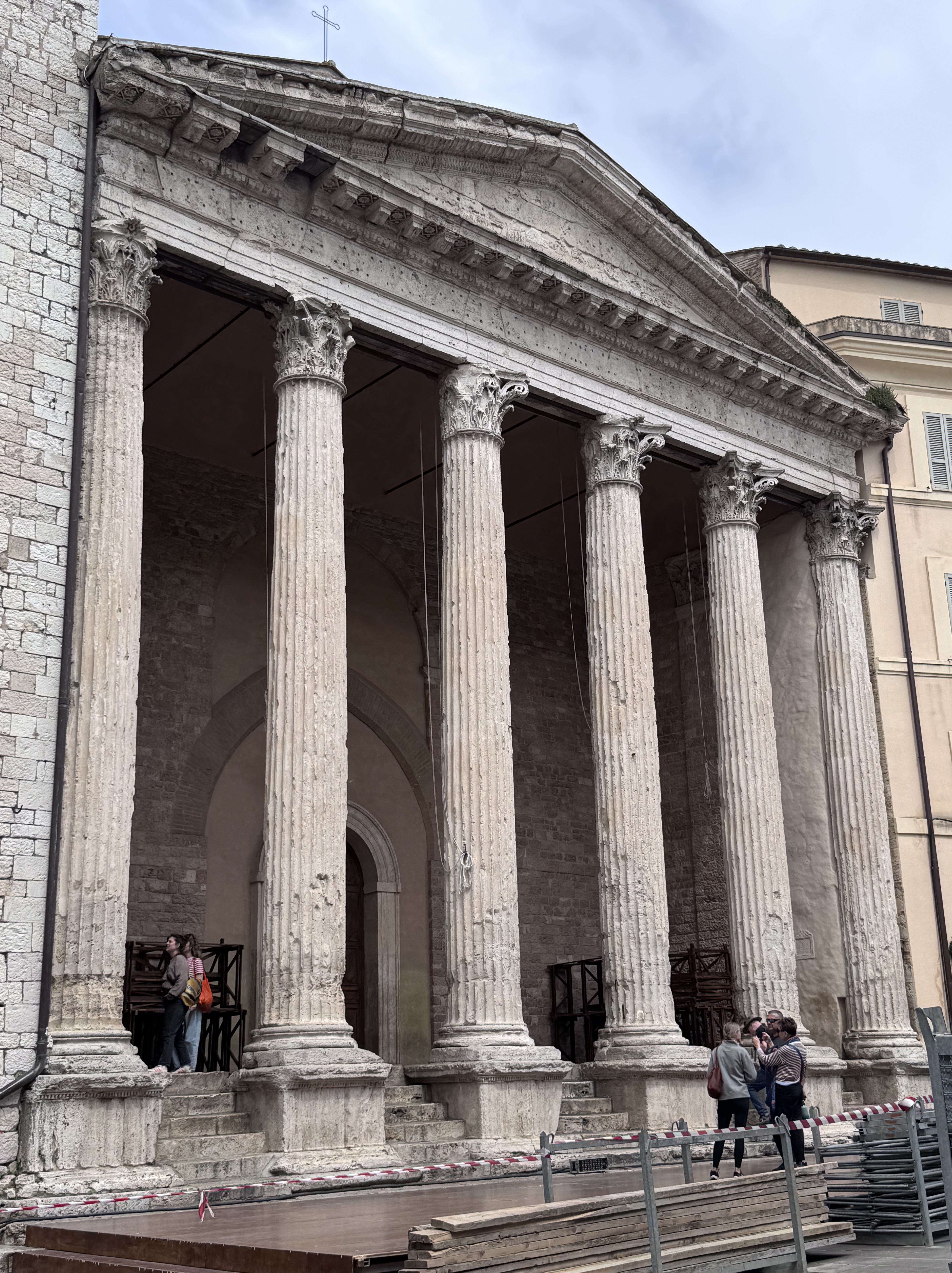
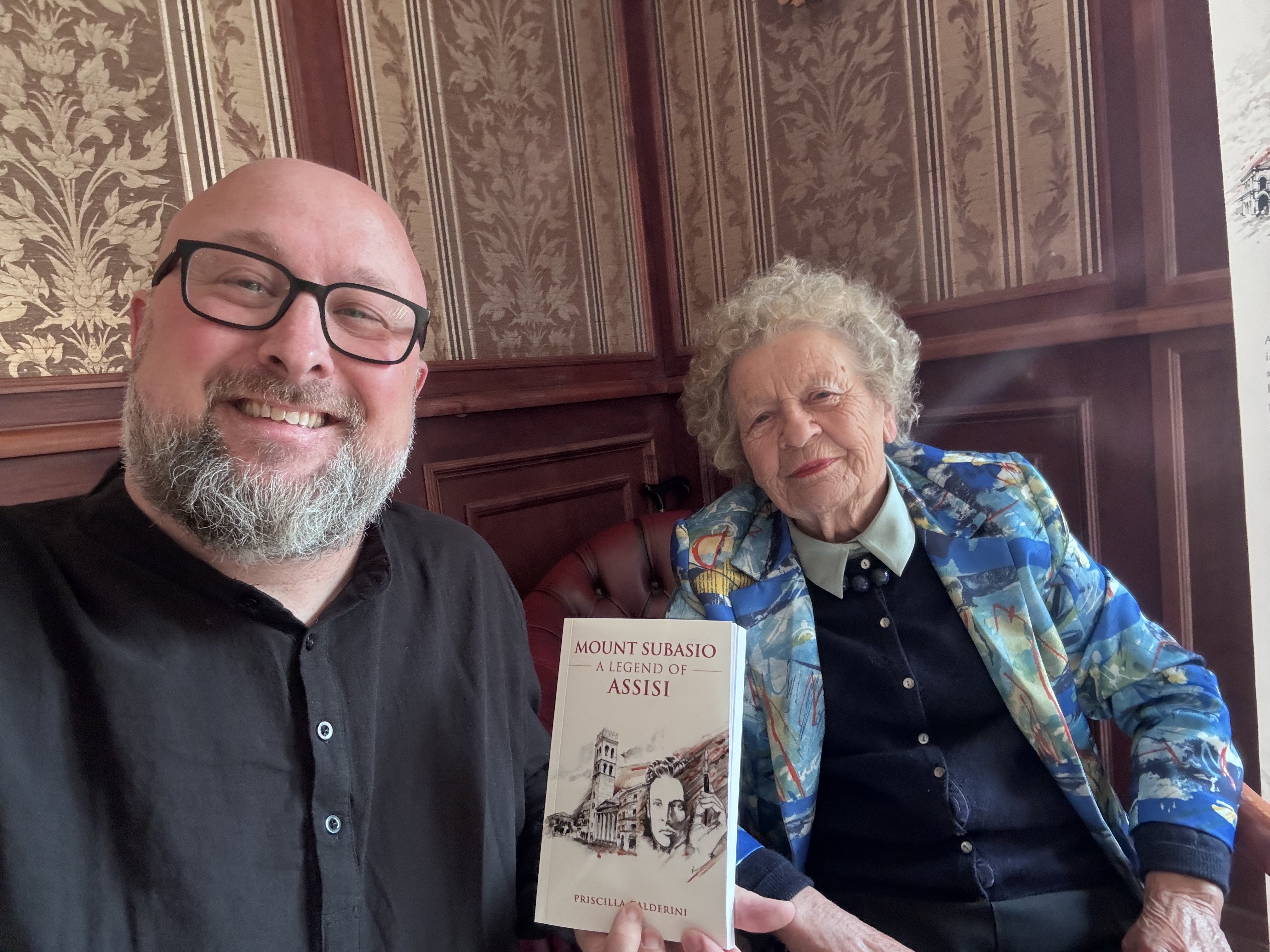
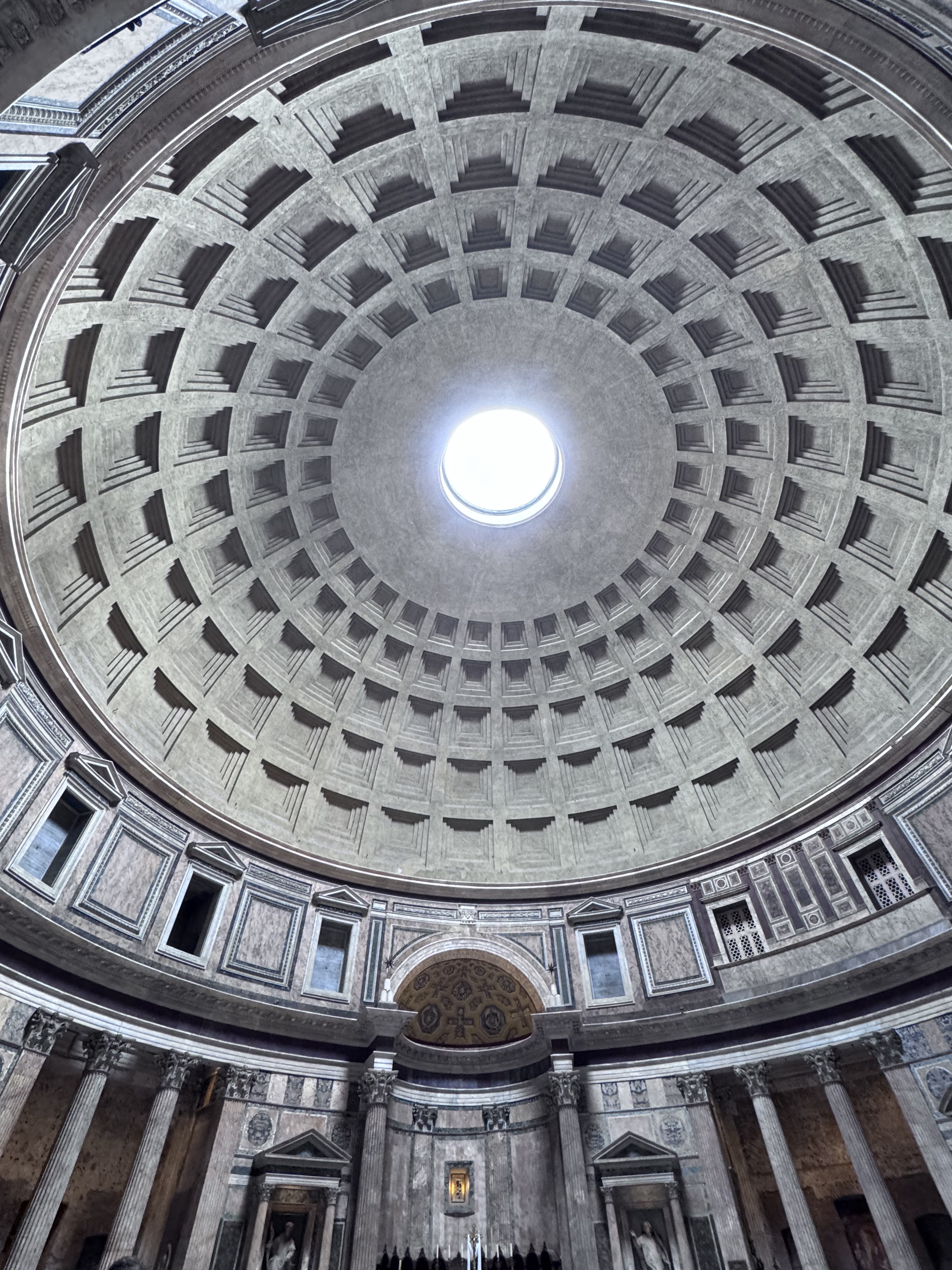
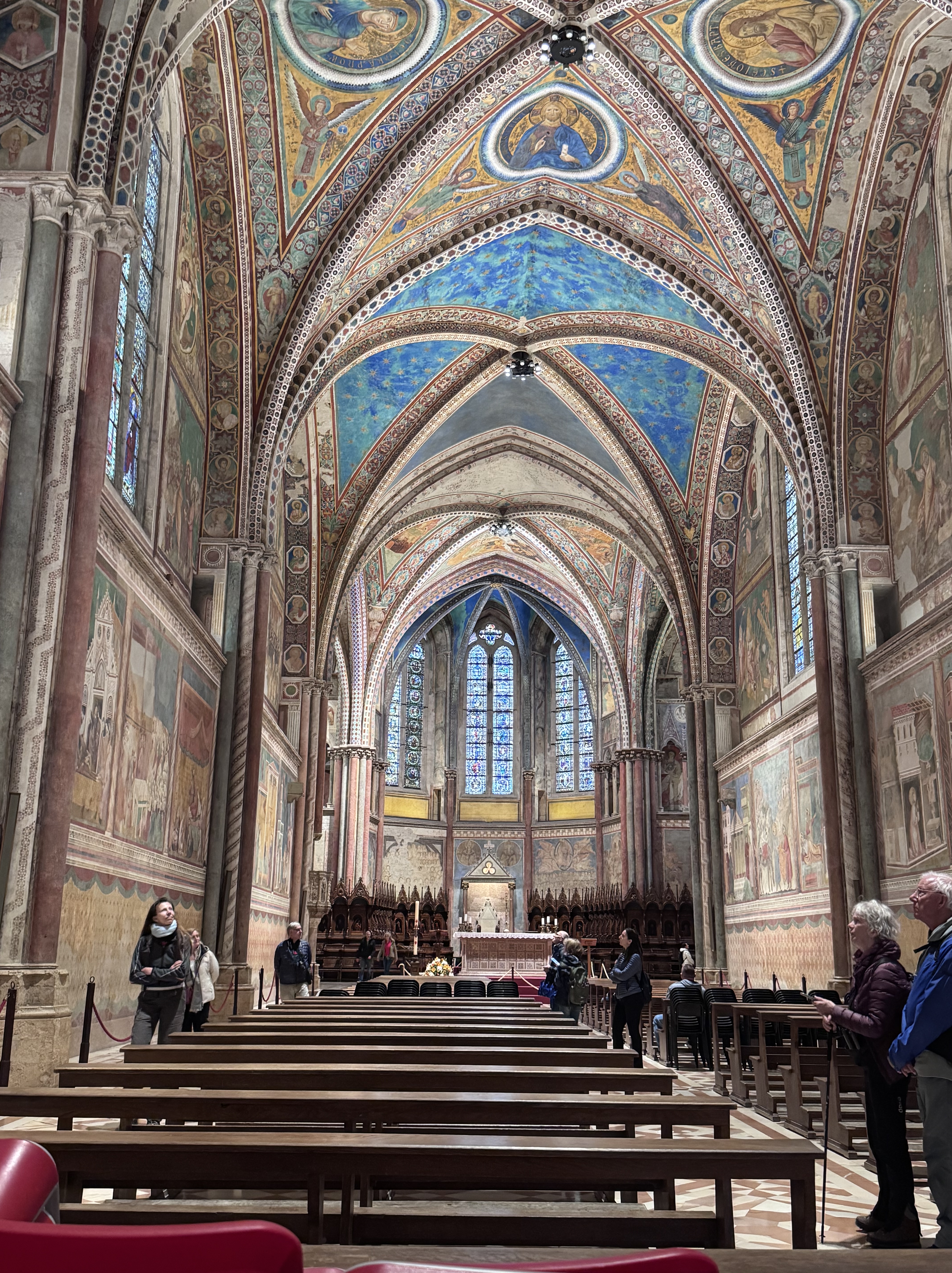
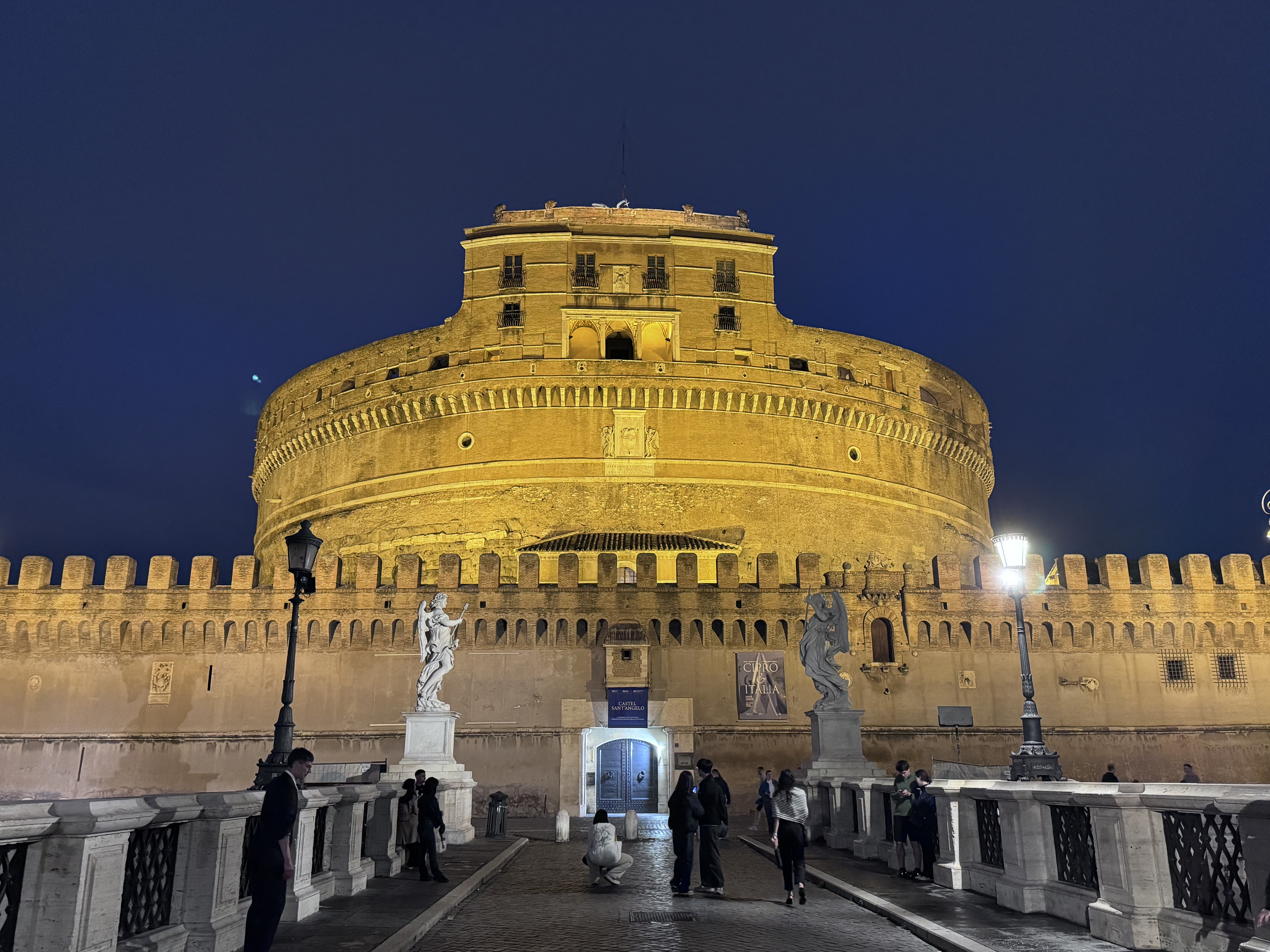
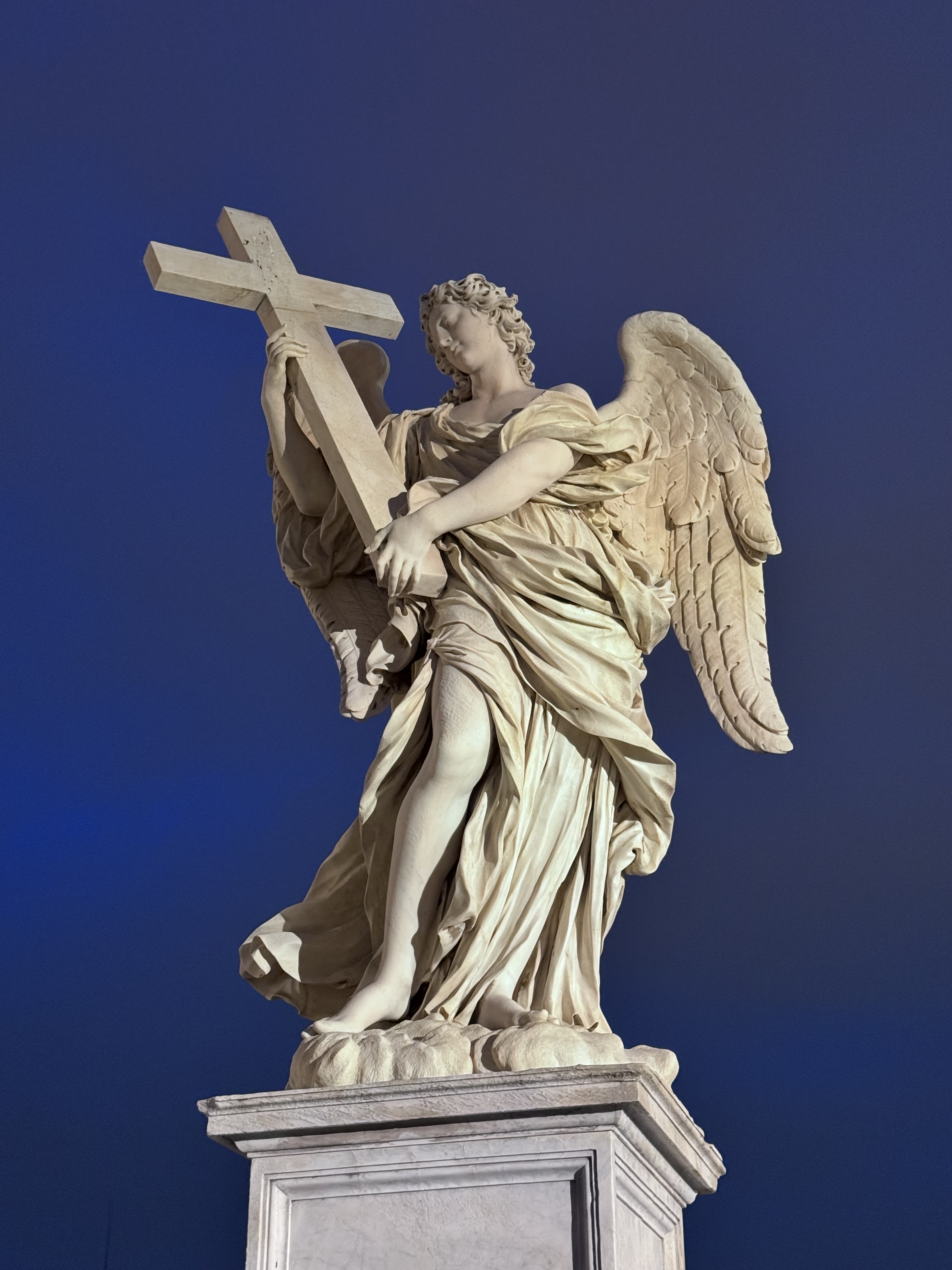
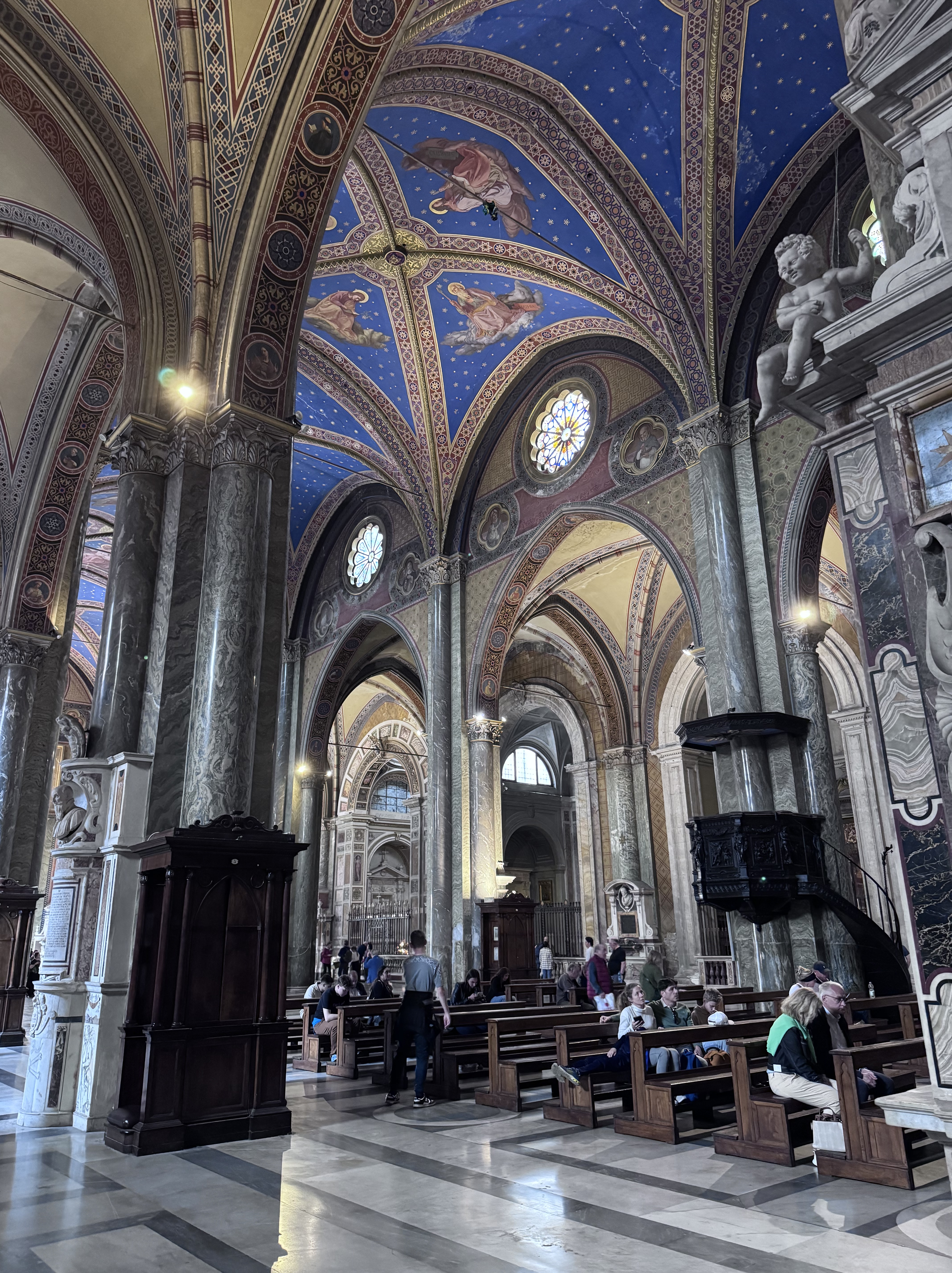
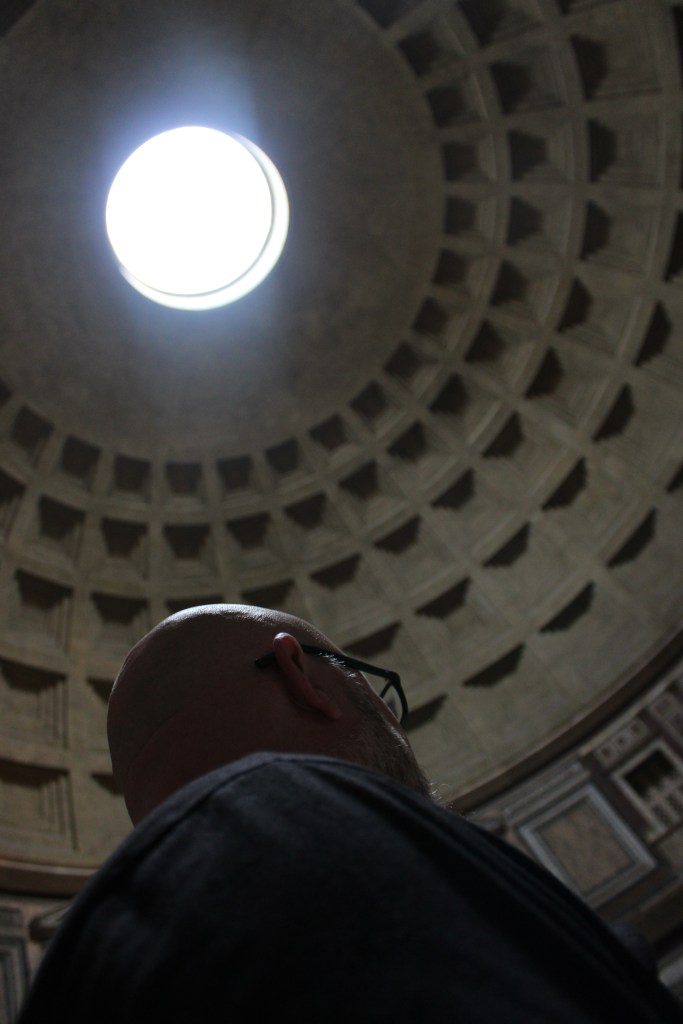
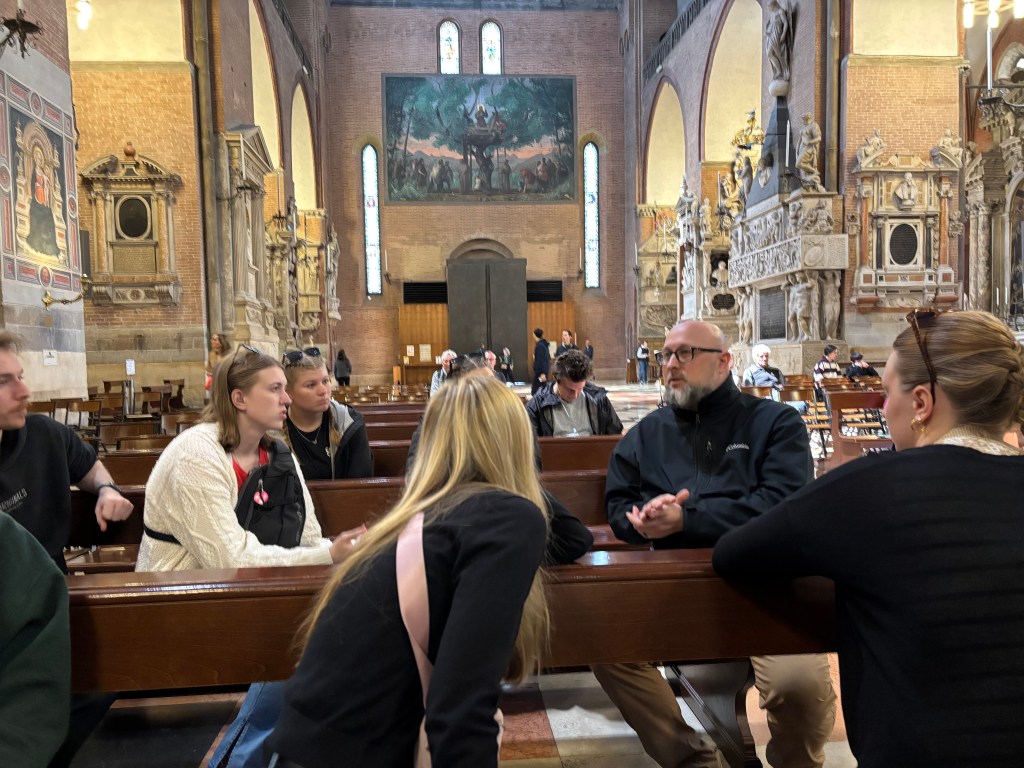
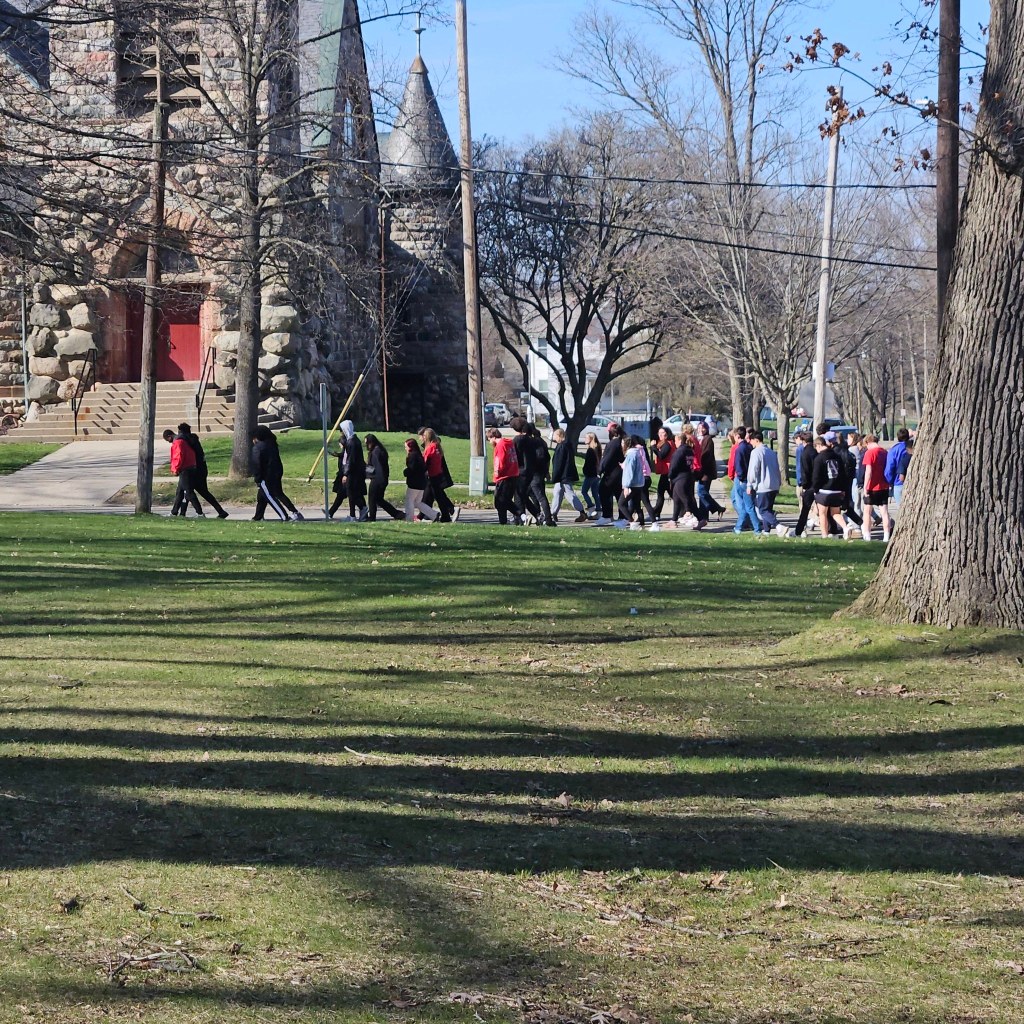
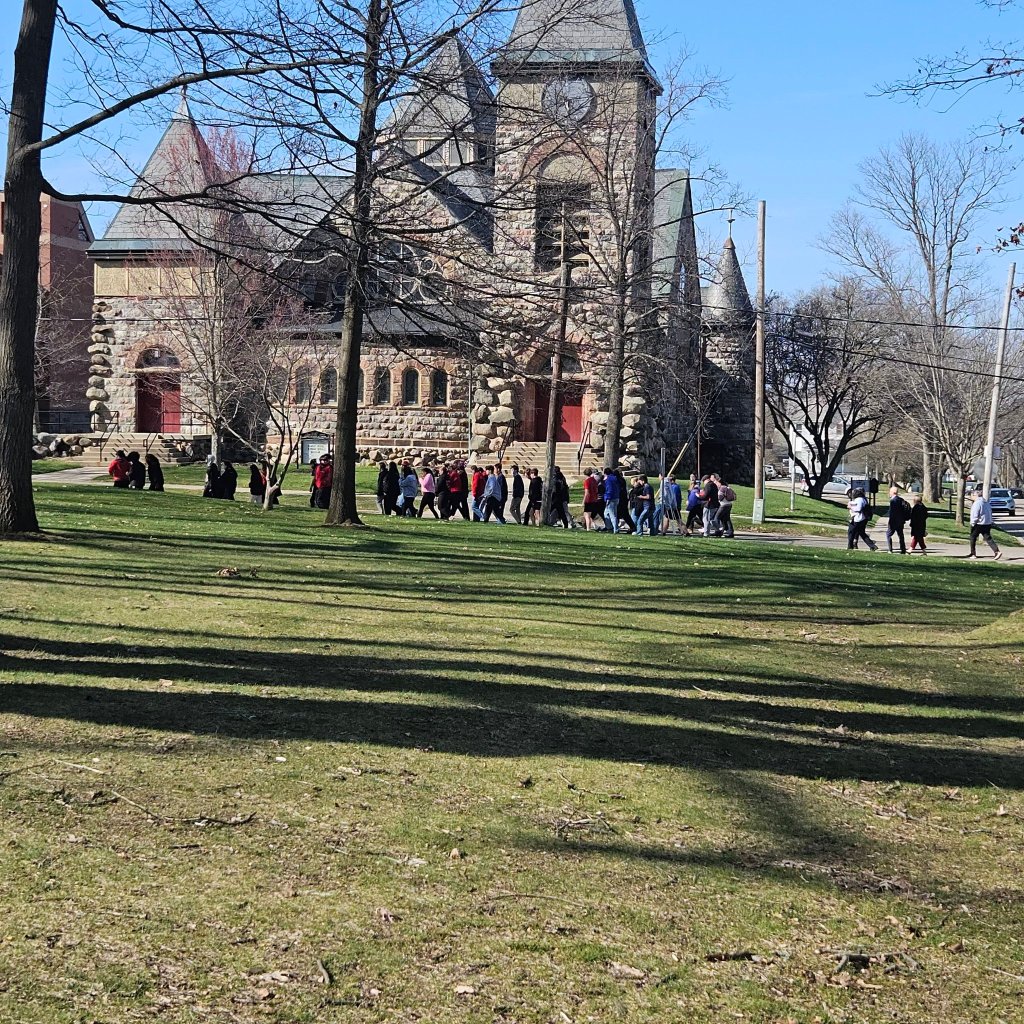
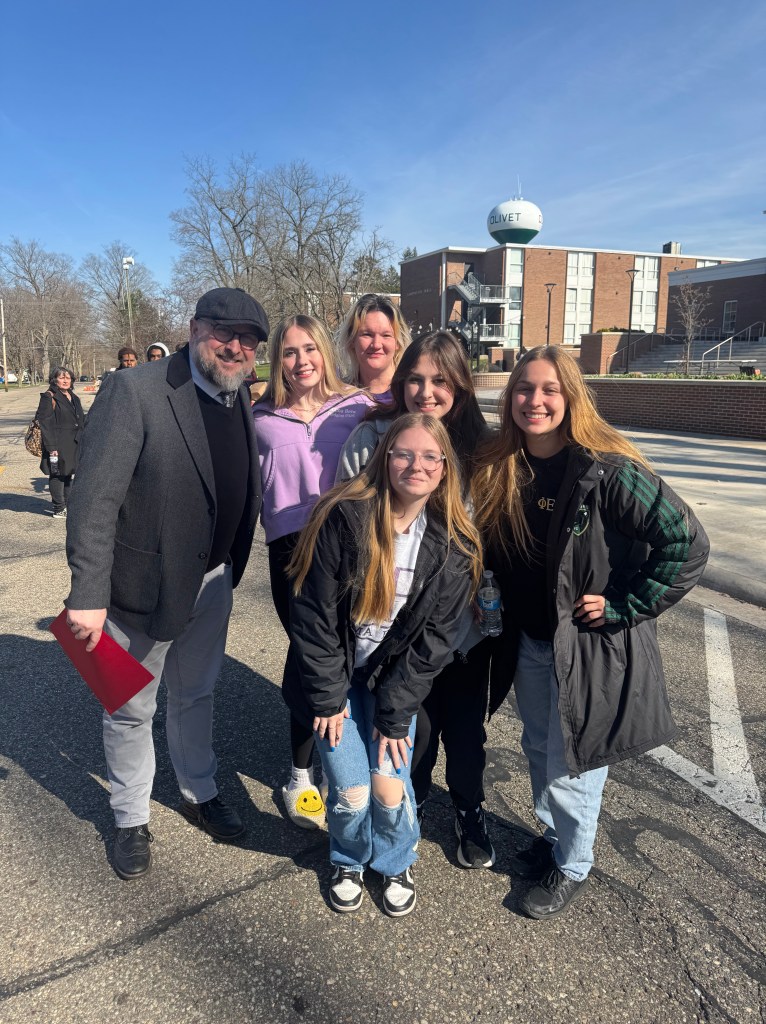
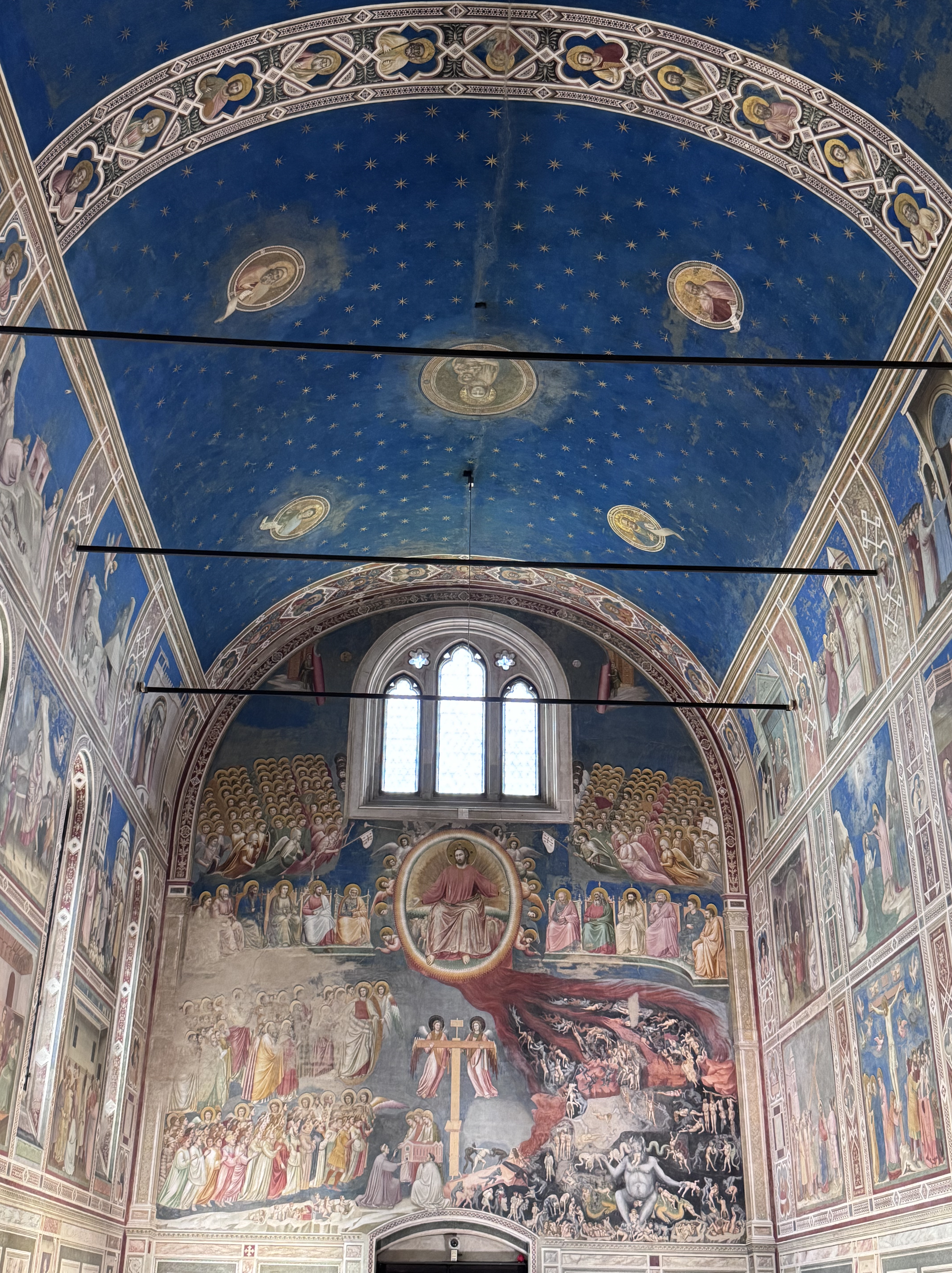
From April 27th to May 10th, I led a group of students and friends on a journey to Italy to study Medieval and Renaissance Christianity. We began our trip in Venice, where we studied Venetian mercantilism, the history of the Doges, as well as the history of this unique water-bound city. We took a day trip to Padua to visit the Scrovegni Chapel as well as the Basilica of San Anthony. From Venice, we traveled to Florence, where we studied Dante Alighieri, Niccolò Machiavelli, Savonarola, and the Medicis. We visited the Santa Maria del Fiori, the Franciscan church of Santa Croce, the Uffizi Galleries, as well as the Galleria dell ’Accademia. By chance, while standing in line to visit the Museum of San Marco, I ran into the American travel guru, Rick Steves, with whom I had a wonderful conversation. He was there to update his Florence guidebook; I was there to see the martyr Savonarola. We had a wonderful concert of Pachelbel, Bach, Mozart, and Vivaldi. Leaving Tuscany, we traveled to Assisi, to study the life of St. Francis and St. Clare. This year has been declared the year of St. Francis by Pope Leo XIV, since it was 800 years ago that St. Francis died. Leaving Umbria, we traveled to Rome. While the students were all exhausted, we continued our studies, visiting the Colosseum, the Arch of Constantine, the Roman Forum, the Capitoline Museum, The Vatican Museum and St. Peter’s Basilica. We also spent some time at the catacombs of San Callixtus. In Rome, we saw our second concert, a mix of opera arias at an Episcopal Church. We had wonderful guides, wonderful dinners, and wonderful conversations. Overall, we had an amazing trip, which I hope the students learned a lot. Thank you, Witte Travel and Tours, for constructing this successful travel class.

The Polycrisis of our Age: A Discourse in the Philippines

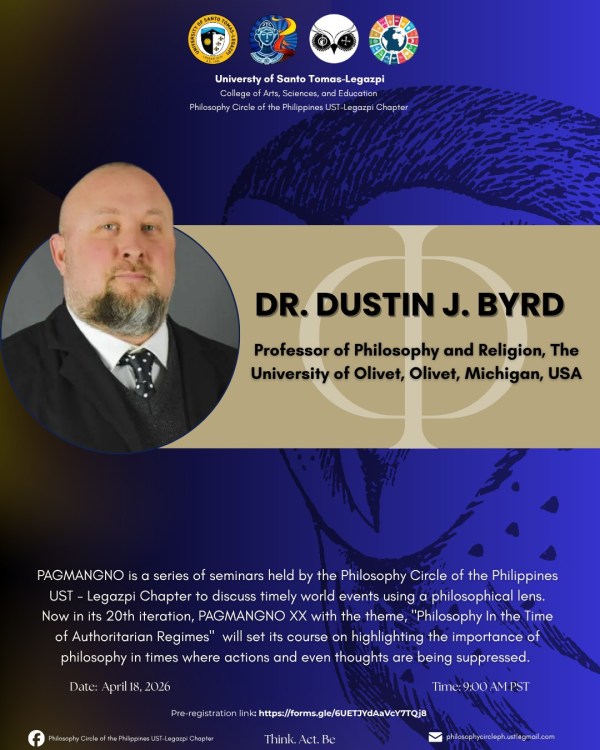
On April 18, 2026, I had the wonderful opportunity to join the PAGMANGNO series of seminars held by the Philosophy Circle of the Philippines – Legazpi Chapter. In its 20th iteration, PAGMANGNO XX adopted the theme, “Philosophy in the Time of Authoritarian Regimes,” highlighting the importance of philosophy in times where actions and thoughts are being suppressed. I would like to thank my dear brother Hadje Cresencio Sadje who initiated the invitation, as well as the amazing students who had excellent questions.

African American Music in the Struggle for Existence in the United States

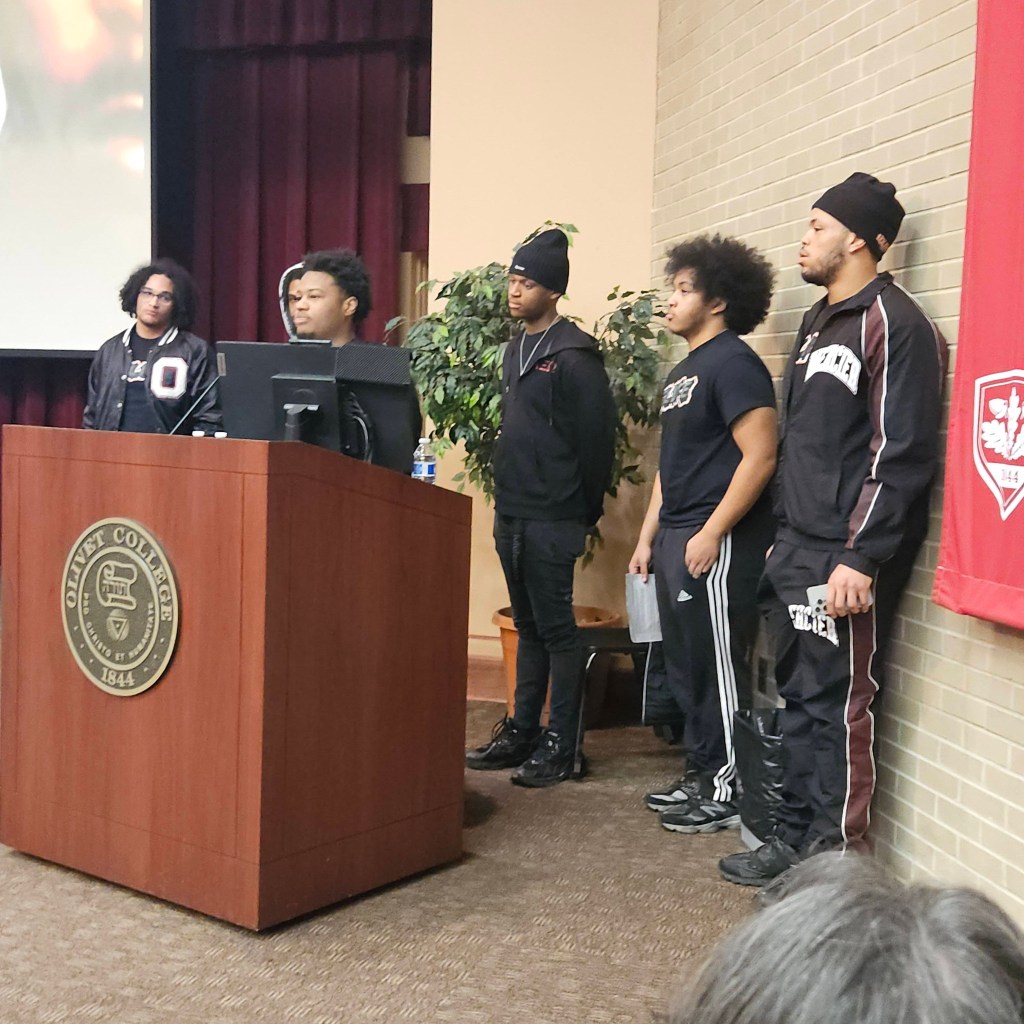
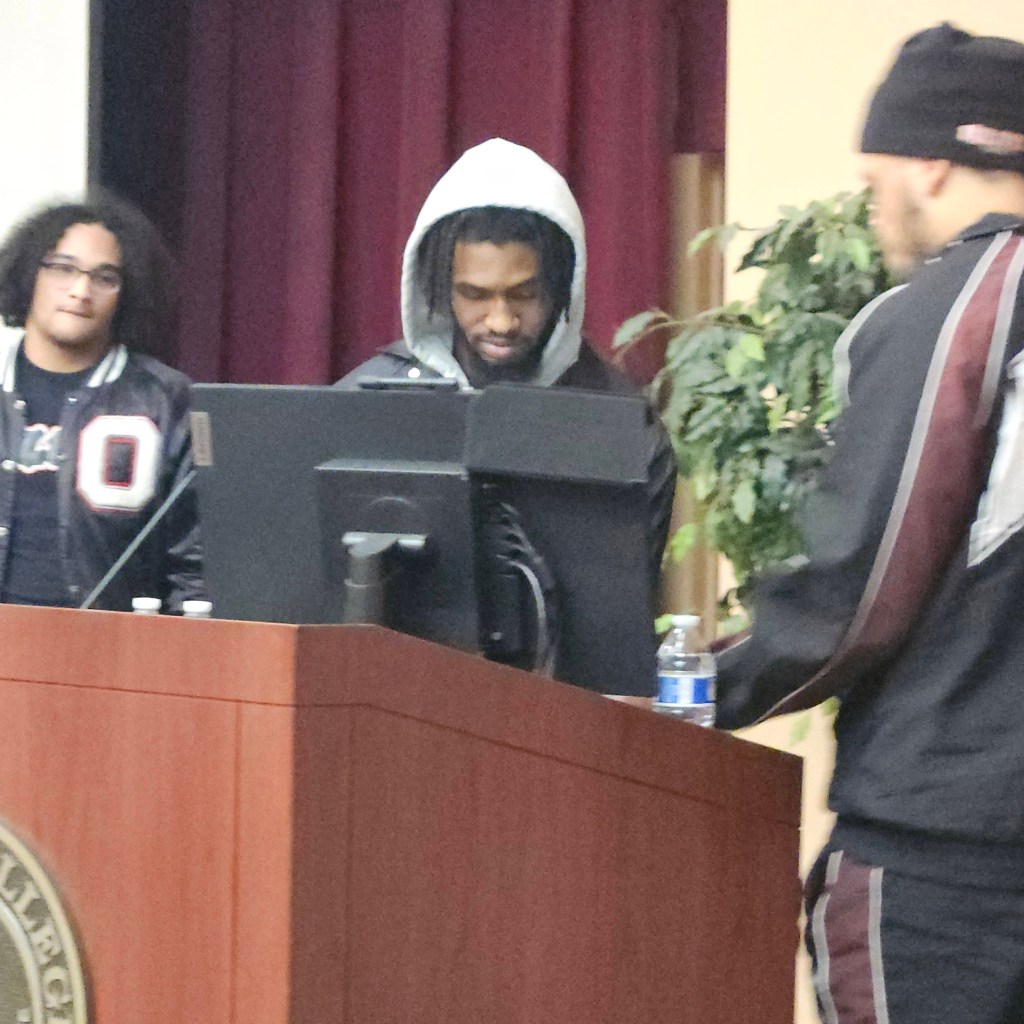
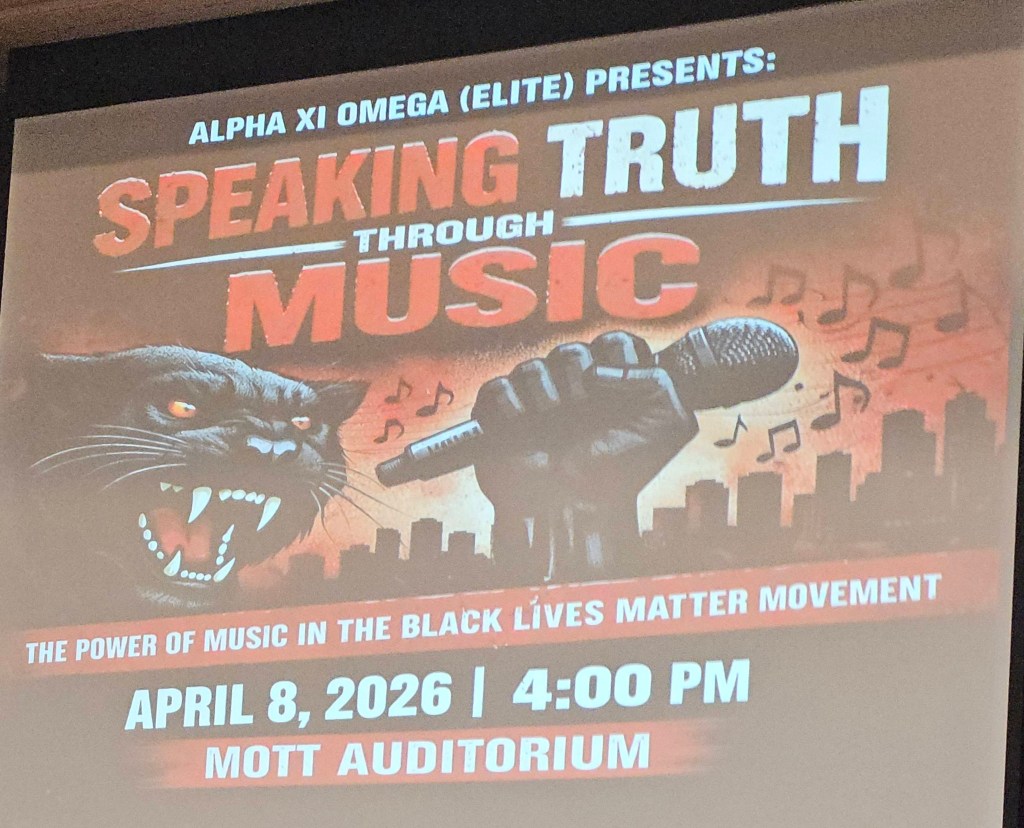
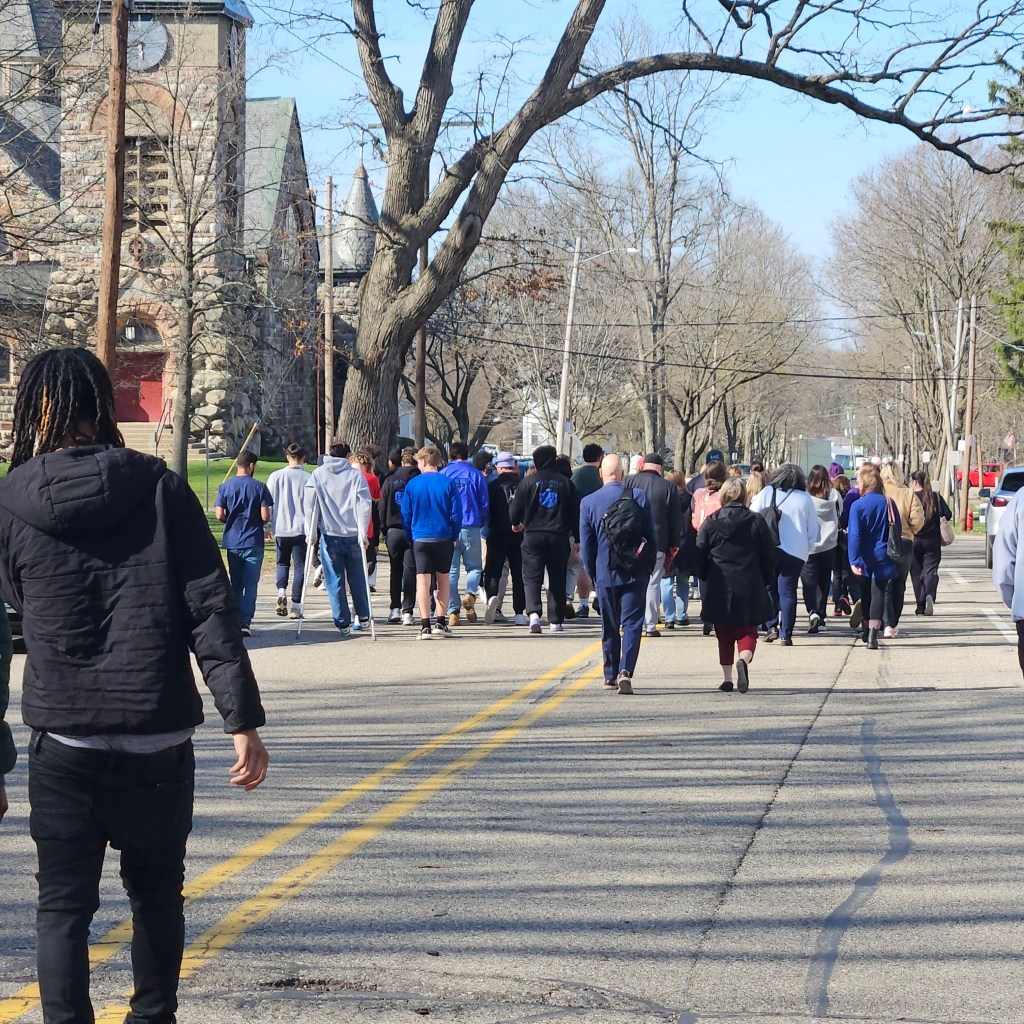
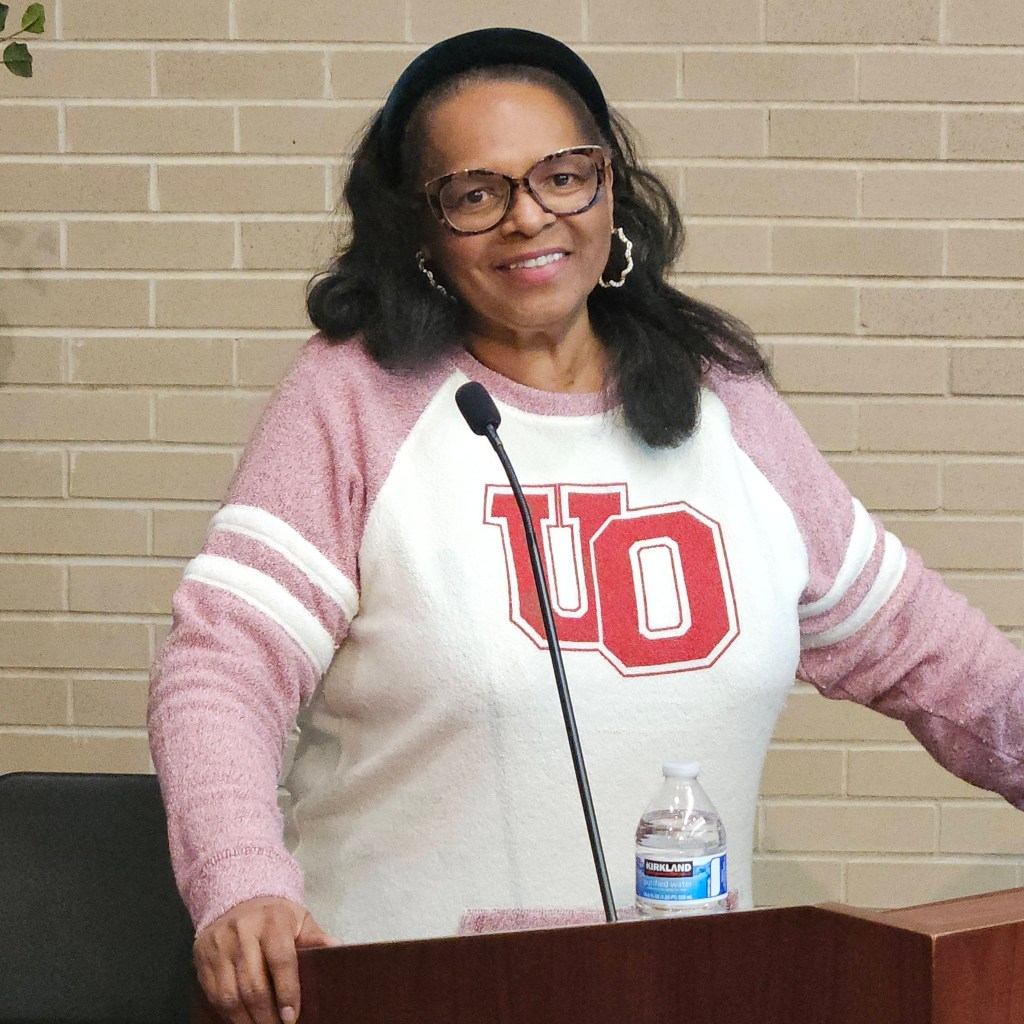
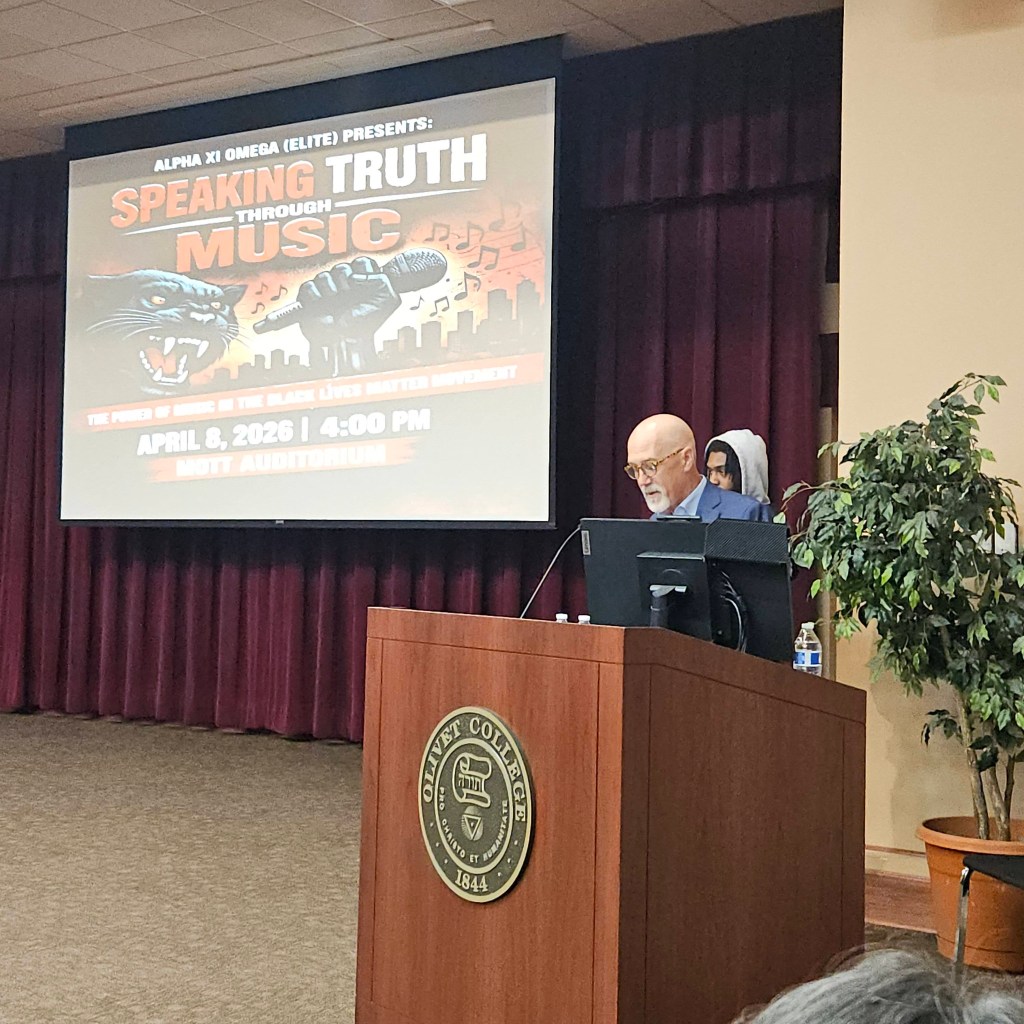
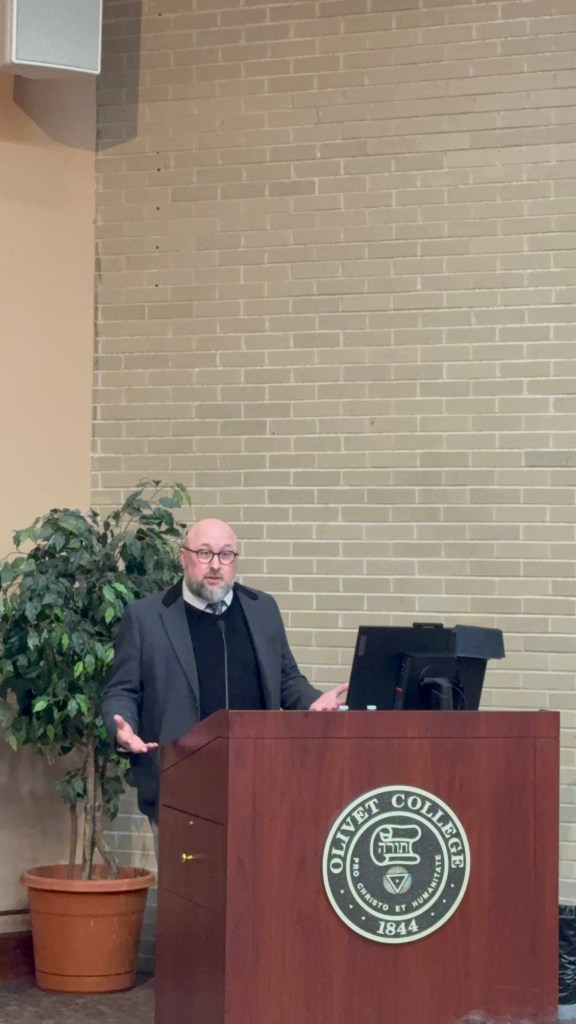
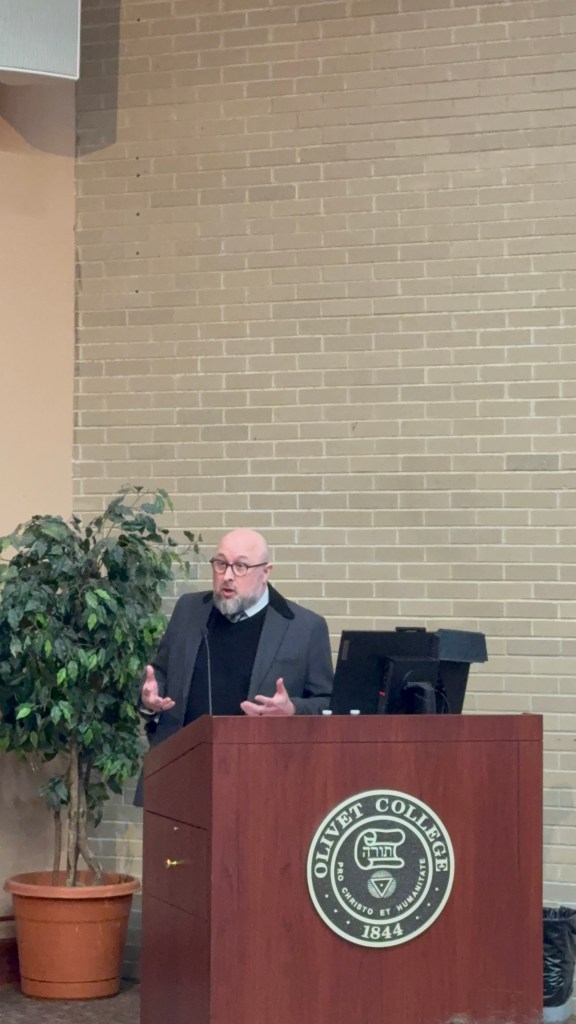
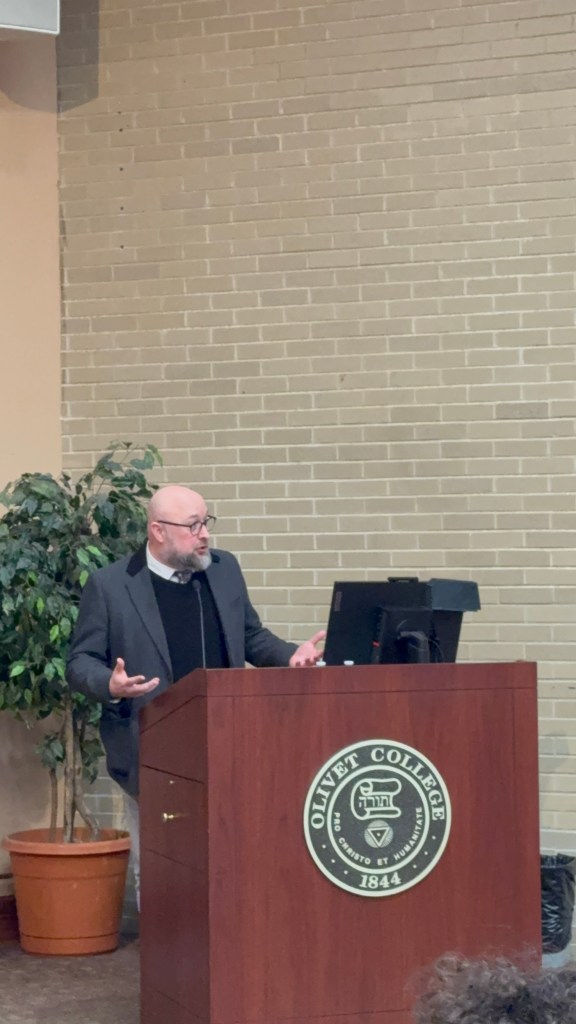
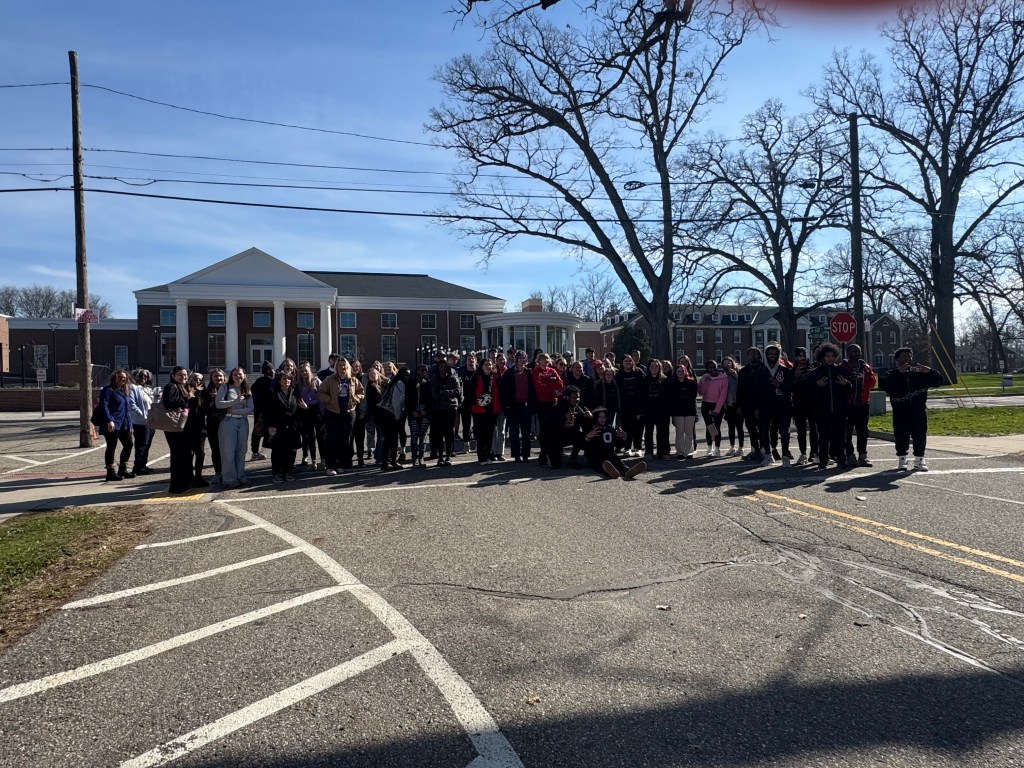
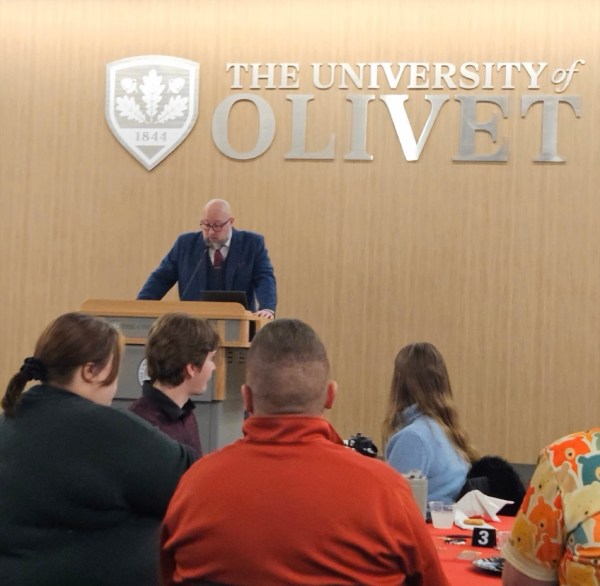
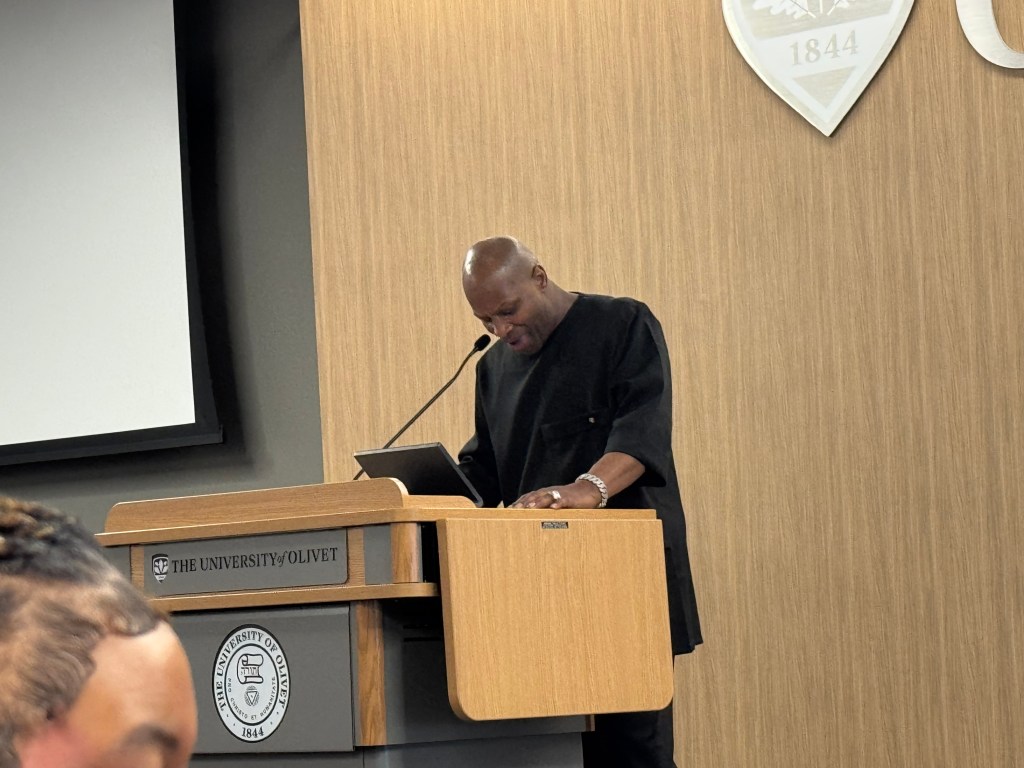
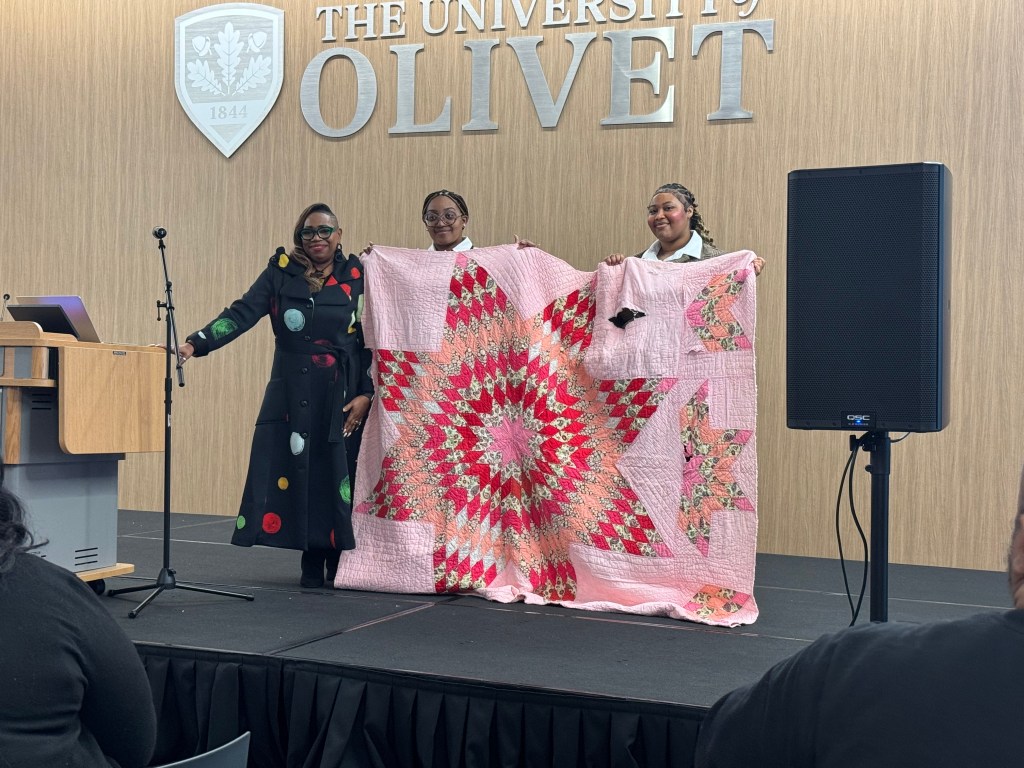
On April 8th, 2026, I gave a presentation on the centrality of music within the African American struggle within the United States. Tracing the “tenacious recalcitrance” of African Americans back to the spirit of West Africa, I argued that such recalcitrance animated the music of enslaved African Americans in the antebellum South to the Jim Crow period, through the Civil Rights struggle unto the Black Power movement, a spirit which was once again reborn in the music of the 1990s. I pressed the students once again to rediscover that “tenacious recalcitrance” in the music they listen to and that they perform, and to allow such meaningful music to be the soundtrack of their lifeworld – pushing them to achieve greater things in this life beyond the trappings of comfort and conspicuous consumption. The invitation to speak came from the men of Alpha XI Omega “Elite,” an amazing fraternity on campus, advised by Prof. Laura Barlond-Maas. I was joined on stage by UO President Steven Corey, Dr. Linda Logan, and the men of Elite, who discussed numerous Black musicians who contributed to the struggle for equality, dignity, and freedom. The pictures below were taken by the student Sydney Lynch (Sigma Beta) and Dr. Linda Logan.

Celebrating MLK; Talking about Justice

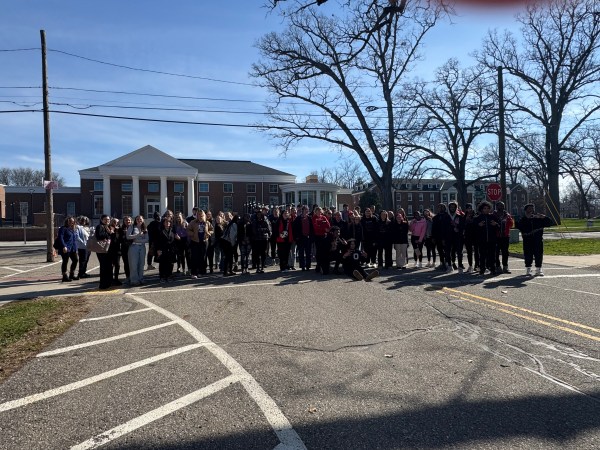
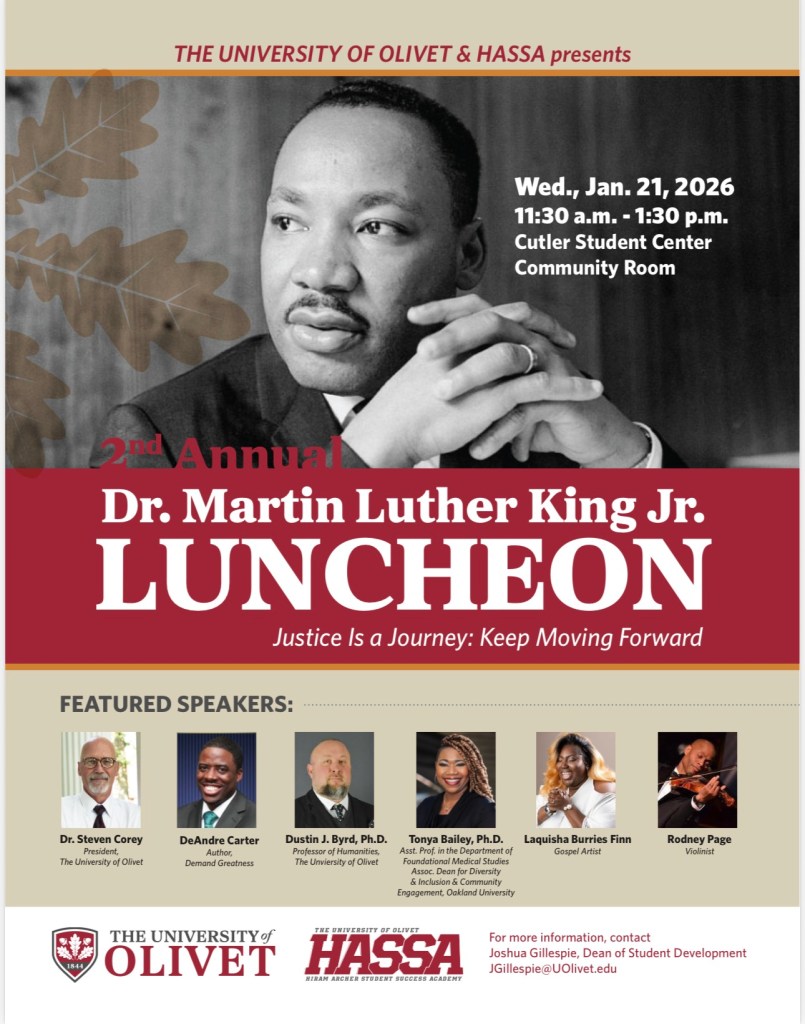
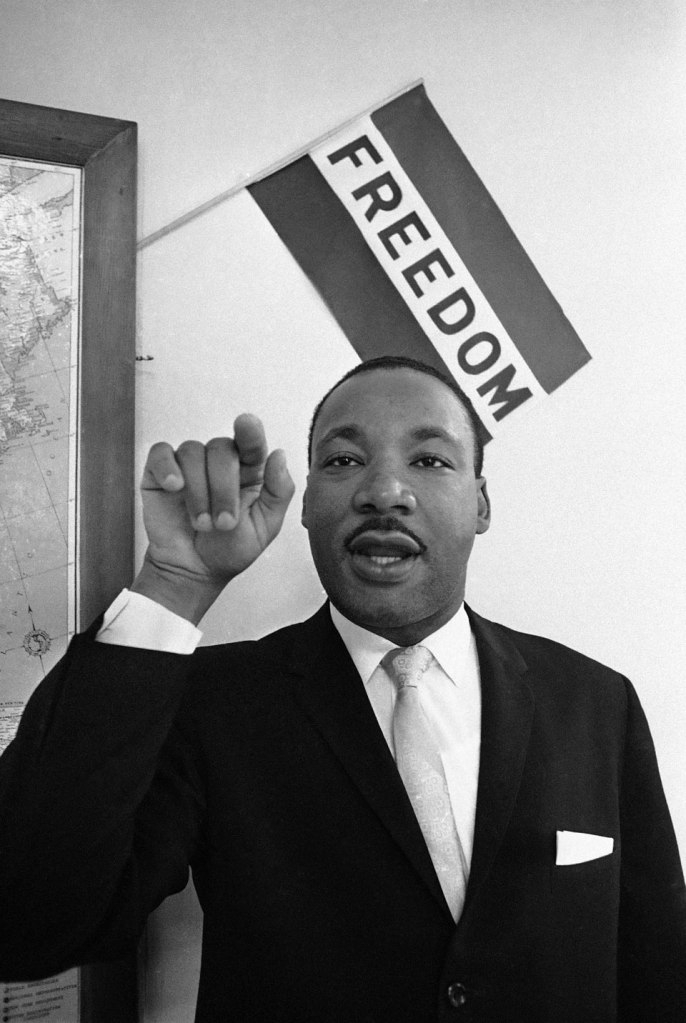
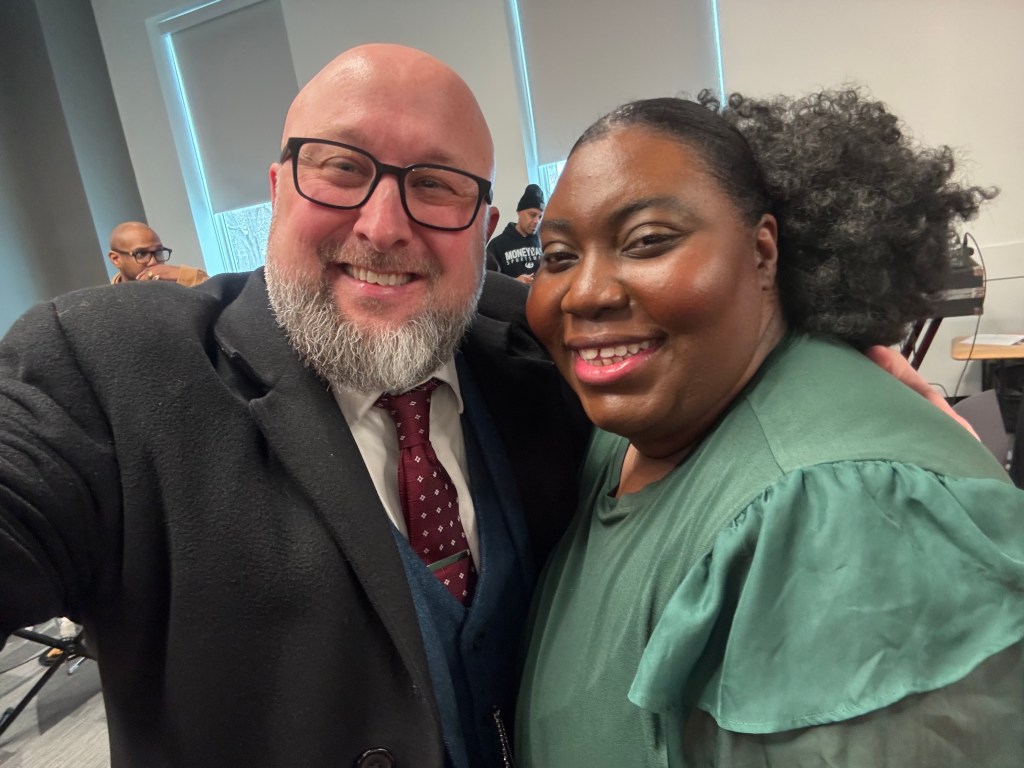
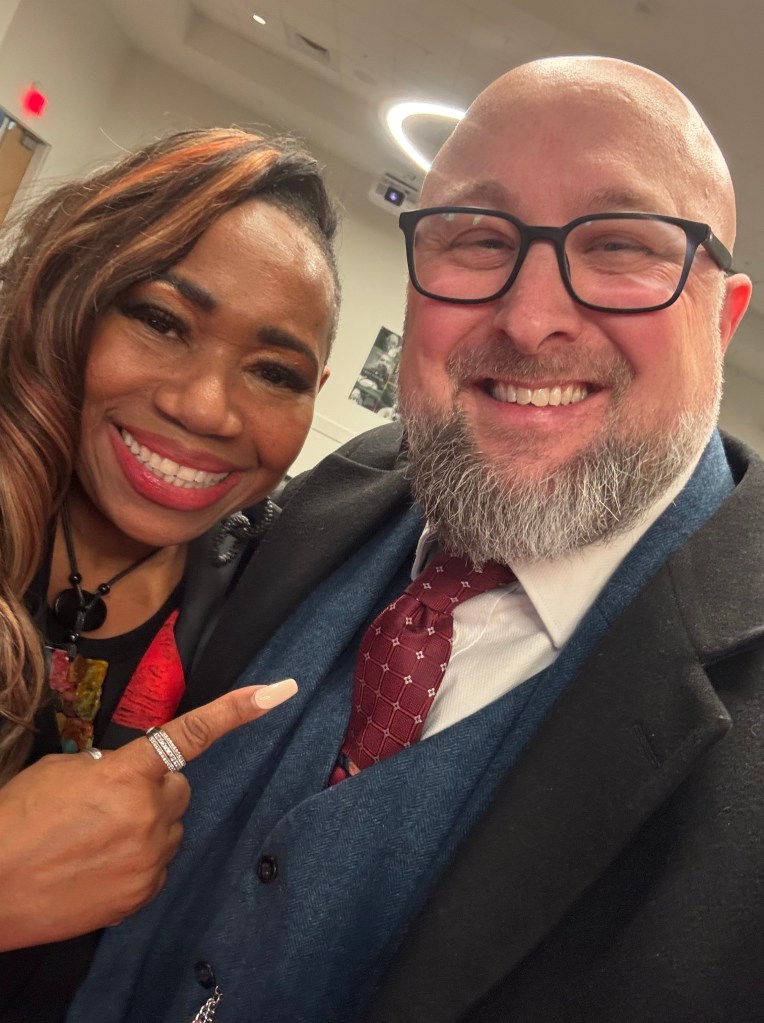
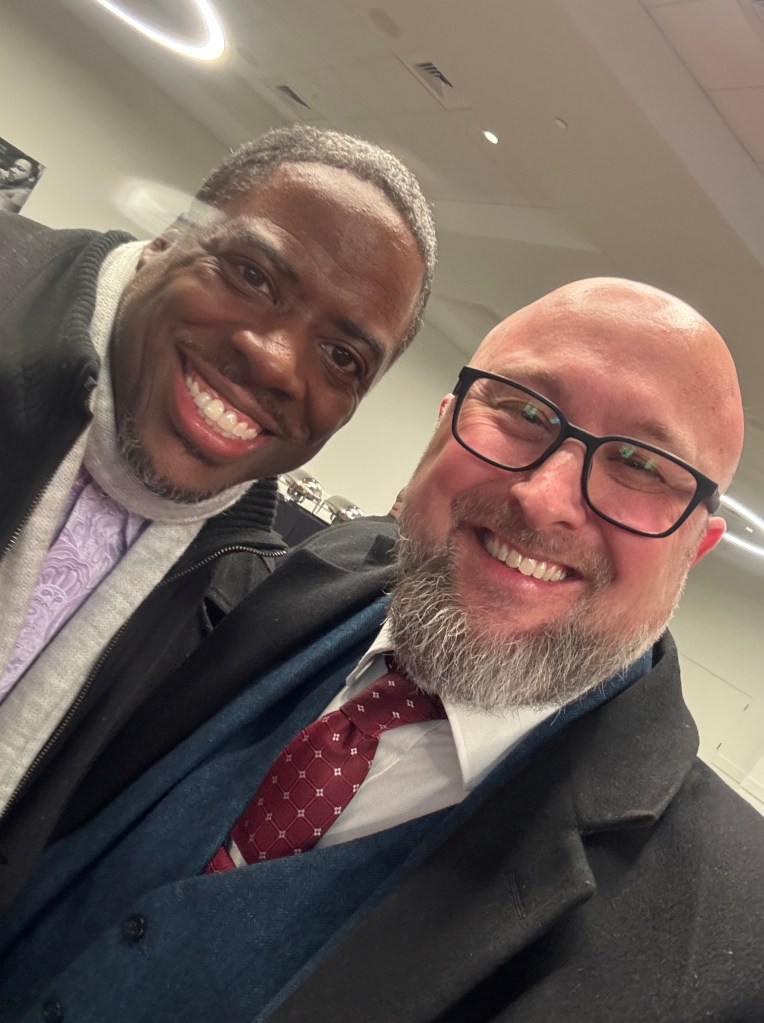
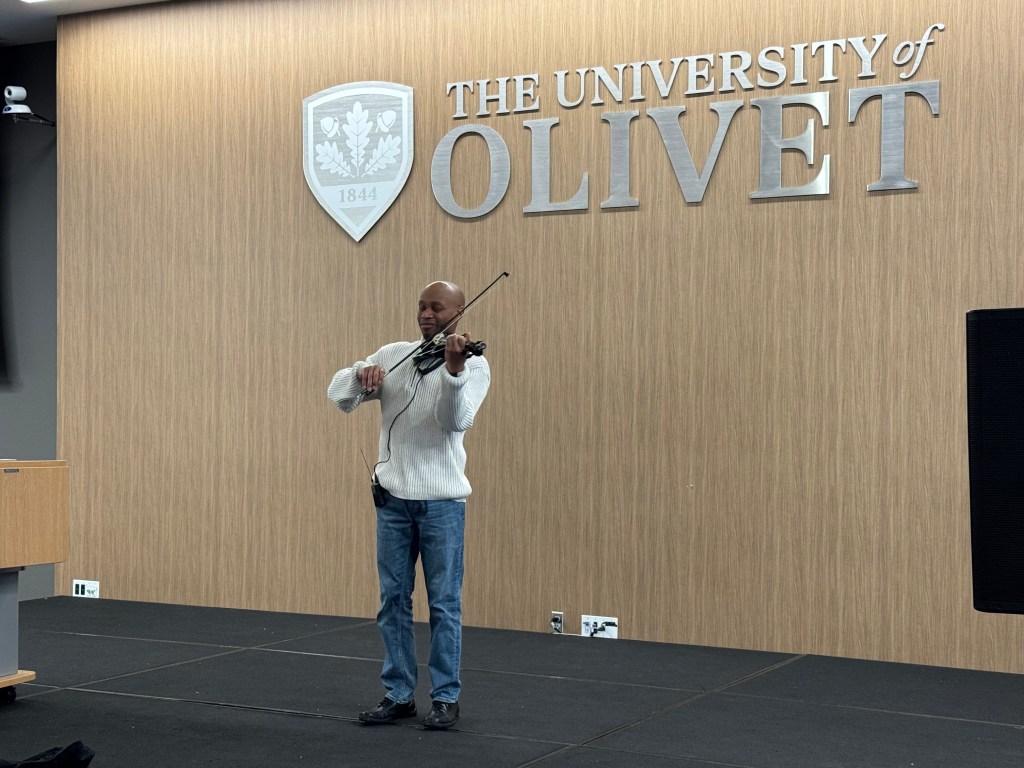
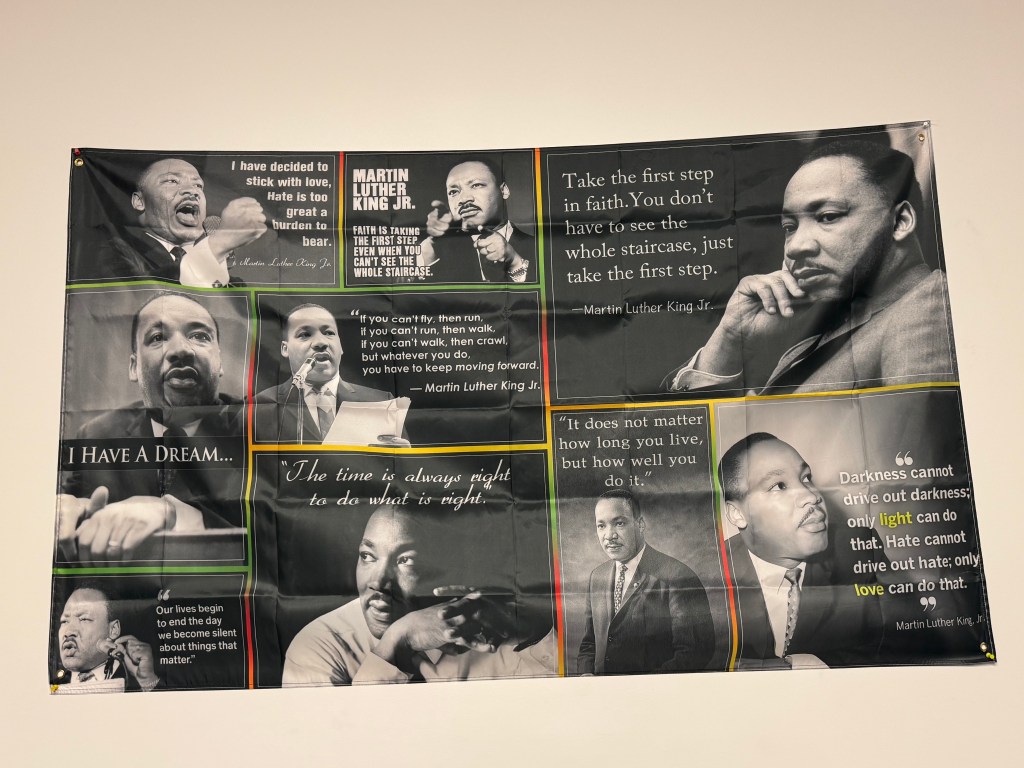
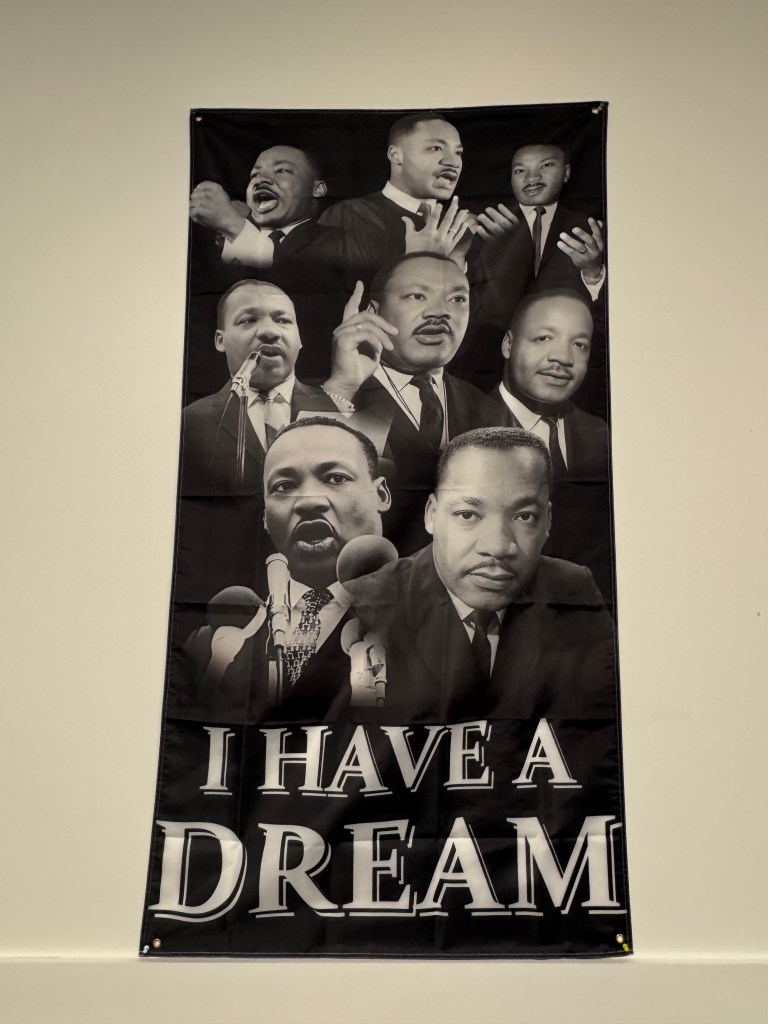
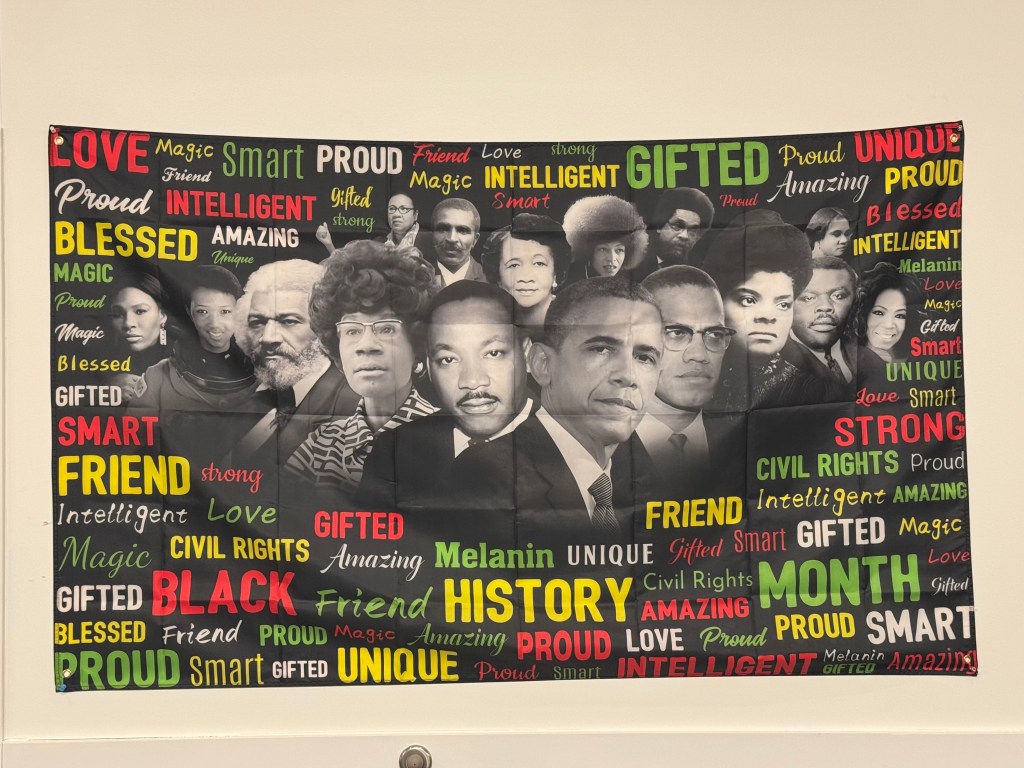
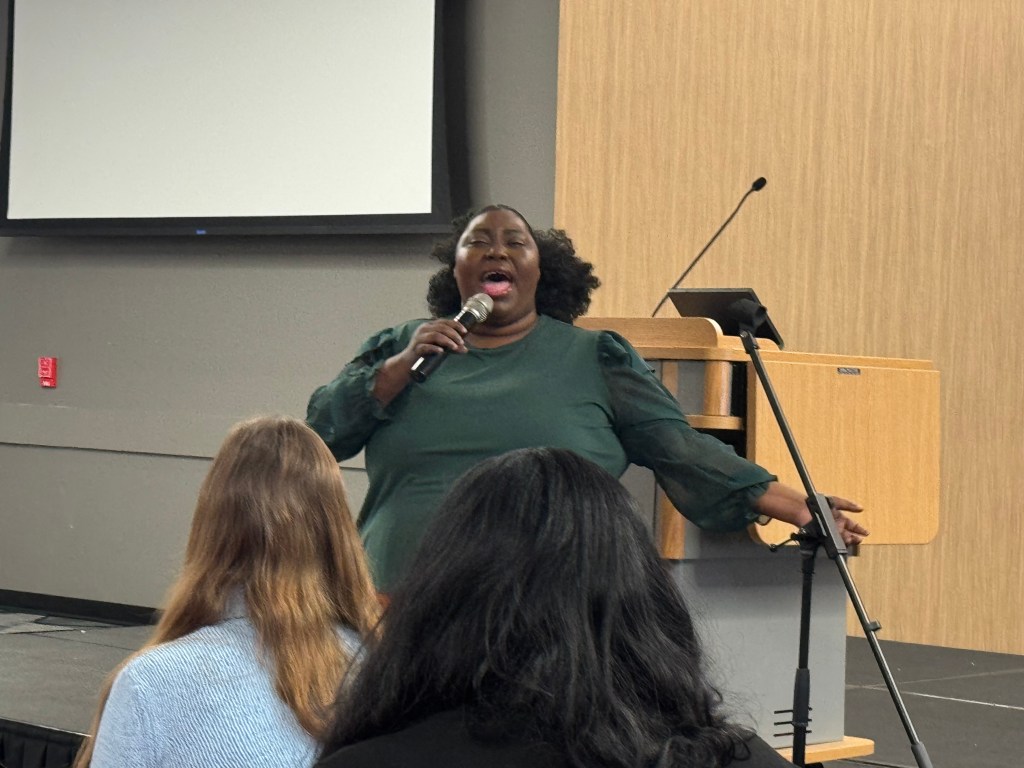
On Wednesday, January 21st, I had the distinct pleasure to be a speaker at the 2nd annual Symposium of the Hiram Archer Student Success Academy (HASSA) at The University of Olivet. I spoke on Dr. Martin Luther King Jr.’s conception of Justice, and why it is needed in the world today, as we, like Dr. King, live in a time of despair, a time of troubles, and a time wherein faith in our ability to govern ourselves with justice for all is disintegrating. I joined President Dr. Steven Corey, Author and Speaker DeAndre Carter, Oakland University’s Dr. Tonya Bailey and her amazing husband Lee Bailey, as well as the unconquerable recording artist, LaQuisha Burries-Finn. We also had the pleasure of listening to the UO Gospel Choir and the violinist, Rodney Page. This was a tremendous event, one wherein the spirit of Dr. King emanated through all the speakers and performers.

Just Released: On Christian Nationalism: Critical and Theological Perspectives

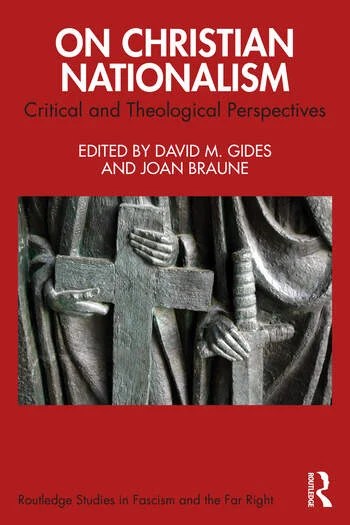
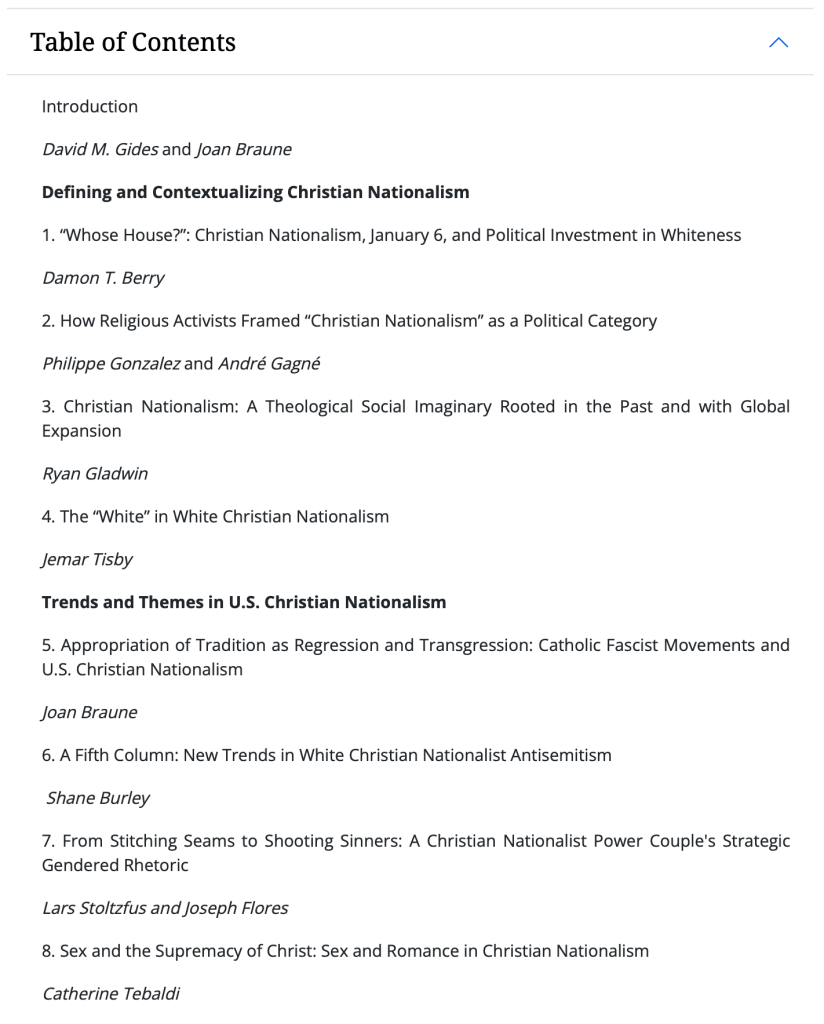
In late November 2025, Routledge just released the edited volume, On Christian Nationalism: Critical and Theological Perspectives, edited by David M. Gides and Joan Braune. In it, I have a chapter entitled, “Messianic Ruscism: Christian Nationalism and the Lure of Putin’s Russkii Mir,” which discusses why certain American Christian Nationalists look to palingenetic Russia, with its reversal of Soviet theomachism for the resurgence of Orthodoxy and autocracy, as a model of what they’d like to do in America. The “symphonia” of the Russian Orthodox Church and the Putinist state is a template for a renewal of “Christian America” for many self-avowed Christian Nationalists, who see “shared values” in the conservative values of the anti-West politics of Putin (and Alexander Dugin). Obviously, I’m deeply critical of this vision for America as well as for Russia. Get yourself a copy of this book. Joan and David did an excellent job!

You can find the book at Routledge’s website: On Christian Nationalism.

Artificial Intelligence and St. Augustine’s Just War Theory – St. Mary’s University – Edinburgh

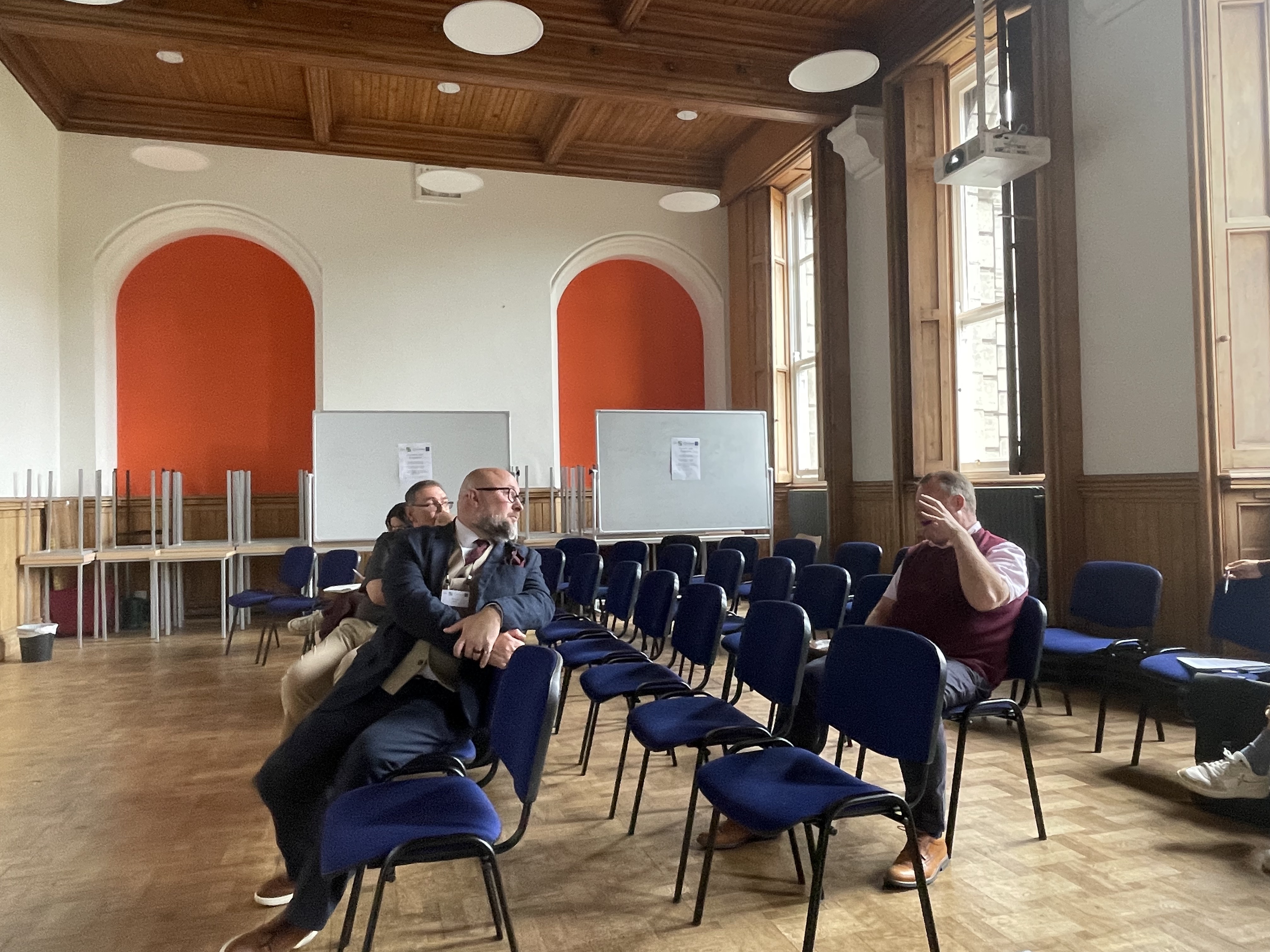
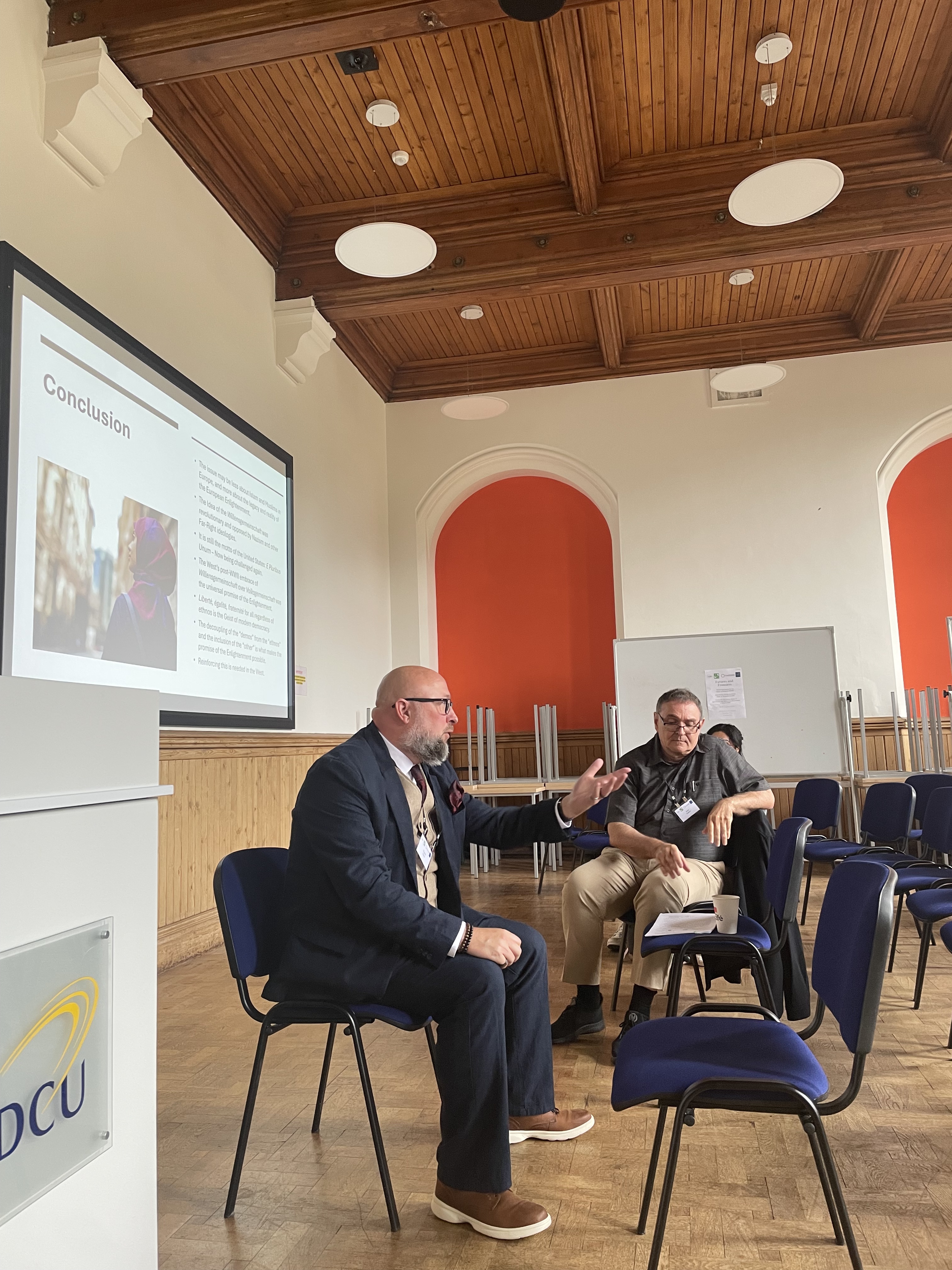
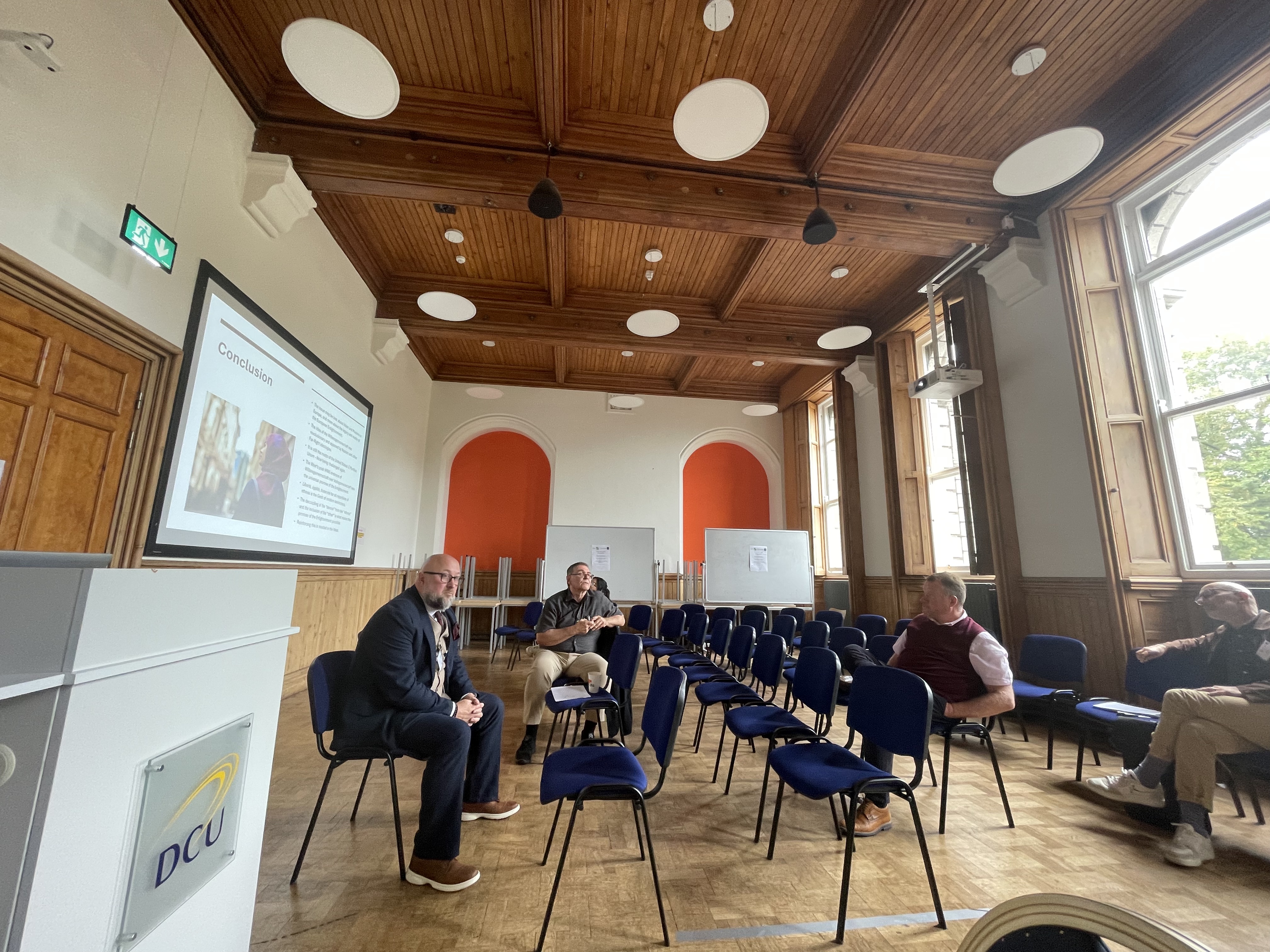
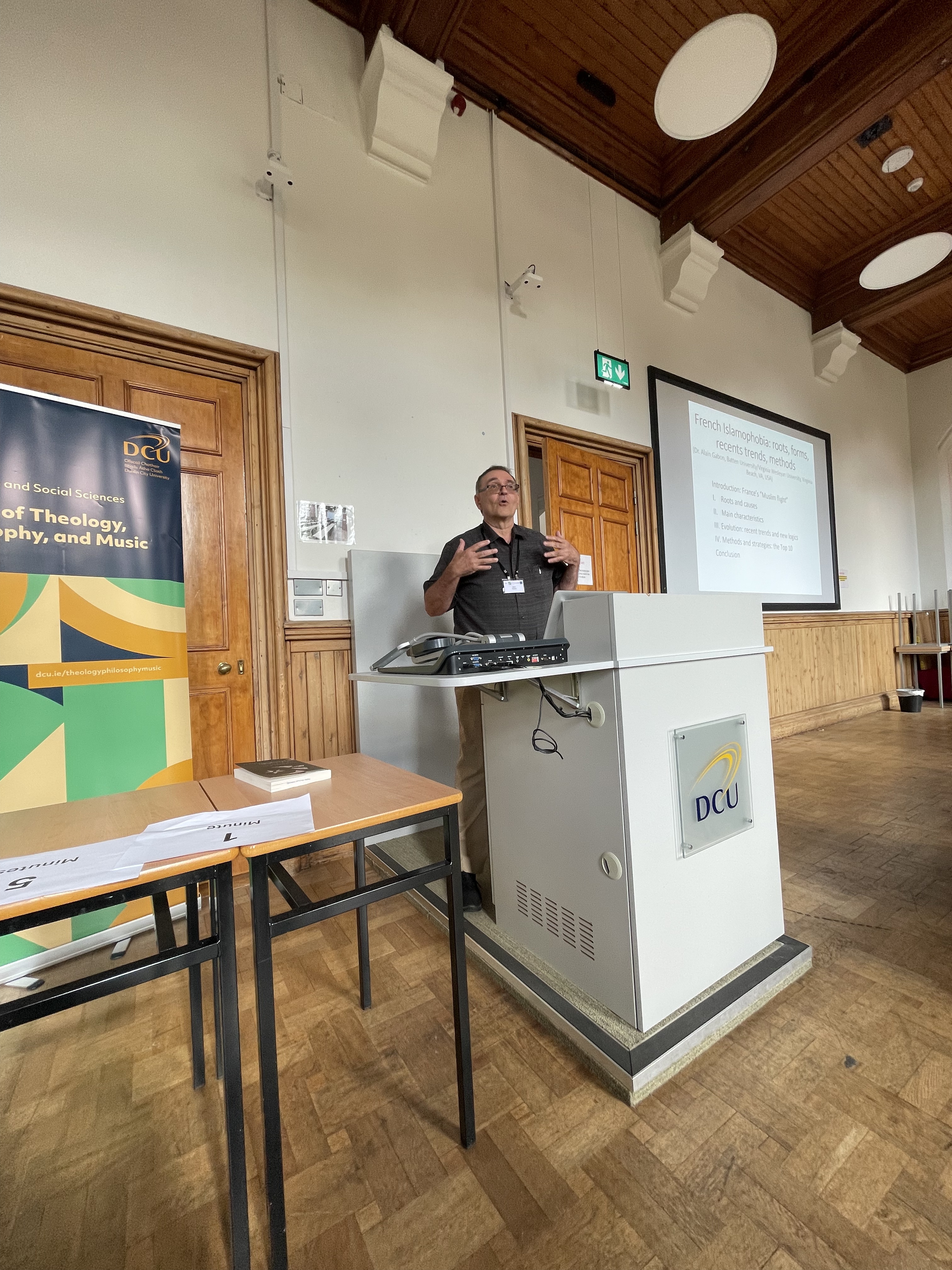
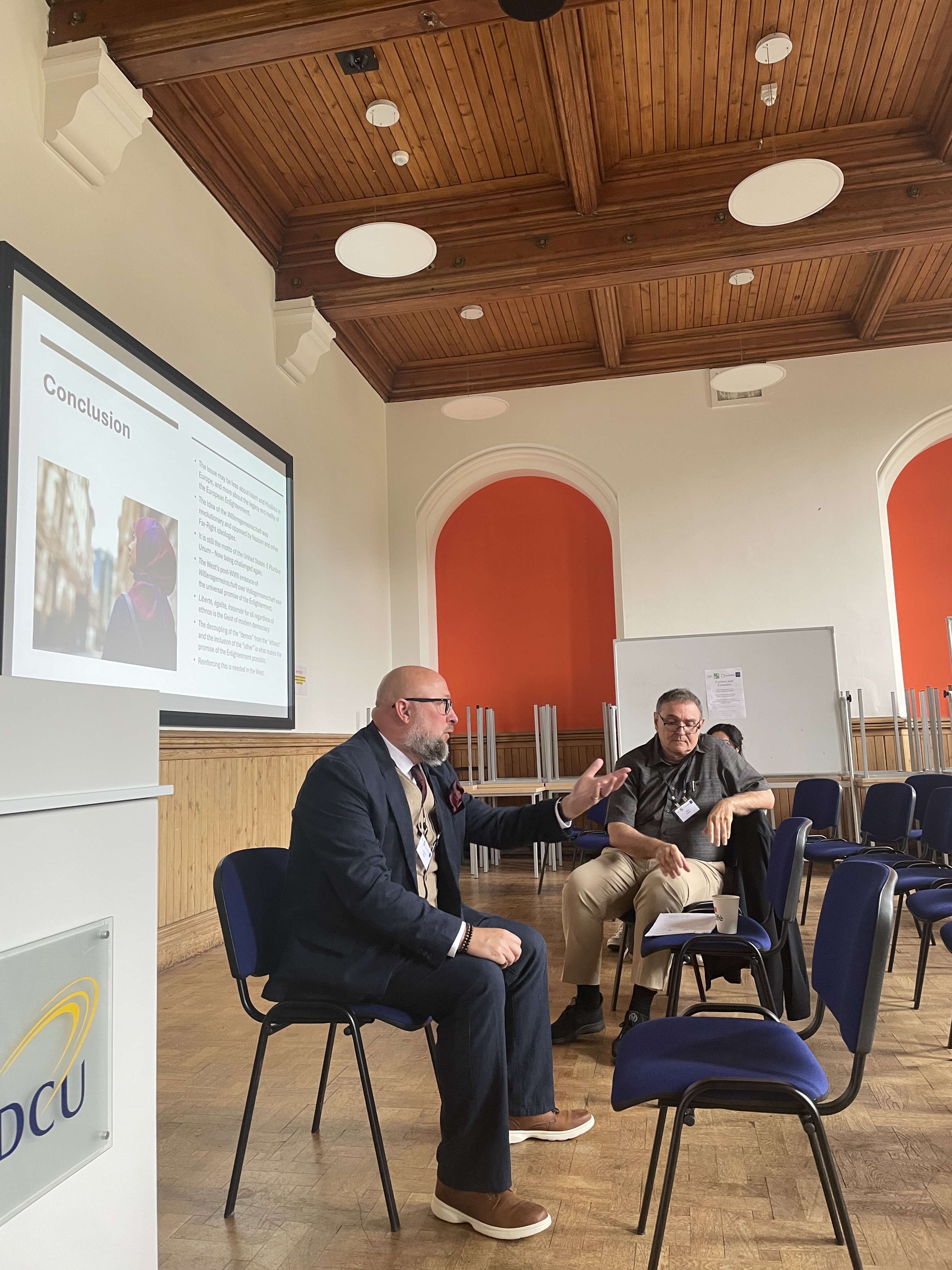
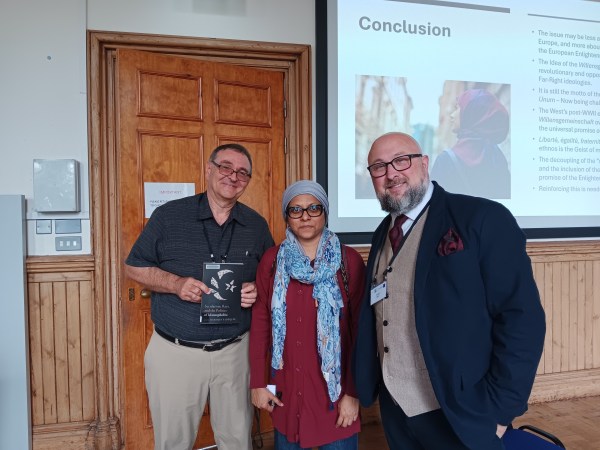
On September 3rd, 2025, I had the opportunity to present my work on the ethical problems of AI in warfare at the “Catholic Social Teachings and AI” conference at St. Mary’s University-Twickenham-London, Edinburgh campus. Stephen Dolan was the genius who organized the conference and I’m especially grateful that he invited me to address the attendees. My presentation discussed the ethical issues regarding the use of Artificial Intelligence in warfare, with Israel’s genocide of Palestinians in Gaza as a particular egregious case. While I’m no expert on the technical side of AI, the ethics of its use for military means seems deeply problematic, especially as it relates to the 7-point Just War Theory.

New Book Chapter: St. Paul, Carl Schmitt, and Alexander Dugin on the Katechon

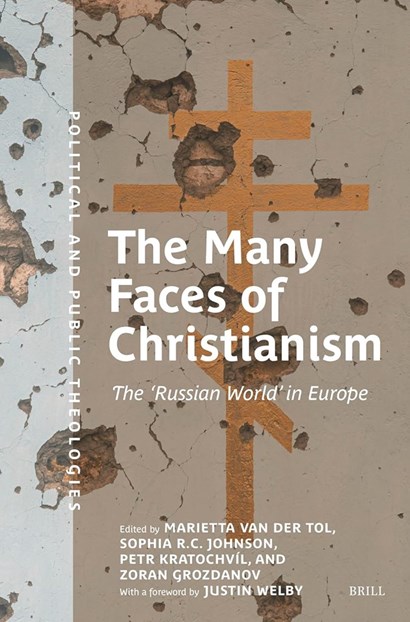
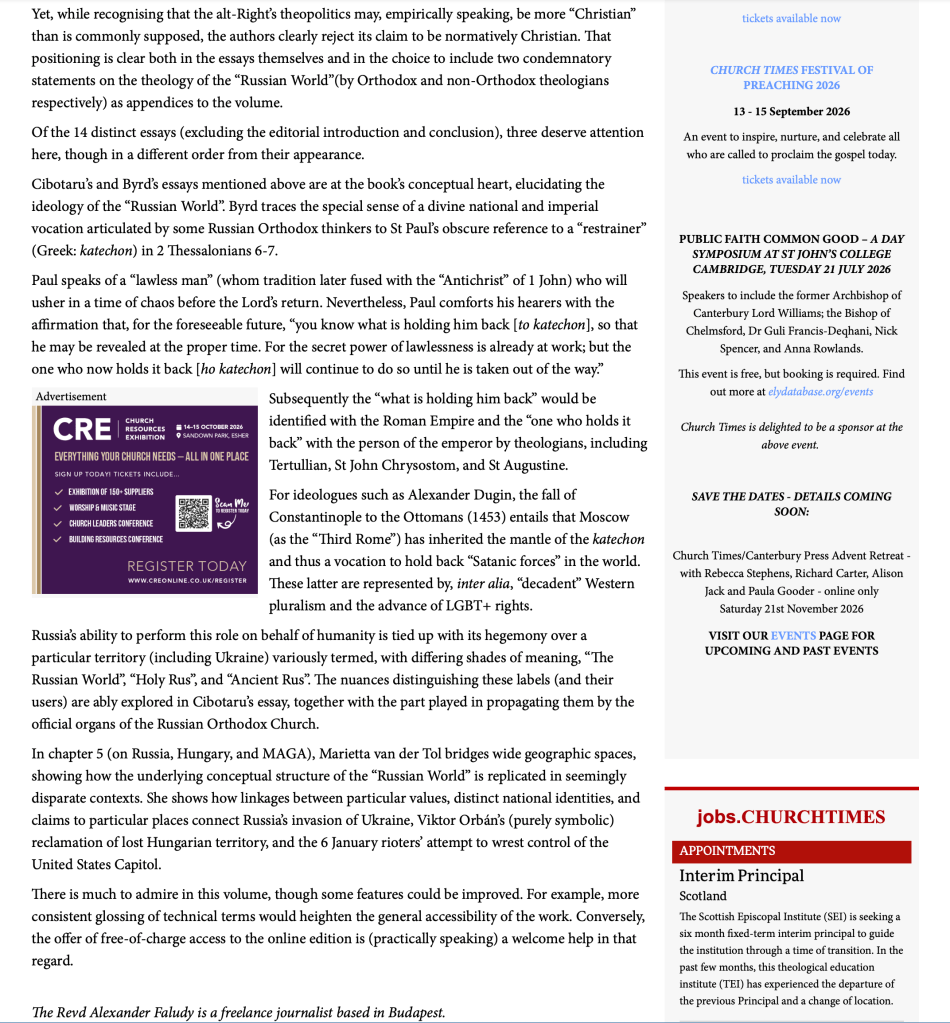
The book, The Many Faces of Christianism: The ‘Russian World in Europe, edited by Mariëtta van der Tol, Sophia R.C. Johnson, Petr Kratochvíl, and Zoran Grazdanov, has just been published by DeGruyter-Brill, in their Political and Public Theologies series. In this book, I have a chapter entitled, “From St. Paul and Carl Schmitt to Alexander Dugin: The Katechon as a Political Category in Empire building,” wherein I trace the development of the notion of the “Katechon” (The Restrainer of the Apocalypse) through St. Paul’s theology, Schmitt’s political theology, and Dugin’s political philosophy. This book chapter came out of a paper I presented at a 2023 conference, Political Theologies after Christendom, at the University of Oxford, New College. The former Archbishop of Canterbury, Justin Welby, has written the forward. I’d like to send a big thanks to all those who contributed to the book, and to all those who edited the book; it is a work of sheer genius!

If you’d like to read my chapter, you can download it below:

To purchase a copy of the book, see Brill: The Many Faces of Christianism, or see Amazon: The Many Faces of Christianism

Or, as the book is open access, download the whole book for free here:
Discussing the life and legacy of Pope Francis with Dr. Rudolf J. Siebert

On May 31st, 2025, I sat down with the critical theorist and Catholic theologian, Dr. Rudolf J. Siebert, to discuss the life, work, and legacy of Pope Francis. We discussed the Pope’s life before the papacy, the twelve years of his papacy, and the numerous ways in which he “changed the tone” of the Catholic Church, making it more inclusive and open to the world. Elected in 2013, Pope Francis died on Easter Monday, 2025. To the end, he maintained his positions against Russia’s war on Ukraine, Israel’s genocide of Palestinians, and the need to address Global Climate Change before it is too late. In many ways, Pope Francis was a force unto himself, as he, as Dr. Siebert says, put the poor at the forefront of faith, as the church should be a “field hospital” as opposed to a bunker. Our discourse was sponsored by Ekpyrosis Press and the Institute for Critical Social Theory.

Blog at WordPress.com.

Up ↑