New Article: Syed Hussein Alatas and the “Captive Mind”: Decolonizing the Non-Western Psychoanalyst

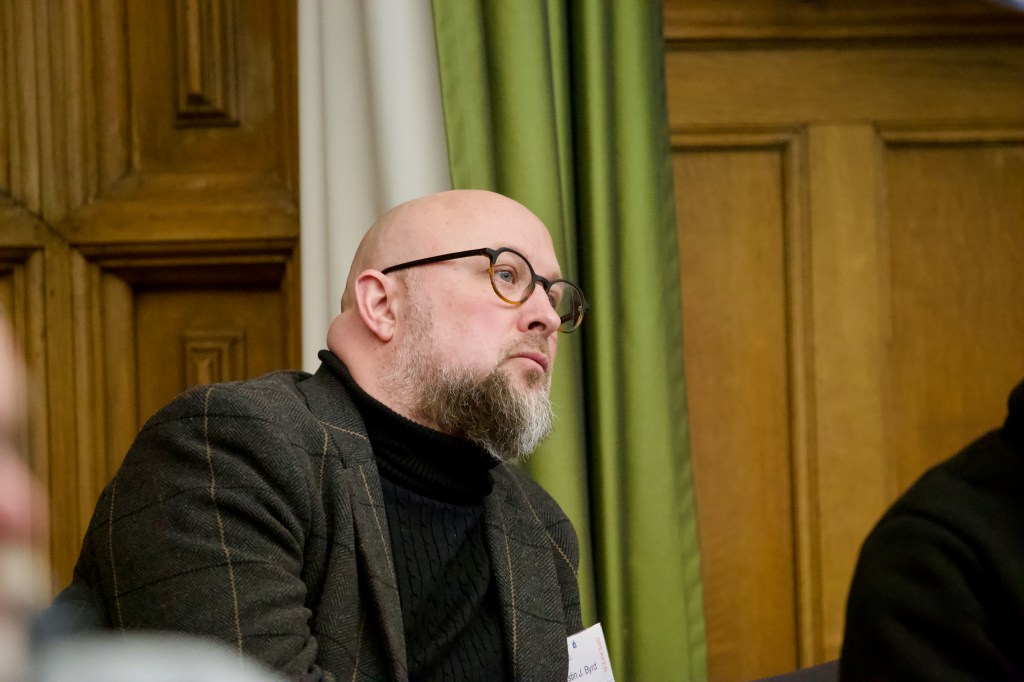
My article “Syed Hussein Alatas and the ‘Captive Mind’: Decolonizing the Non-Western Psychoanalyst,” has now been published by the journal, Psychoanalysis, Culture, and Society (Springer).

Abstract: This essay examines the work of Syed Hussein Alatas and his concept of the captive mind as it relates to psychoanalysis in the non-Western context. I argue that psychoanalysts have to go through a two-part process to decolonize psycho- analysis so as to avoid trapping analysts and analysands within the confines of the captive mind, as detailed in Syed Hussein Alatas’s many writings.

Here’s another way to access the article, through “Share it” via Springer: Syed Hussein Alatas.

NEW PODCAST on Ali Shariati

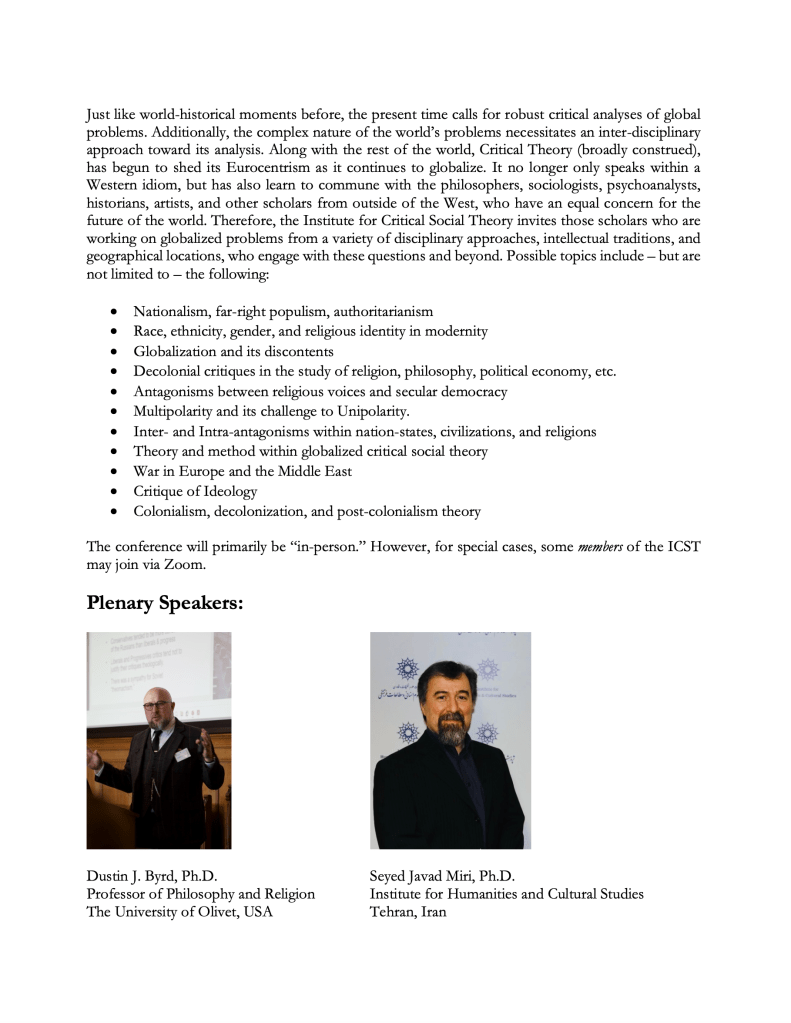
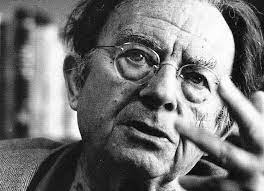
My dear brother and colleague, Seyed Javad Miri, and I had a wonderful opportunity to discuss Ali Shariati with Jacek Drozda, the host of the “Emancypacje” (Emancipation) podcast out of Warsaw, Poland. We discussed Shariati’s life, work, influence on the 1979 revolution in Iran, and most importantly, Ali Shariati’s Liberation Theology.

Here’s the introduction to the podcast: We begin our new mini-series “Liberation Theologies” where we look at the intersection of emancipatory politics and religion with an exciting conversation about Ali Shariati, a renowned Iranian revolutionary, sociologist, political theologian and theoretician. Our guests are two major specialists in this field: prof. Dustin J. Byrd (The University of Olivet) and prof. Seyedjavad Miri (Institute for Humanities and Cultural Studies in Tehran). As regular collaborators they authored and edited several important books together, including “Ali Shariati and the Future of Social Theory: Religion, Revolution, and the Role of the Intellectual” (Brill, 2017). Take a deep dive into Shariati’s contribution to political philosophy and the Iranian Revolution the victory of which he did not live to see.

Liberation Theologies Pt. 1 on Soundcloud: Ali Shariati, Revolution, Islamic Modernism, and Red Shi’ism.

Gynocracy and Gynophobia; a discussion with Dr. Rudolf J. Siebert

On October 26th, 2024, I had the pleasure of discussing a very contentious subject: “Women in Power: Gynocracy and Gynophobia,” with the critical theorist, Dr. Rudolf J. Siebert. November 2024 could see the election of the U.S.’s first woman president. Or, it could see the re-election of Donald J. Trump, who has not only a long record of misogyny and adultery, has also been adjudicated to have engaged in “sexual assault” against E. Jean Carroll, and has been accused of much more by many other women. The rise of women to powerful positions has caused a backlash in the “manosphere,” wherein many men, born of deep-seated insecurities and fears, are not prepared to see a women in the most powerful position in the world. Feeling emasculated, they have retreated into a juvenile form of masculinity, one that politicizes the historical gender antagonisms. Dr. Siebert and I believe it is important to work for a democratic relationship between genders, steered on the principle of equality, as opposed to one that privileges one gender over the other in the family, civil society, and the state. This discourse was sponsored by Ekpyrosis Press and the Institute for Critical Social Theory.

NEW ARTICLE on Russian Multipolarity and the Dār al-Islām:

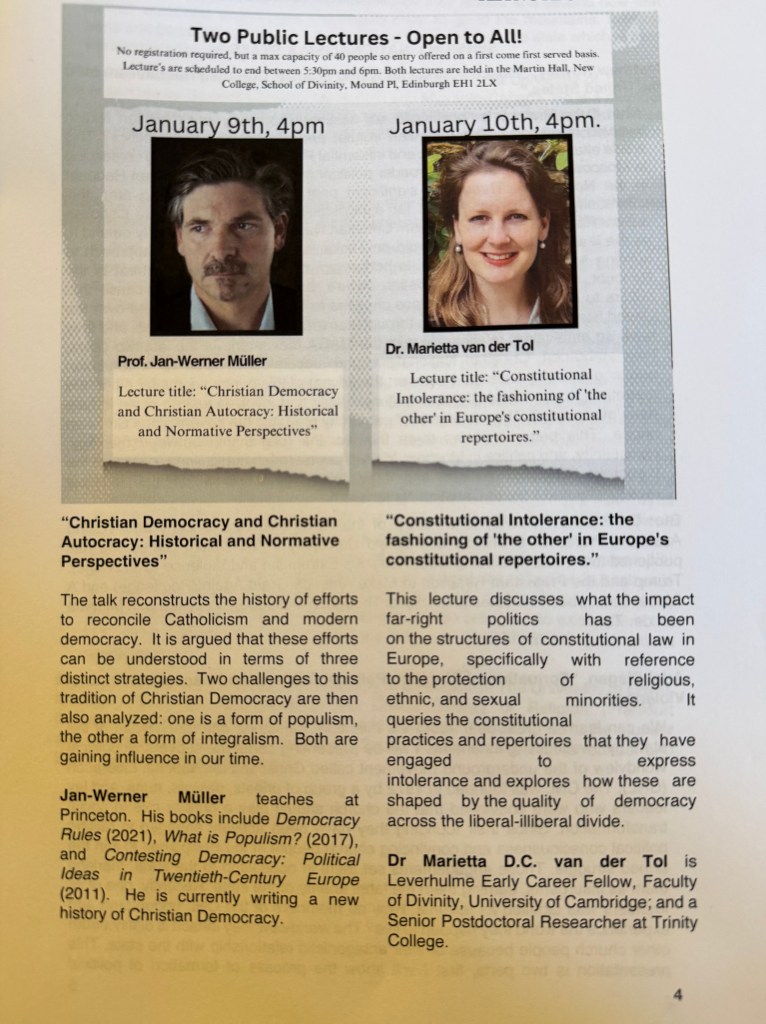
I’m pleased to announce that my latest article, entitled, “From ‘We want to destroy the regime’ to ‘We want to destroy the world order’: Russian Multipolarity and the Enlistment of the Post-Arab Spring Dār al-Islām,” has now been published. It was a part of a special issue on Contemporary Muslim Thought for the journal Philosophy and Society 35, no. 3 (University of Belgrade, Serbia). In the article, I discuss Putin’s (and Alexander Dugin’s) attempt to take advantage of the turmoil in the Muslim world, especially the Middle East, to enlist their support in Russia’s rightwing challenge to the American-led Neo-liberal “rules based order” and the dismal prospects of such a “multipolar” affront to unipolarity being effective.

It is available here: “From ‘We want to destroy the Regime’ to ‘We want to destroy the World Order.'”

OUT NOW: The Many Faces of Populism: Perspectives from Critical Theory and Beyond

I’m pleased to announce the new edited volume, The Many Faces of Populism: Perspectives from Critical Theory and Beyond, which I co-edited with Mlado Ivanovic and Jeremiah Morelock, will be released by Brill this coming December.

Contributors include: Dustin J. Byrd, Emília Barna and Ágnes Patakfalvi-Czirják, Ronald Beiner, Samir Gandesha, Yonathan Listik, Grigoris Markou, Jeremiah Morelock and Felipe Ziotti Narita, Maria Cristina Dancham Simões and Carlos Antonio Giovinazzo Júnior, and Hassan Zaheer.

Order it directly through Brill, The Many Faces of Populism, or find it on Amazon.

Erich Fromm and the Problem of Oikophobia

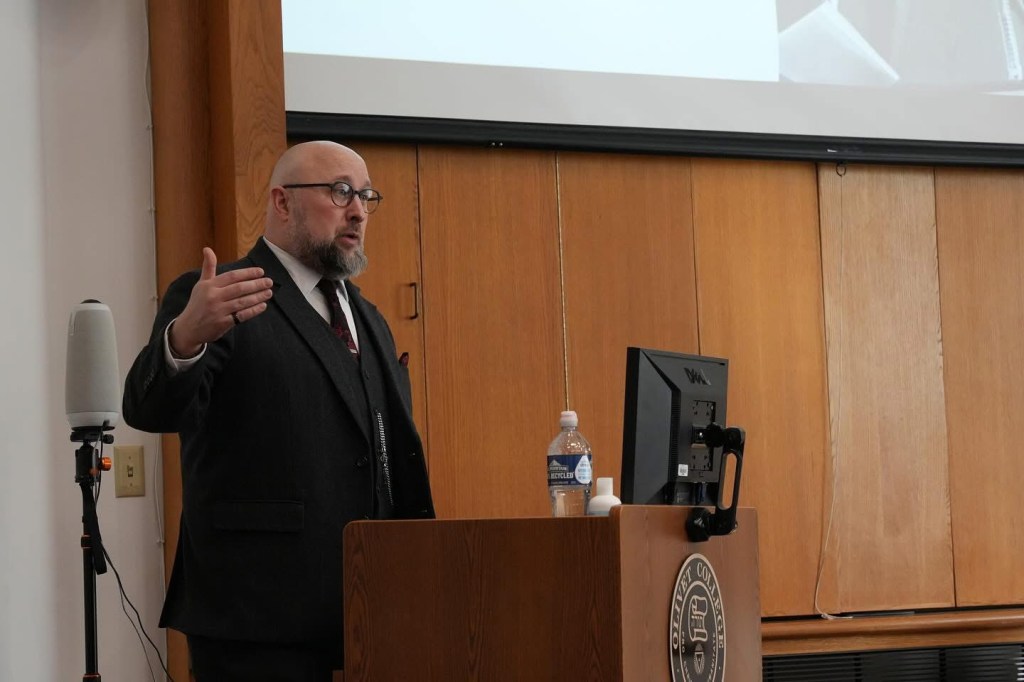
On September 15, 2024, I had the wonderful opportunity to present my work at the inaugural Erich Fromm Society of North America conference at Gonzaga University. My presentation was on the problem of “oikophobia,” or fear/hatred of all things our own). Oikophobia entails the pathological disavowal of all things Western, including the civilization, culture, history, religion, philosophy, etc. It has plagued a portion of the political Left, especially in academia. I argue that for the Left to abandon the Western inheritance is to leave it in the hands of the far-right, who will functionalize it as a tool of repression against all things “non-Western” residing in the West. What is needed is a dialectical approach to the Western inheritance, not an abstract negation. A video of my presentation can be found on the Dustin J. Byrd Audio-Visual Archive on YouTube.

New Book Coming in November:

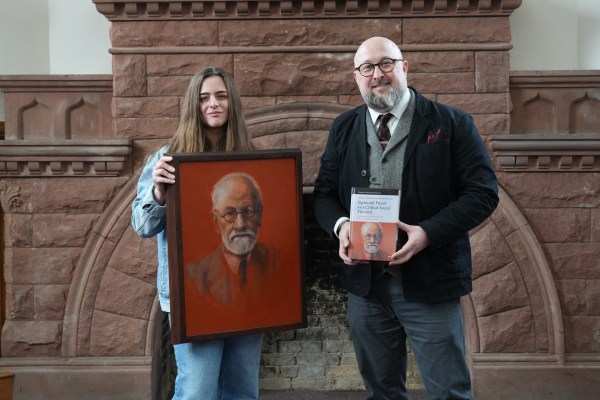
I’m pleased to announce that my latest co-edited book, “Sigmund Freud as a Critical Social Theorist: Psychoanalysis and the Neurotic in Contempoary Society” will be released at the end of November, 2024. My co-editor, Seyed Javad Miri, and I conceived of this book amidst the COVID-19 pandemic, as we were both reading Freud. We wanted to show not that Freud was right about everything – he certainly wasn’t, but rather that Freud’s work continues to be theoretically fruitful in a variety of disciplines and subject. Thus, the thread that unites the chapters in the book is the realization that Freud is not dead, but rather is alive and well within critical social theory.

The portrait of Freud used for the cover was painted by a former student of mine at The University of Olivet, Mahalia Stelter, who is an amazing portrait artist. It was a great pleasure to commission the painting for the purpose of this book.

Contributors: Joan Braune, Jimmy Butts, Dustin J. Byrd, Mlado Ivanovic, Clint Jones, Howard L. Kaye, Ulrike Kistner, Lauren Langman, Gregory Joseph Menillo, Seyed Javad Miri, Michael Naughton, Délia Popa, Francesco Ranci, Iaan Reynolds, Rudolf J. Siebert, Yannis Stavrakakis, Alfred I. Tauber, Michael J. Thompson, Eli Zaretsky

Freud as a Critical Social Theorist: Psychoanalysis and the Neurotic in Contemporary Society

Discourse on “Political Violence,” with Rudolf J. Siebert

On August 24th, I had the great pleasure to speak with the critical theorist, dialectical religiologist, and theologian, Rudolf J. Siebert, to talk about political violence. Spawned by the latest attempt to assassinate the former U.S. President, Donald J. Trump, we discussed the long history of political violence and assassinations, the reasons why they continue to happen, and the potential for future violence in the name of political change. This discourse was sponsored by Ekpyrosis Press and the Institute for Critical Social Theory.

“Political Violence: History, Purpose, and Future,” with Rudolf J. Siebert

Blog at WordPress.com.

Up ↑